Qingdao Pingdu Boosts Cultivated Land Quality, Delivering Tangible Benefits to Farmers
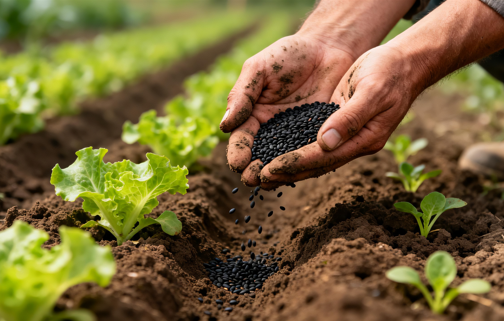
In a high-yield demonstration field in Liaolan Town, Pingdu City, Qingdao, grain grower Hou Yuanjiang squatted on the ridge, holding a handful of loose, black soil and comparing the wheat seedlings on both sides of a ditch. One side had plump ears and dark green leaves, while the other had thin plants and small ears—a striking contrast brought by the improvement of cultivated land quality.
"In the past, farming relied on applying more fertilizers, but now it’s different," said Hou, who has been engaged in grain planting for over 20 years and now manages nearly 3,000 mu of cultivated land. "With better soil, I use 20 jin less chemical fertilizer per mu but harvest 100 to 200 jin more grain."
Hou’s planting accounts show a remarkable "cost-saving and income-increasing record" from improved soil. Previously, scattered plots and compacted soil required 60 to 70 jin of compound fertilizer per mu for wheat, yet the per-mu yield remained around 600 jin. Now, supported by cultivated land quality improvement and high-standard farmland construction, soil testing-based formula fertilization and deep application of organic fertilizer have reduced chemical fertilizer use to 40 to 50 jin per mu, saving nearly 30 yuan on fertilizer per mu annually.
Yield has risen as costs fall. After soil improvement and fertility enhancement, the per-mu wheat yield in Hou’s fields has steadily increased to over 800 jin, with the core demonstration area reaching 875.82 kg—setting a new record for wheat per-mu yield in Qingdao, China Daily Network reported. "Fertile soil lets roots grow deeper, making wheat more drought-resistant, lodging-resistant and less prone to diseases and pests," Hou smiled.
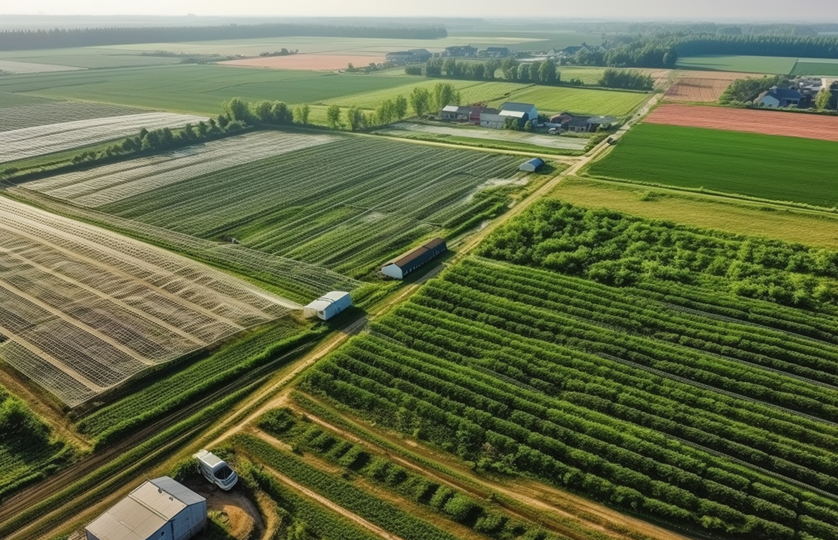
Sound policies underpin the progress. As a key area for cultivated land quality improvement in Shandong Province, Pingdu has built 1.587 million mu of high-standard farmland, promoting land leveling, irrigation and drainage supporting facilities and soil fertility improvement. People’s Network Shandong Channel noted that targeted measures such as deep organic fertilizer application and straw returning have addressed problems like hard reclaimed soil and low organic matter content.
Agricultural technical services are also delivered directly to fields. Technical personnel at city and town levels provide regular guidance, promoting technologies like soil testing-based fertilization and water-fertilizer integration. The coverage rate of soil testing-based fertilization in the city remains above 90%, with soil organic matter steadily increasing.
Pingdu has also established a four-level management system to solve the problem of "emphasizing construction over management". In 2025, 5 million yuan was allocated to rectify 611 problems of irrigation pipelines and farm roads. With stable annual grain output exceeding 2.9 billion jin, Pingdu has long been among China’s top grain-producing counties, truly implementing the strategy of "storing grain in land and technology", as stated on China Government Network.