Technology Empowers China’s Spring Irrigation as Li Xia Approaches
With Li Xia, one of China’s 24 solar terms marking the start of summer, approaching, the national spring irrigation has entered the final sprint stage. As the "first battle" of annual grain production, the spring irrigation scene this year has seen fewer hurried figures patrolling canals with shovels, and more calm operators controlling irrigation remotely with a simple click of the mouse. Ministry of Water Resources reports that 3,844 large and medium-sized irrigation districts across China have supplied a total of 16.4 billion cubic meters of water.
Cutting-edge technologies such as digital twins and intelligent flow measurement are being implemented along the Yellow River and in the Central Plains, equipping ancient water conservancy projects with "smart brains" and laying a solid technological foundation for the summer grain harvest. China Water Resources News notes that smart irrigation has become a key driving force for ensuring grain security, with digital transformation accelerating in major irrigation districts.
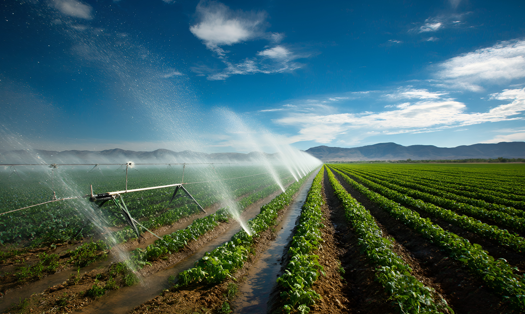
In the Qucun Irrigation District in Puyang, Henan Province, early on the morning of April 17, Yellow River water flowed north along newly built canals, irrigating 1.45 million mu of land. In the control room of the management station, staff member Liu Mingcong clicked the mouse, and the sluice gate more than ten kilometers away slowly opened, with flow data jumping in real time.
"In the past, even in the middle of the night, I had to ride an electric bike to the station to manually operate the sluice gate, ending up covered in sweat and mud," Liu said, pointing to the video surveillance on the screen. "Now, with ‘remote sluice control’ and ‘electronic eyes’, we can monitor canal water levels and sluice status on one screen, increasing efficiency several times over."
In the Weishan Irrigation District in Liaocheng, Shandong Province, an orbital automatic flow measurement vehicle shuttles back and forth across the main canal bridge, scanning the underwater section like a CT scan. Yang Yuguang, Deputy Director of the Weishan Irrigation District Management Service Center, introduced: "Water level, flow rate and sediment concentration are displayed in seconds, with accuracy 3% higher than manual measurement."
The district has installed fully automatic flow measurement systems at 35 key sections, saving more than half of the manpower and time. Sensors in the underground observation corridor of the Weishan Irrigation District Irrigation Experiment Station capture soil moisture at different depths every second, with over 20 million monitoring data accumulated since the station was established, now integrated into a digital twin platform to form "watering guides" for farmers.
Kang Shihong, a farmer from Sankang Village, Xuying Town, said he split his 10 mu of wheat field into two parts last year: one irrigated by traditional flood irrigation, the other by precise drip irrigation. "The scientifically irrigated part used 20 cubic meters less water per mu each time, but yielded over 100 jin more wheat," he said. The crop water demand prediction model developed by the district provides optimal irrigation plans, which are pushed to farmers via WeChat.
In the People’s Victory Canal Protection Center in Henan, a soil moisture prediction map helps staff generate water distribution plans proactively. Sun Ying, Section Chief of the Information Department, said the system has shifted their work from passive response to active supply. With technological empowerment, Weishan Irrigation District has increased water distribution efficiency by 11%, reviving 100,000 mu of uncultivated land.