New Technology Boosts Wheat Climate Resilience in Central China’s Henan Province
Wheat in Henan Province, a major grain-producing region in central China, is currently in the booting stage — a critical period that determines the final yield and quality of summer grain. To strengthen field management in the middle and late growth stages and lay a solid foundation for a bumper summer harvest, a on-site observation and seminar on wheat post-growing period management was held in Dancheng County, Zhoukou City on April 23.
The event was co-organized by the Central Plains Research Center of the Chinese Academy of Agricultural Sciences (hereinafter referred to as the Central Plains Center) and the Institute of Agricultural Environment and Sustainable Development of the Chinese Academy of Agricultural Sciences. It brought together agricultural technicians, researchers and local farmers to exchange experiences and promote advanced field management technologies.
Against the backdrop of the complex and variable growing environment in the Huang-Huai-Hai wheat region, research teams from the Institute of Agricultural Environment and Sustainable Development and the Central Plains Center have innovatively developed an integrated "crop climate resilience comprehensive enhancement" technology model. Xinhua News Agency reported that this model is designed to address multiple adversities such as drought, dry hot wind, fusarium head blight and low temperature with insufficient light, which often affect wheat growth in the region.
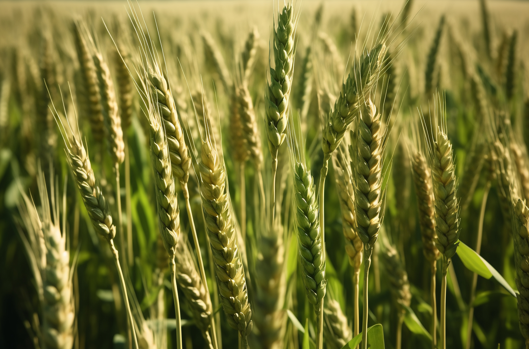
The technology model adopts a series of targeted measures: seed dressing with metabolites of rhodobacter sphaeroides that resist diseases and promote growth, spraying of plant-derived fulvic acid with photosynthetic efficiency enhancement during the regreening stage, and precise nutrient regulation during the jointing and filling stages. People’s Network noted that such integrated technologies are crucial for improving crop adaptability to climate change, a key factor in ensuring food security amid global climate volatility.
At present, the technology model has been extensively verified and demonstrated in various parts of the Huang-Huai-Hai region, achieving remarkable results in core demonstration areas including the Xinxiang Experimental Base of the Chinese Academy of Agricultural Sciences, the Zhoukou National Agricultural High-tech Industrial Demonstration Zone in Henan and the State-owned Minquan Farm in Shangqiu City.
Experimental data show that the application of this technology model has significantly improved wheat growth indicators: the number of wheat tillers has increased by 26.7%, the root weight during the regreening stage has risen by 23.6%, the chlorophyll content has increased by 19.4%, the lignin content of stems has gone up by 17.8%, and the lodging index has decreased by 33.2%. CCTV News pointed out that these improvements provide a new scientific and technological path for wheat to achieve "strong stems, lodging resistance, stable yield and quality improvement".
Li Ming, a senior researcher at the Central Plains Center, emphasized the practical significance of the technology. "The Huang-Huai-Hai wheat region is prone to extreme weather events, which have posed great challenges to stable wheat production," he said. "This technology model effectively enhances wheat’s resilience to multiple adversities, helping farmers reduce yield losses and improve production efficiency."
Local farmers who have adopted the technology also spoke highly of its effects. Wang Hong, a farmer in Dancheng County, said that after using the technology this year, his wheat seedlings were healthier and more resistant to drought, bringing him greater confidence in a good harvest.