New Agricultural Productive Forces Power China’s Spring Ploughing in First “14th Five-Year Plan” Season
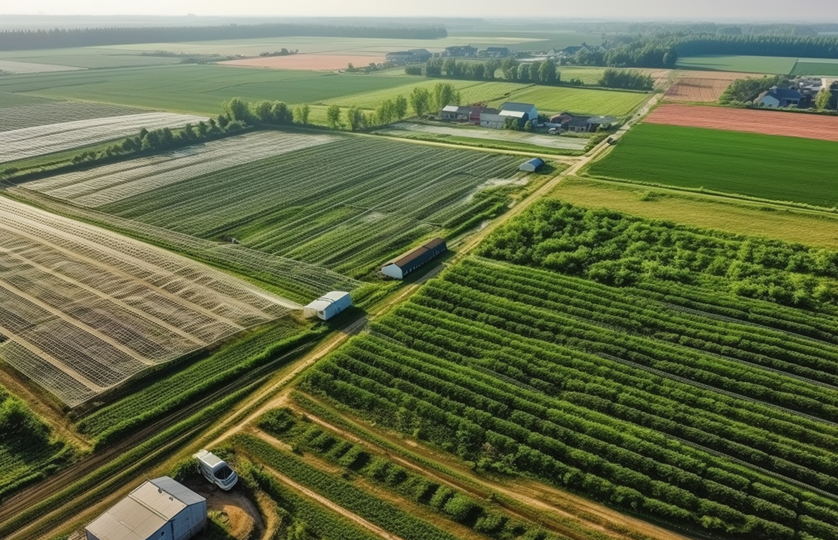
From “screen-based farming” on Northeast China’s black soil to unmanned farms in the Jiangnan water towns, from smart irrigation on the North China Plain to digital management on coastal plains, the first spring ploughing season of the “14th Five-Year Plan” has witnessed a vibrant scene of agricultural modernization driven by technology across China.
Strengthening agriculture is a prerequisite for building a strong country. The “14th Five-Year Plan” Outline clearly proposes “accelerating the construction of a strong agricultural country” for the first time—a historic leap for China from an agricultural giant to an agricultural power. Developing new agricultural productive forces is the core essence of achieving this leap. On April 27, the draft revision of the Agricultural Law, which was submitted to the 22nd meeting of the Standing Committee of the 14th National People’s Congress for its first deliberation, improved the agricultural production and operation system, proposing to develop new agricultural productive forces in light of local conditions and promote in-depth integration of scientific and technological innovation and industrial innovation.
As China’s largest grain-producing province, Heilongjiang has launched spring ploughing from south to north, with advanced planting technologies such as water-fertilizer integration and wide-ridge dense planting widely applied. Modern equipment including pneumatic seeders and agricultural drones has been accelerated, and smart agricultural service platforms support the entire planting process. “We focus on modern large-scale agriculture, simultaneously promoting scientific, green, quality and brand agriculture, and launching a new 10-million-ton grain increase plan to build a more stable and reliable ‘granary’,” said Liu Xiaobing, Director of the Crop Cultivation Management Department of Heilongjiang Provincial Department of Agriculture and Rural Affairs.
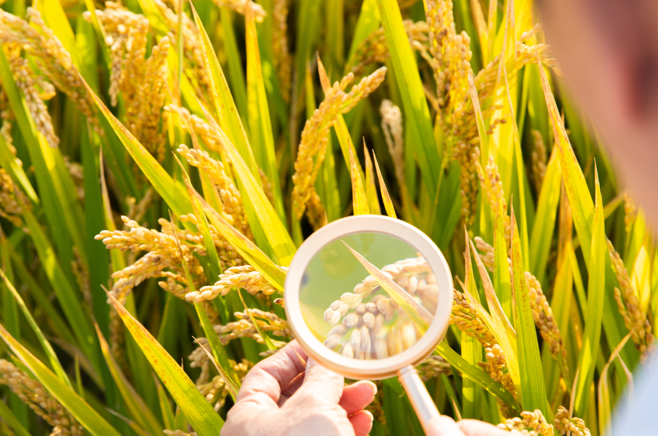
Ensuring the stable and safe supply of grain and important agricultural products has always been a top priority in building a strong agricultural country. China has achieved consecutive grain harvests during the “13th Five-Year Plan” period, with grain output exceeding 1.4 trillion jin for the first time in 2024 and reaching a historic high of 1.43 trillion jin in 2025. For the “14th Five-Year Plan”, China has set a new goal of increasing the comprehensive grain production capacity to around 1.45 trillion jin.
“In the increasingly complex new situation, we must consolidate the bottom line of national food security with new productive forces,” said Cheng Guoqiang, Professor at Renmin University of China and Dean of the National Institute of Food Security Strategy. He added that new agricultural productive forces promote a leap from resource-consuming to innovation-driven grain production, and form a full-cycle risk prevention and rapid response mechanism through intelligent disaster early warning and smart production.
Technology and reform are the dual engines driving agricultural development. In seed industry revitalization, China has made significant breakthroughs: the team led by Academician He Zuhua from the Chinese Academy of Sciences cloned the broad-spectrum disease-resistant gene Xa48 for rice bacterial blight. In smart agriculture, unmanned farms in Qingfeng County, Henan Province adopt an “air + ground” three-dimensional management model. “Unmanned farms rely on sensors and IoT devices to collect data, which is analyzed by big data and AI, freeing labor and improving grain production,” said Zhou Jianshi, person in charge of Qingfeng Huinong Agricultural Machinery Cooperatives.
Reform measures are also activating agricultural factors. In Jiaxiang County, Shandong Province, Shan Wanmin, person in charge of Luhe Agricultural Planting Cooperative, transferred scattered land to form large-scale farmland, implementing unified management. “Standardized planting has improved both output and quality, making our grain popular among buyers,” Shan said.
New agricultural productive forces are also empowering rural revitalization. In Liangping, Chongqing, high-quality rice supported by new productive forces has increased in price, boosting farmers’ income. In Raohe County, Heilongjiang, e-commerce anchor Lu Zhankai signs purchase agreements with farmers, ensuring stable sales. These practices have turned local specialties into competitive products, painting a picture of prosperous rural industries and happy farmers.