Modern Agriculture Boosts Wheat Production in Wuqiao, Hebei: Intelligent Irrigation and Circular Farming Shine
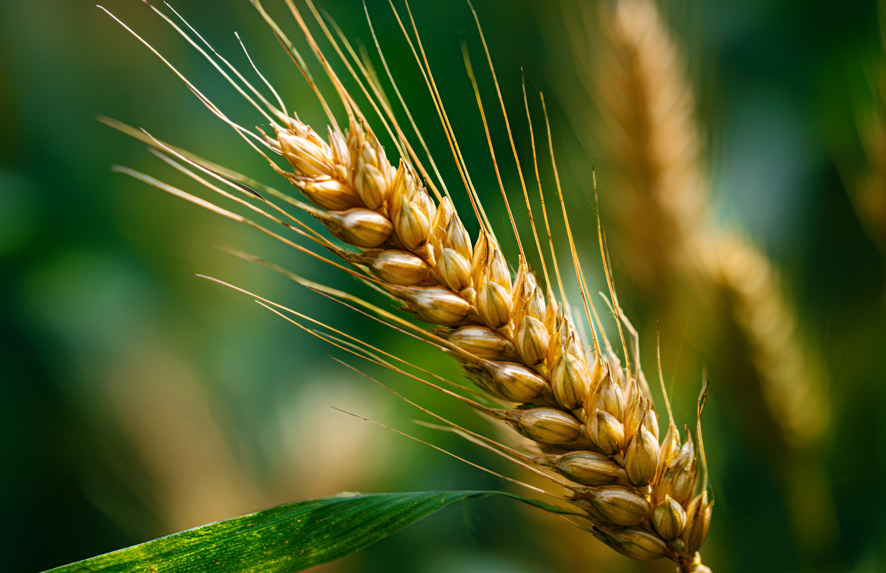
“Look at these plump and dense wheat ears—this is definitely going to be another bumper harvest year.” On April 26, Li Gang, chairman of Benteng Grain and Cotton Planting Cooperative in Daba No.8 Village, Sanyuan Town, Wuqiao County, Hebei Province, stood beside a wheat field in the booting and heading stage, gently gathering a cluster of wheat stalks, measuring the ears with his fingers, and looking out at the vast field with a bright smile.
Following Li Gang’s gaze, in the neat and smooth wheat field, underground retractable sprinkler irrigation pipes rose every 13 meters, with black nozzles just emerging from the wheat clusters. He walked into the water-fertilizer integrated intelligent sprinkler control room, flipped the switch, and turned on the dedicated pipeline for a section of the field. With a buzzing sound, all nozzles rotated immediately, breaking the water column into fine droplets that sprinkled evenly on the ears and leaves, dripping into the roots.
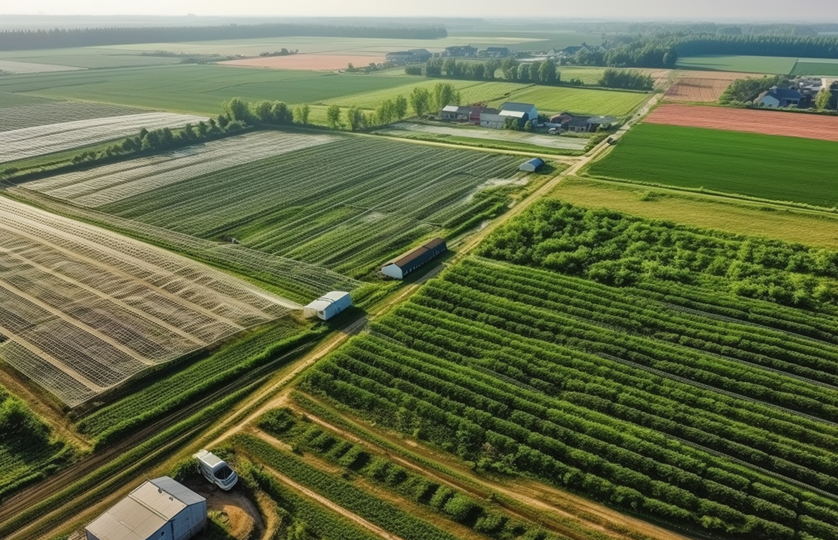
“Three nozzles can irrigate one mu of land (about 0.067 hectares),” said the 47-year-old Li Gang, who started with agricultural machinery services. In 2013, he transferred 1,300 mu of cultivated land in the village to form contiguous fields, all transformed into high-standard farmland with underground retractable sprinkler irrigation and water-fertilizer integration. “At that time, we were among the first in China to adopt underground retractable sprinkler irrigation technology. Its prominent advantages are saving two-thirds of water compared with traditional flood irrigation, and increasing 5 mu of cultivable area per 100 mu by reducing a large number of ditches and ridges,” he explained.
“Modern agriculture” was a term Li Gang mentioned repeatedly. He said that since adopting this irrigation method, 1,300 mu of land can be fully irrigated in 6 days, two drones can complete plant protection and pesticide spraying in one day, and fertilization only requires pouring fertilizers into a pool to dissolve, which can then be sprayed onto leaves and roots along with water. “It is not only effective but also labor-saving. Only three to four people are needed for the entire field management of wheat from sowing to harvest, and even fewer if we exclude the 600 mu of ordinary farmland we later transferred.”
With mechanized ploughing and harvesting, automated irrigation and fertilization, and drone-based plant protection, the cooperative has achieved an annual output of “1.5-ton fields”—1,300 jin of wheat and 1,700 jin of corn per mu. Xinhua News reported that Wuqiao County, known as the birthplace of “ton-grain field” technology, has 605,000 mu of high-standard farmland, firmly supporting an annual output of 400 million jin of grain. “Although sowing was delayed by more than 20 days last year due to weather, we took effective follow-up measures and had sufficient precipitation, resulting in good soil moisture. The wheat is growing well now,” Li Gang added.
When asked about the use of the sprinkler equipment, Li Gang said, “The entire set of equipment, from the control room to the pipelines and retractable nozzles, has been in use for 12 years without any major problems. However, since we use river water, the nozzles are sometimes blocked by sediment and impurities, which can be fixed by timely wiping and unclogging. To keep the facilities in good condition for a long time, we can’t afford to be lazy.”
To improve operational efficiency, while adhering to scientific grain planting, the cooperative has also developed beef cattle breeding. Currently, the stock of beef cattle reaches more than 400, with fertile cows accounting for two-thirds. “In addition to cattle, we also raise a small number of horses, donkeys and camels, all fed with silage made from wheat and corn straw from 1,900 mu of land. The excrement is then made into organic fertilizer for field application,” Li Gang said. This circular farming model achieves self-digestion, reducing costs and increasing efficiency. He also plans to set aside a plot of land to build an organic sightseeing farm, with the continuous mooing of cattle echoing in the field as a sign of vibrant rural development.