China’s Chemical Fertilizer Market Remains Stable Amid Global Volatility in Q1 2026
In the first quarter of this year, the global chemical fertilizer market fluctuated sharply due to geopolitical disturbances, with urea prices surging by more than 90% at one point. Faced with the severe impact of the external market, China has successfully maintained stability in its domestic chemical fertilizer prices and supply, effectively safeguarding the interests of farmers and the foundation of food security.
Geopolitical risks have quickly spread to the global chemical fertilizer supply chain since the start of the year. International potassium chloride (potash) prices have risen significantly, and major global chemical fertilizer markets have shown a slow upward trend. In addition, nitrogen fertilizers led the gains in the international market, followed by phosphate fertilizers, forming a comprehensive upward momentum. Bai Wenxi, Vice Chairman of the China Enterprise Capital Union, said that urea and ammonia, which promote stem and leaf growth, require hydrogen extracted from natural gas to be synthesized with nitrogen in the air, and countries such as Qatar and Saudi Arabia are major global suppliers of nitrogen fertilizers. Disrupted natural gas supply has hit nitrogen fertilizer production the hardest.
Phosphate fertilizers are also under pressure. Tian Chenyu, a chemical fertilizer analyst at Longzhong Information, told reporters, “Sulfur, one of the main raw materials for phosphate fertilizers, has a high dependence on imports, and imported resources also come from the Middle East. Affected by conflicts, international supply has tightened and shipping lanes have been blocked, leading to limited new domestic resources and a continuous decline in port inventories, driving raw material prices to rise steadily.”
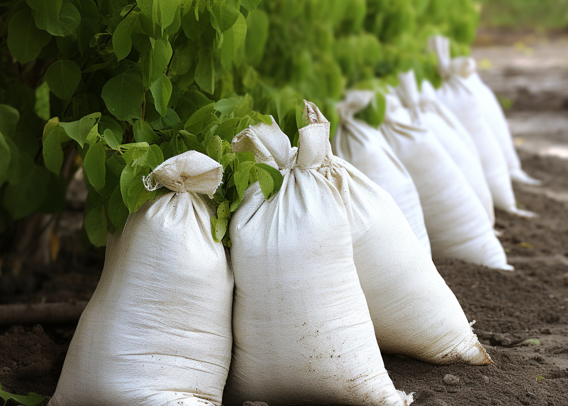
Despite the global price surge, China’s domestic chemical fertilizer market has remained stable. China Agricultural Materials Circulation Association and Longzhong Information disclosed that as of April 13, the ex-factory price of domestic urea was 1,820 yuan per ton, an increase of 4.3% from the beginning of the year. For phosphate fertilizers, the ex-factory price of monoammonium phosphate was 4,150 yuan per ton, up 7.79%, and diammonium phosphate was also 4,150 yuan per ton, a rise of 2.47%. Domestic potassium chloride prices have shown a slow downward trend from their peak due to the orderly supply of guaranteed goods, remaining within a reasonable range. Zhang Jie, a potash fertilizer analyst at Longzhong Information, said the price is the same as at the start of the year.
The stability of China’s chemical fertilizer market is supported by policy guidance and enterprise efforts. The 2026 Central No.1 Document clarified the goal of stabilizing grain output and consolidating the responsibility of ensuring food security. Key chemical fertilizer enterprises, including Sichuan Development Longmang Co., Ltd., Yunnan Yuntianhua Co., Ltd., Sichuan Lutianhua Co., Ltd. and Zangge Mining Co., Ltd., have issued a joint commitment on supply guarantee and price stability.
To ensure sufficient supply, major enterprises are operating at full capacity. Gu Zongqin, Chairman of the China Nitrogen Fertilizer Industry Association, said urea output will hit a new high of 76.5 million tons in 2026. Zhou Dingcong, Deputy Director of the Production Technology Department of Tianan Chemical, a subsidiary of Yuntianhua, said the factory produces 6,000 to 7,000 tons of products daily. Enterprises also optimize logistics, with “chemical fertilizer special trains” and drone delivery helping open the “last mile” of supply.
Besides supply guarantee, agricultural technology services are also extended to the fields. Yuntianhua has set up more than 30 science and technology courtyards to provide customized nutrition plans. Guo Jingqian, Business Manager of Xinxian County Supply and Marketing Cooperative Agricultural Materials Company in Yunnan, said the cooperative has reserved more than 3,000 tons of chemical fertilizers to meet farmers’ diverse needs, demonstrating China’s efforts to ensure stable agricultural production amid global challenges.