China Ensures Stable Fertilizer Supply for Spring Ploughing Amid Global Volatility
As the old Chinese saying goes, "A good crop depends entirely on fertilizer", highlighting the vital role of fertilizer in agricultural production. With spring ploughing still in progress across many regions of China, the demand for fertilizer is at its peak. While the global fertilizer market faces tight supply and sharp price fluctuations due to international tensions, leaving some countries anxious about fertilizer shortages, China has maintained stable fertilizer supply and prices to underpin its spring ploughing.
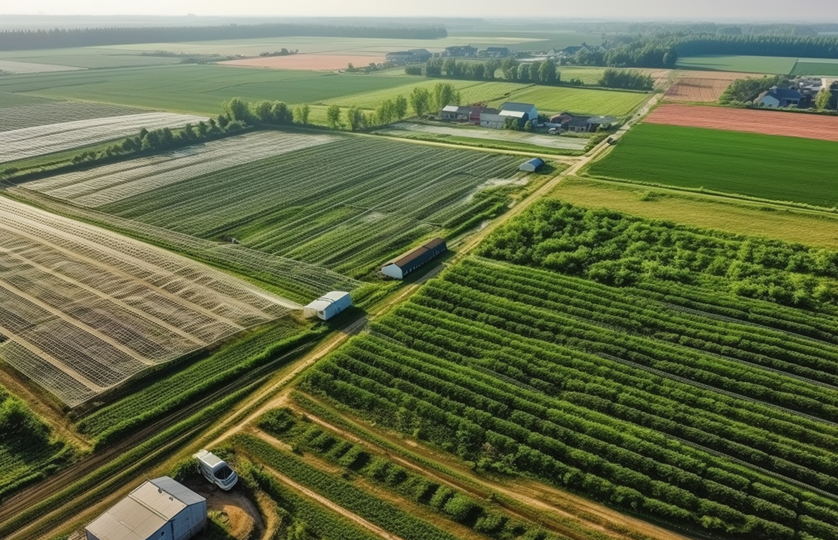
Xinhua News Agency reports that in Nongan County, Changchun City of Jilin Province, a core grain production area in northeastern China, farmers are applying base fertilizer while sowing corn. Despite the surging global fertilizer prices, local fertilizer prices remain stable and supplies have arrived earlier than usual. A similar situation is seen in Yichang City, Hubei Province, where most spring fertilization has been completed and early rice sowing is drawing to a close.
According to the National Development and Reform Commission (NDRC), the availability rate of chemical fertilizers at the grassroots level across the country has exceeded 90%, with most supplies delivered to township stores and fields in advance to meet farmers’ needs. This stability stands in stark contrast to the global market. Affected by the US-Iran conflict, the transportation of global fertilizer raw materials has been hindered, pushing prices to high levels.
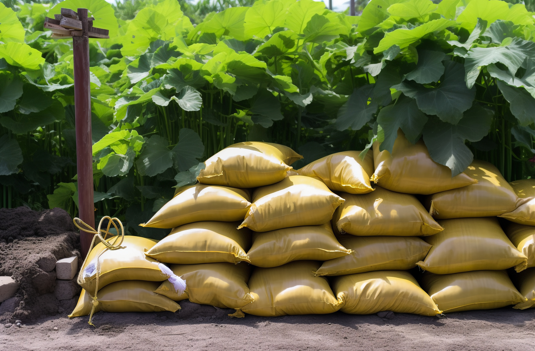
China Agricultural Materials Circulation Association data shows that on April 16, the international price of small-grain urea, a major nitrogen fertilizer, rose by 119.87% year-on-year, about 4,000 yuan per ton higher than the domestic price. Phosphorus and potassium fertilizers also saw much higher international prices, while many countries are grappling with shortages.
Wang Lihua, planned operation director of Hubei Jiamachi Ecological Agriculture Co., Ltd. under Hubei Supply and Marketing Cooperatives, said the company stored 50,000 tons of compound fertilizer by the end of 2025 to ensure spring sowing in 2026. "We signed agreements with downstream dealers and large-scale farmers at 2025’s cost and delivered all supplies at the original price without any increase," she added.
China’s stable fertilizer supply is supported by a sound reserve system. The Measures for the Administration of National Chemical Fertilizer Commercial Reserves, issued in 2024, includes three parts: nitrogen-phosphorus-compound fertilizer reserves, potassium fertilizer reserves and disaster relief fertilizer reserves. Yang Guomin, manager of the Raw Material Fertilizer Department of Sinochem Holdings under China Supply and Marketing Group, noted the company has 600 warehouse outlets covering all major grain-producing areas, supplying 9.9 million tons of fertilizer so far.
Fu Chunhua, vice president of China Agricultural Materials Circulation Association, said relevant departments had advanced the emergency release of national nitrogen-phosphorus-compound fertilizer reserves for 2025-2026, curbing price hikes. To address raw material pressures, the government has also ensured stable supply of sulfur, a key input for phosphorus fertilizer production affected by Middle East tensions.
Zheng Chunlai, general manager of Hubei Yihua Phosphorus Chemical Co., Ltd., said sulfur prices had quadrupled, but state-owned refining companies provided affordable supplies, keeping diammonium phosphate price increases at around 10%. Zhang Jinguang, director of the Circulation Development Office of NDRC’s Economic and Trade Department, stated China had secured sulfur supply by guiding stable procurement relationships between suppliers and phosphorus fertilizer producers.
To ensure efficient transportation, local authorities have kept waterway and highway routes open, while railways implement preferential freight rates for agricultural fertilizers. Multiple departments have also cracked down on counterfeiting and price gouging. These measures have not only guaranteed stable fertilizer supply for spring ploughing but also demonstrated China’s institutional advantages in safeguarding economic security.