China’s Hog Farmers Cut Output to Ease Oversupply and Losses
China slaughters around 700 million hogs annually, accounting for roughly half of the global total, with strong production inertia. While efficiency gains have boosted pork output per sow, consumption growth has slowed markedly, leading to oversupply and industry-wide losses. To restore market stability, the sector is cutting production capacity.
Under the Ministry of Agriculture and Rural Affairs’ regulatory policies, major producers are reducing sow herds. By end-March 2026, Muyuan Group had cut its breeding sow inventory to 3.129 million, down 492,000 or 13.6% from early 2025, exceeding its reduction target.
“In 2025, we could have expanded, but we chose long-term stability over short-term gains,” said Gao Tong, CFO of Muyuan Group. “Adding one more sow might seem profitable, but it would worsen oversupply and trigger industry losses. As a leading firm, we must support national policy and industry health.”
Li Yanpeng, head of hog production at Muyuan, added: “The ministry’s guidance helped us reduce potential output by about 13 million hogs. Fewer sales meant smaller losses during the price slump in Q1 2026.”
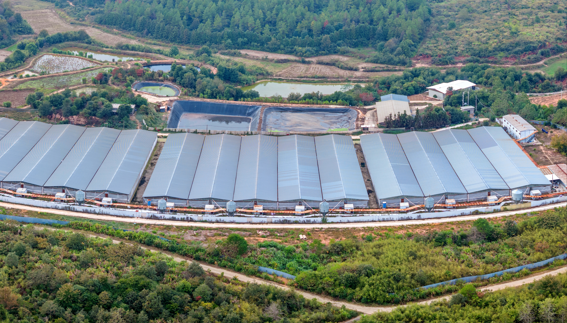
Sichuan Tieqilishi Industrial Co. also responded promptly. Since June 2025, it has shut inefficient farms and cut sows from 103,200 to 90,400 by March 2026, a 12% reduction. “We avoided losses of around 1 billion yuan by reducing 332,800 hogs,” said Cui Xizhong, President of Tieqilishi’s Hog Division.
Smaller farms are adjusting too. Jiangxi Xinxing Agriculture reduced sows from 18,000 to 13,000 by November 2025. “Cull sow prices indicated weak capacity adjustment,” said Wang Zhanjun, Chairman of Xinxing Agriculture. “Cutting 5,000 sows prevented 100,000 extra hogs from entering a weak market.”
Many farms are lowering slaughter weights. In southwest China, where heavyweight hogs are preferred, Tieqilishi has reduced average slaughter weight from over 140kg to about 125kg. Muyuan stopped selling to secondary fatteners in June 2025 and cut average weight from 129kg to below 120kg by August. “Lower weights helped us sell 3.25 million hogs early and stay profitable,” Li Yanpeng noted.
Since July 2025, China’s breeding sow inventory has declined for nine consecutive months. In March 2026, piglet numbers fell year-on-year for the first time in 17 months, easing supply pressure. According to the National Bureau of Statistics, China had 39.04 million breeding sows at end-Q1 2026, down 1.5% month-on-month and 3.3% year-on-year.
Zhu Zengyong, researcher at the Institute of Animal Science, Chinese Academy of Agricultural Sciences, said: “Prices are low due to high capacity and supply inertia. As capacity cuts take effect, prices may stabilise and recover, showing a ‘low first, high second’ trend in 2026.”
Wang Zuli, researcher at the Institute of Agricultural Economics and Development, advised: “Farms should eliminate low-yield sows, optimise feed formulas, and avoid blind expansion. The downturn is a chance to upgrade and pursue quality-based growth.”