Mutual Aid Courtyards Warm Rural Left-Behind Elderly Across China
“In the past, I stayed at home alone, making do with butter tea and tsampa for every meal,” recalled Garco, a 64-year-old villager from Duoma Village in Ruoergai, Xinjiang, shaking his head at the memory of his former life. Today, in a brand-new warm yellow two-story building in the village, Jiamo serves freshly steamed Tibetan buns on the table, while Garco sits around with his elderly friends, drinking butter tea and chatting happily as they bathe in the sun in the cozy glass room.
This small building is the “Rural Left-Behind Elderly Mutual Aid Courtyard” jointly built by China National Petroleum Corporation and the China Rural Development Association. From the snow-capped plateau to the Central Plains, these courtyards scattered in the countryside have become the most beloved “homes” for left-behind elderly people. People’s Network reports that the China Rural Development Association has launched a project to build 100 such mutual aid courtyards, aiming to solve the problems of loneliness, difficulty in eating and medical care for rural left-behind elderly.
Duoma Village, located 3,500 meters above sea level, is not an exception in the plateau pastoral area where left-behind elderly face various difficulties with their children working far away in pastures. He Zhicheng, Deputy County Mayor of Ruoergai County People’s Government, recalled his first visit to the home of an elderly person living alone in Duoma Village, Dazha Temple Town: “The double dilemma of cold meals and loneliness made building a place where the elderly can have hot meals the most urgent need.”
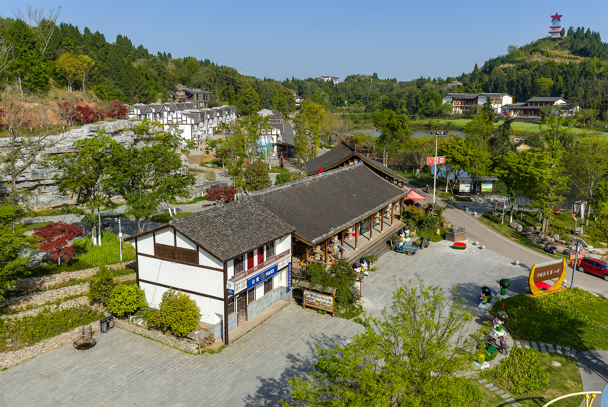
To deliver targeted assistance to those most in need, the site selection team identified the key pain points: the combination of “difficulty in traveling, difficulty in cooking and difficulty in seeing a doctor”. The same pain points exist in Liuziyu Village, Taiqian County, Henan Province, thousands of miles away. To ensure the elderly can eat well and afford their meals, cadres from the plateau to the Central Plains have put a lot of thought into finding solutions.
“Solving the problem of eating is not about providing free meals. Letting the elderly pay a little is not only participation but also dignity, which ensures the long-term operation of the courtyard,” explained Liao Taiping, a project officer from the Civil Affairs Bureau of Ruoergai County. He added that this “love account” is not just about money, but more about long-lasting warmth.
Duoma Village has set a “tiered pricing” system: a meal is priced at 20 yuan, fully free for those over 80, 5 yuan for those over 70, and 8 yuan for those over 60. Behind this is a careful “love account”: a little from individuals, a concession from enterprises, a subsidy from the government, a contribution from the village collective, and donations from society.
Building mutual aid courtyards on the plateau requires more than enthusiasm; it also needs technology. An ingenious “sunroom” has been built, with glass installed on the roof and around the walls to let sunlight into the room. The walls are specially thickened and the windows are replaced with double glazing, keeping the room warm even when the temperature drops to minus 20 degrees Celsius outside. China Tibet Network notes that such mutual aid elderly care services are supported by national policies, which encourage neighborhood mutual aid and joint support for the elderly.
Details are full of care. To address oxygen deficiency, plateau-specific energy-saving stoves are provided; to cope with strong ultraviolet radiation, electric sunshade curtains are installed. Even the entertainment area is equipped with Tibetan-style chess and cards first, allowing the elderly to feel at home as soon as they enter. Ruoergai has adopted a cooperative model where the civil affairs department handles house renovation, enterprises purchase equipment to support operation, and the village collective manages services, solving the past problem of “being able to build but not afford to maintain”.
To ensure the warmth lasts, the courtyard in Duoma Village is exploring a “public welfare + industry” model. The kitchen is open to tourists, linking with Tibetan teahouses to explore “elderly care + cultural tourism”, and an integral supermarket makes participation more beneficial. These small courtyards, filled with great love, not only provide a hot meal and a ray of sunshine but also embody deep care for the elderly in rural areas.