Parent-Child Experiential Consumption Booms, Boosting China’s Consumer Market Upgrade
In parent-child handicraft workshops, parents and children work together to create handcrafted items; in indoor pet parks, families sit around feeding animals, filling the air with laughter and joy; in front of immersive experience venues, parents queue up with their children, waiting to start interesting challenges; as soon as indoor real-life CS stores open, long queues of parent-child families form at the front desk. Such warm and interactive parent-child experiential consumption scenarios are now ubiquitous in major shopping centers across China.
Currently, China’s consumer market is accelerating its upgrade towards high quality, diversification and experientialization. As an important pillar for expanding domestic demand, family consumption is undergoing a profound transformation from single commodity purchases to full-scenario life experiences, with experiential consumption becoming an important part of the family consumption structure.
Against the dual background of evolving consumption concepts and the impact of online consumption, physical commerce faces the challenge of format innovation and passenger flow improvement. However, the release of parent-child interaction demand and the unique sense of interaction and participation of experiential consumption, which cannot be replaced by online channels, have made parent-child experiential consumption a key means to address the passenger flow anxiety of physical commerce.
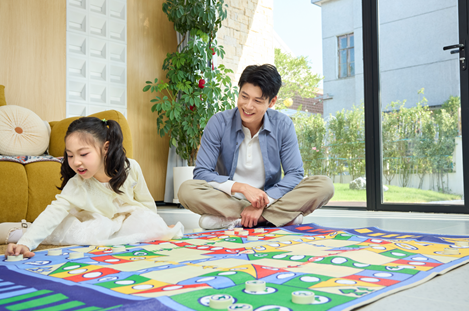
Indoor real-life CS has become a popular choice for parent-child families, with its stores covering more than 50 cities and parent-child families accounting for over 70% of its user base. Demand in this field has evolved from simply "entertaining children" to focusing on joint participation and growth empowerment. Stores transform entertainment activities into parent-child interaction classes through battlefield environment simulation and tactical collaboration design, and some even adopt intelligent systems to record data such as reaction speed and team collaboration during games, generating personal ability reports to meet parents’ quantitative needs for "education through entertainment".
Beyond urban areas of first-tier cities, there is enormous potential for such parent-child experiential consumption in suburban new areas of first-tier cities as well as second and third-tier cities. Take Jiading District in Shanghai as an example, with a permanent population of over 1.9 million, it boasts great potential for regional consumption vitality. However, such areas often lack trendy and high-quality parent-child entertainment supply, forcing parents to travel across cities for such experiences. Relevant cooperation has been established between indoor real-life CS operators and large shopping malls in these areas to build important nodes connecting cities, regions, commerce and daily life.
The rise of parent-child experiential consumption is driving a profound transformation of traditional shopping centers from commodity sales venues to emotional connection and experiential consumption spaces. Amid the wave of "accompanying economy", experiential consumption is no longer limited to a single entertainment attribute, but is upgrading to "light quality education" scenarios that integrate physical vitality, emotional value, spiritual strength and social emotional intelligence, turning one-time entertainment consumption into repeatable consumption choices.
With the continuous integration of technological empowerment and format innovation, parent-child experiential consumption will continue to radiate new vitality, injecting a steady stream of momentum into promoting the quality upgrade of China’s consumer market and further consolidating the role of family consumption in expanding domestic demand.