China’s First Comprehensive Atmospheric Survey Aircraft Completes Maiden Flight in Harbin
According to Xinhua News Agency, a specialised fixed-wing aerial platform for integrated atmospheric environmental monitoring, modified from the Yun-12F turboprop aircraft, completed its maiden flight at Harbin Pingfang Airport on 2 July.
The aircraft stands as the country’s first dedicated aerial survey platform for multi-dimensional atmospheric observation, marking a landmark technical breakthrough under a national key research and development initiative focused on high-sensitivity airborne detection of multi-pollutants and cloud-water chemical properties. The project falls within a special national programme governing integrated pollution control across air, soil and groundwater systems, delivering a robust vertical monitoring tool for regional air quality assessment nationwide.
The atmospheric survey variant is built upon the Yun-12F airframe, engineered by AVIC Harbin Aircraft Industry Group as an eight-tonne twin-turboprop general and feeder aircraft with generous cabin space and substantial payload capacity.
Extensive full-aircraft integration and modification work has been carried out to accommodate more than sixty custom mission sensors, tailored to capture atmospheric particulate matter, gaseous pollutants, greenhouse gases, alongside physical and chemical parameters of clouds and water vapour. The integrated airborne survey suite delivers detection precision and sensitivity aligned with top-tier international benchmarks, enabling simultaneous layered sampling of multiple atmospheric compositions during flight.
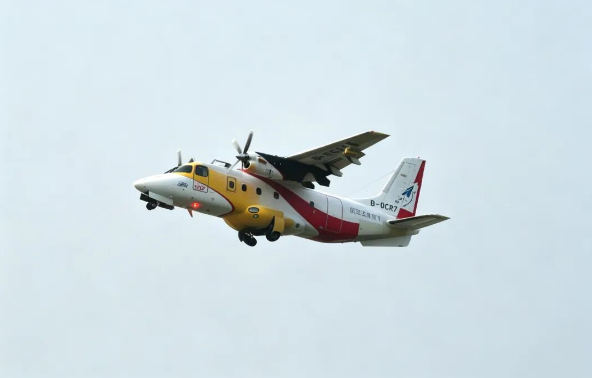
The base Yun-12F airframe holds a unique certification record among China’s civil aviation portfolio, having secured type certificates issued by the Civil Aviation Administration of China, the United States Federal Aviation Administration and the European Union Aviation Safety Agency, opening global operational access for the domestic aircraft design. The proven airworthiness credentials and flexible load-bearing layout underpin the platform’s suitability for long-duration environmental data collection missions across diverse climatic zones.
Extended flight trials totalling over thirty hours lie ahead for the modified atmospheric aircraft. Test flights will unfold across a range of altitudes and meteorological conditions to validate the full functional performance of all onboard detection instruments, calibrating sensor response under variable humidity, temperature and pollution concentration profiles.
Ground-based monitoring stations and satellite remote sensing systems form the backbone of routine national air quality surveillance, yet airborne platforms fill critical gaps by capturing vertical stratification data that surface equipment cannot replicate. The Yun-12F atmospheric survey aircraft will support targeted pollution source tracing, transport pathway analysis and climate-related greenhouse gas profiling across major urban and industrial regions, complementing existing environmental monitoring infrastructure. Continuous calibration flights and cross-regional observation campaigns will generate consistent, high-resolution datasets to inform scientific research and coordinated air quality governance work across administrative boundaries.
热门内容推荐