Summer Travel Rush Kicks Off with Sharp Airfare Falls, Flights Cheaper Than High-Speed Rail on Many Routes
According to industry travel analytics platforms, China’s annual summer travel peak officially commenced on 1 July, with steep airfare cuts across mainstream domestic routes in early July pushing flight tickets below second-class high-speed rail fares and triggering a sharp uptick in reservation volumes.
Latest figures released by TravelSky show that domestic flight bookings for July surpassed 27.35 million as of 7 July, marking an 89 per cent week-on-week rise, while cross-border flight reservations hit 5.92 million, representing a 19 per cent week-on-week growth rate.
Social media feeds carry widespread user commentary on the rapid slump in air ticket prices. Some travellers report booking return flights to Urumqi in late April only to find fares cut by 1,000 yuan one day prior to departure, while others note a 200-yuan reduction on Shenzhen-Chengdu flights they purchased in early June.
Real-time fare tracking data from Flight Manager records average economy ticket prices during the summer travel window sitting below figures seen in 2025 and 2019. The average fare on 5 July, the fifth day of the travel rush, stood at 831.5 yuan, a 2.3 per cent drop year-on-year against 2025 and a 7.6 per cent fall compared with 2019. The average price on 4 July reached 822.4 yuan, down 2.3 per cent from 2025 and 2.4 per cent from 2019.
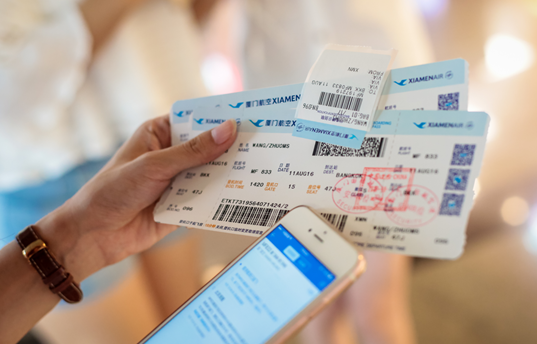
Live checks on mainstream ticketing platforms carried out on 7 July reveal reduced fares for flights departing Hangzhou bound for Guangzhou, Beijing, Zhengzhou and Shenzhen, with tickets priced between 200 and 300 yuan. Numerous routes list base fares before surcharges under 200 yuan, including the Chongqing-Daocheng service available for 199 yuan across travel dates from 12 to 17 July.
Qunar Travel data records average pre-tax booking prices for domestic flights departing between 1 and 7 July nearly 20 per cent lower than the equivalent period last year. Multiple routes carry all-in airfares under parallel high-speed rail costs. The fully taxed Beijing-Wuhan flight on 2 July cost 450 yuan, 80 yuan less than the corresponding high-speed rail ticket, while return flights between Beijing and Ningbo for the first week of July totalled less than 1,000 yuan against high-speed rail fares close to 1,400 yuan.
An industry analyst from Qunar Travel Research Institute explains that most primary and secondary schools arrange summer break starting around 10 July, yet airlines have rolled out large volumes of additional summer peak flights from early July. Total flight schedules and daily operational rates remain elevated, creating ample short-term seat capacity before mass tourist demand concentrates, directly suppressing average air ticket prices in early July. Multiple listed airline carriers have introduced extra services and opened new routes through the summer months to capture seasonal travel demand.
Major carriers will maintain expanded flight schedules through August to match the staggered release of student holiday travel flows, adjusting pricing tiers dynamically to balance seat occupancy and passenger uptake across mid-to-late July and August. Ticketing platforms will continue rolling out targeted promotional fares for regional tourist destinations to sustain booking momentum throughout the summer travel cycle.
热门内容推荐