2026 Low-Altitude Industry Development Conference Held, Boosting Trillion-Yuan Industry Growth
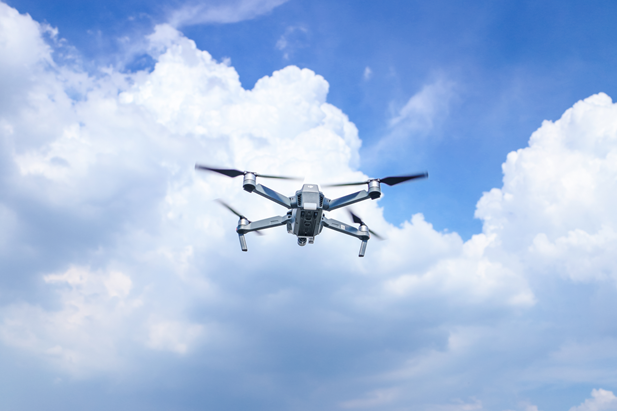
A drone hovers over the river, precisely delivering daily supplies to an intelligent unmanned cruise ship; on the opposite bank, an unmanned helicopter airdrops emergency materials smoothly to the designated area. This vivid flight operation scene became a reality recently at the 2026 Low-Altitude Industry Development Conference hosted by Aviation Industry Corporation of China (AVIC).
According to China Daily, low-altitude economy has been included in the government work report for three consecutive years from 2024 to 2026, evolving from a "new growth engine" to an "emerging industry" and further to an "emerging pillar industry". The outline of the "15th Five-Year Plan" proposes to "promote the healthy and orderly development of the low-altitude economy".
Wu Ximing, Chief Technical Expert of AVIC, stated that this fully demonstrates the country’s determination to cultivate and expand emerging pillar industries and build a modern industrial system, injecting policy momentum into the trillion-yuan low-altitude industry track. "Equipment is the foundation and technology is the key to transforming low-altitude economy from a concept to industrialization," he added.
Fan Huitao, Academician of the Chinese Academy of Engineering, noted, "Innovation is the essential feature of aviation, and aviation technology drives major scientific and technological achievements in materials, electronics and advanced manufacturing." According to Xinhua News Agency, a number of new technologies, products and achievements in the low-altitude economy field have emerged in recent years, reflecting China’s strong momentum in technological innovation.
Currently, the AG600 Kunlun large amphibious aircraft has moved from model development to practical application, performing forest fire fighting tasks in Guangdong and enhancing the province’s aviation rescue capacity. The AS700 Xiangyun manned airship has obtained China’s first domestic production license for manned airships, with its electric version completing its first scientific test flight.
At the conference, AVIC released 6 key new low-altitude products independently developed, including the AC332 civil helicopter and the AR-E800 unmanned air cargo system. The AR-E800, China’s first 800kg-class heavy-duty electric vertical take-off and landing aircraft, can undertake tasks such as equipment transportation and emergency material delivery.
Industry experts said that driven by airspace management, equipment innovation and infrastructure construction, China’s low-altitude industry is accelerating its transformation from "taking off" to "being put into use". Application scenarios have extended to urban air distribution, scenic spot sightseeing, mountain logistics and emergency rescue.
Emphasizing that "safety is the lifeline of low-altitude economy development", Wu Ximing stressed the need to build a comprehensive test and verification system, improve the whole-life cycle operation safety management, and strengthen cooperation with all sectors to ensure the healthy development of the industry.