China’s First Heavy-Haul Railway Hydrogen Refueling Station Hits 10,000kg Refueling Milestone
As of April 16, China’s first heavy-haul railway hydrogen refueling station — the China Energy Group Batuta Hydrogen Refueling Station — has achieved a cumulative hydrogen refueling volume exceeding 10,000 kilograms. This milestone marks a phased achievement in the large-scale application of hydrogen energy in China’s heavy-haul railway sector, laying a solid foundation for the high-quality development of the hydrogen energy industry.
Xinhua News Agency reports that the Batuta Hydrogen Refueling Station is located at Haileshao South Station in Ejin Horo Banner, Ordos City, Inner Mongolia. It is equipped with a 45MPa skid-mounted compressor, high-flow hydrogen refueling machines, water chillers and a 15-cubic-meter hydrogen storage cylinder group, boasting a total hydrogen storage capacity of 800 kilograms and a maximum refueling flow rate of 7.2 kilograms per minute.
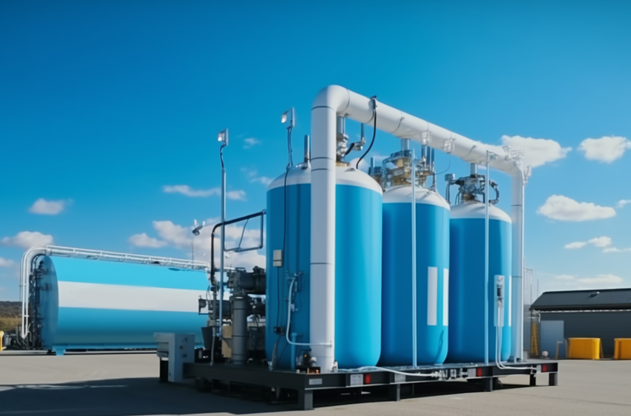
With a daily hydrogen refueling capacity of 500 kilograms, the station provides refueling services for domestic high-power hydrogen energy-powered shunting locomotives and zero-emission catenary operation vehicles equipped with "hydrogen fuel cells + lithium-ion power batteries". It is also equipped with an intelligent station control system, which realizes automatic reset, fault alarm and other functions, improving lean management efficiency and strengthening the safety production line through digital means.
China National Radio notes that the station is equipped with the world’s first low-temperature-resistant automatic hydrogen refueling robot independently developed and manufactured in China, which can work continuously around the clock and conduct high-flow automatic hydrogen refueling at a minimum temperature of minus 25 degrees Celsius. This robot has obtained China’s first explosion-proof certificate for hydrogen refueling robots after strict testing.
Zhang Kai, a technical personnel at the Batuta Hydrogen Refueling Station, said the automatic hydrogen refueling robot can complete the entire refueling process without manual intervention, including opening the explosion-proof cabin door, clamping the refueling gun, visual identification, inserting the refueling port, automatic locking and resetting. It adopts advanced force control soft floating technology and anti-interference 3D vision cameras to ensure accurate positioning and safe operation.
The station is expected to reduce carbon dioxide emissions by about 800 tons annually, as the hydrogen fuel it supplies can support a hydrogen-powered locomotive to operate continuously for 8 hours with an empty-load range of 800 kilometers. China News Service points out that hydrogen energy has unique advantages in long-distance heavy-haul transportation and alpine areas, where pure electric vehicles are less competitive.
The cumulative refueling volume exceeding 10,000 kilograms fully demonstrates the maturity and reliability of China’s hydrogen energy application technology in the heavy-haul railway field. As a key project for China’s energy transformation, the Batuta Hydrogen Refueling Station not only provides a practical model for the large-scale promotion of hydrogen energy in the transportation sector but also injects strong momentum into the country’s "dual carbon" strategy and the high-quality development of the new energy industry.