Chinese High-End Scientific Instruments Break Monopoly, March Toward Global Market
As the "eyes" of scientific research, scientific instruments are the most dazzling pearl in the crown of manufacturing, with high-end ones serving as the cornerstone of cutting-edge scientific research, industrial innovation and quality inspection, which is crucial to China’s technological self-reliance and self-improvement. An increasing number of Chinese enterprises are forging ahead in this distinctive track featuring small batches, diverse varieties and high thresholds, accelerating their march into the high-end market through technological breakthroughs, market exploration and overseas expansion.
In the field of life science optical imaging, super-resolution microscopes are core equipment for microscopic cell research. This April, a Beijing-based enterprise launched a "1+4" product matrix focusing on the confocal imaging technology route, realizing for the first time in China the integration of different imaging technologies such as super-resolution, label-free, light labeling and structured light illumination into traditional spinning disk confocal products, expanding the application of confocal technology in the life science field.
Its core technology can achieve 60-nanometer resolution for living cells under pure optical conditions, with performance equivalent to or even superior to similar European and American products, enabling high-resolution observation of living cells in both temporal and spatial dimensions. Since its establishment in 2021, the enterprise has broken the monopoly of foreign brands in China’s high-end optical imaging field, maintained the top position in the domestic super-resolution microscope market since 2024, and completed the delivery of its first batch of overseas orders in 2026.
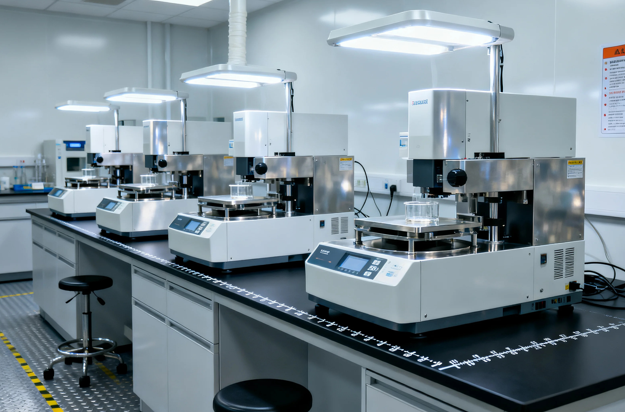
Another leading domestic scientific instrument enterprise has steadily promoted domestic substitution through 20 years of in-depth cultivation. When it was founded in 2006, there was a huge gap between domestic and imported instruments. Its nitrogen determinator, developed in line with top European and American technical standards, reshaped the market pattern after its launch, forcing the price of similar imported products to drop sharply. Now, the enterprise holds a 40% market share in this domestic segment, with its R&D investment accounting for more than 13% in the past five years and the self-sufficiency rate of key components reaching 60% to 70% for its two best-selling products.
China’s scientific instrument industry has formed a professional and refined industrial ecology, supported by the growing demand for refined detection in various industries amid domestic industrial upgrading. The 19th China Scientific Instruments Development Annual Conference recently held gathered more than 1,800 insiders from government, industry, academia, research and other fields, with over 100 instrument enterprises displaying their core products to show their efforts in moving towards high-end upgrading.
Beijing, the Yangtze River Delta and the Guangdong-Hong Kong-Macao Greater Bay Area have become core clusters of China’s scientific instrument industry, relying on abundant scientific research resources. Haidian District in Beijing, for instance, has gathered more than 200 scientific instrument-related enterprises, with an industrial income of 12.1 billion yuan in 2025. According to the regional industrial plan, the number of related enterprises in the district will exceed 350 and the industrial scale will rise to 20 billion yuan by 2030, supported by local government’s special three-year development plan.
After years of in-depth development, China’s scientific instrument industry has achieved leapfrog progress, with the domestic substitution rate of general-purpose instruments continuously rising and local enterprises accelerating their overseas expansion. Insiders remind that rational thinking is needed amid the "overseas expansion upsurge". The key to valuable overseas expansion lies in entering the European and American markets and realizing independent R&D of high-end instruments as well as independent control of core components and supply chains.
The integration of AI and scientific instruments is expected to reshape the industry pattern. AI will promote the intelligent development of the scientific instrument industry, with enterprises likely to provide a complete set of solutions instead of just hardware and supporting software in the future. The impact of AI on scientific instruments has evolved from "auxiliary tool" to "symbiotic evolution", reshaping the design logic, operation paradigm and even industrial pattern of instruments. China’s scientific instrument and inspection industry is entering a stage of structural upgrading, which requires long-term patience in government policy support and enterprise R&D investment.