China’s Largest Integrated Solar-Hydrogen-Storage Complex Completes Construction in Rudong, Jiangsu
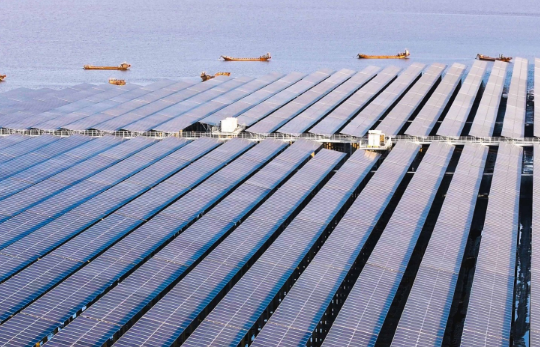
According to Xinhua News Agency Jiangsu Branch, the nation’s largest integrated solar, hydrogen and energy storage facility, developed by Guohua Investment under China Energy Investment Group in Rudong of Jiangsu Province, reached full completion on 10 June and will operate under an integrated source-grid-load-storage-hydrogen framework.
The site sits within Yangkou Port, Rudong County, equipped with solar arrays delivering a total installed capacity of 400 megawatts. Supporting infrastructure includes a newly built 220kV onshore step-up substation, an electrolyser unit with a hydrogen production capacity of 1,500 standard cubic metres per hour, and an electrochemical energy storage station. Together these assets create a closed industrial chain covering green power generation, energy storage and hydrogen conversion.
Annual power output from the photovoltaic installation hits 468 million kilowatt-hours, sufficient to meet the annual residential electricity demand of roughly 200,000 households. Operation of the complex cuts carbon dioxide emissions by more than 300,000 tonnes each year. The attached battery storage facility mitigates fluctuations in power output from intermittent renewable assets and lifts the grid’s capacity to absorb clean electricity supply.
The electrolysis plant manufactures 482 tonnes of high-purity green hydrogen per annum through electrolysis powered entirely by locally generated solar power, forming a zero-carbon production cycle without fossil fuel input. All green hydrogen produced at the site is allocated to industrial and transport consumers across the Yangtze River Delta region, while matching hydrogen refuelling stations come online concurrently to form a complete supply chain for green hydrogen end use.
This coastal integrated scheme also serves as a demonstration model combining renewable energy development and coastal wetland ecological management. Excess solar power generated during peak daylight hours is channelled straight to the hydrogen production equipment, turning otherwise wasted clean electricity into storable hydrogen fuel that can be dispatched to balance power supply during low solar irradiance periods.
Plans are in place to roll out matching green hydrogen supply networks across the Yangtze River Delta in successive phases. Additional electrolysis and storage facilities linked to onshore and coastal photovoltaic bases will be commissioned in coming cycles to expand the scale of zero-carbon hydrogen supply for manufacturing, logistics and power balancing applications across eastern China.