China Energy Group’s Installed Power Capacity Hits 400GW Following Hainan Offshore Wind Turbine Grid Connection
According to domestic energy industry news outlets, Unit 9 of Longyuan Power’s Qiyuan offshore wind farm in Dongfang, Hainan, successfully connected to the grid on 22 June, lifting China Energy Group’s total installed power generation capacity past the 400 gigawatt threshold. The country’s aggregate installed power capacity stands at roughly 4,000 gigawatts at present, meaning the group operates approximately one tenth of China’s nationwide generating assets.
This newly commissioned offshore wind scheme in eastern Hainan marks the group’s first offshore wind development launched on Hainan island, and ranks as the southernmost operational offshore wind project across China’s territory. Detailed ecological planning underpins the site’s construction layout; turbine locations are carefully calibrated to steer clear of seasonal habitats for Indo-Pacific humpback dolphins. Horizontal directional drilling, a trenchless installation method, is deployed for subsea cable laying work to minimise disruption to coastal vegetation and nearshore marine ecosystems. Site crews combine trenchless directional drilling with drone magnetic field detection throughout subsea cable engineering works. The installation of two 1,536-metre protective conduits took merely 31 calendar days to complete, securing the country’s second-longest record for land-to-sea directional drilling construction.
China Energy Group advances national new energy security frameworks by adhering to a development model centred on coal-fired power as the foundation and electricity generation as its core operation. Clean, high-efficiency coal power facilities are built close to major power load centres, while large-scale renewable energy bases take shape across desert and Gobi zones in northwest China, hydro-wind-solar complexes in southwest provinces and coastal offshore wind zones. The group’s installed capacity has maintained consistent upward momentum, climbing past 300 gigawatts in August 2023 before reaching the landmark 400 gigawatt mark in June 2026, setting a new global benchmark for power generation capacity held by a single energy enterprise. Its coal-fired and wind power installed capacities each retain the top global ranking, with renewable assets accounting for more than 41 per cent of the group’s overall generation portfolio.
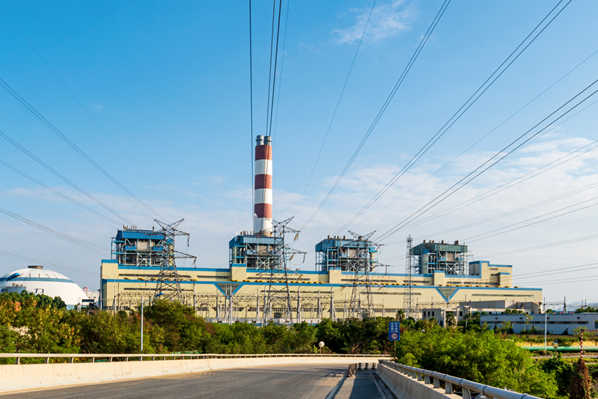
By the end of May 2026, the group had brought 65 ultra-supercritical coal-fired units of one gigawatt or larger into commercial operation, accounting for nearly 30 per cent of all identical unit fleets nationwide and cementing its leading domestic position in high-efficiency low-carbon coal power. Multiple gigawatt-scale wind clusters have been finished, forming extensive wind generation hubs spanning north-western, northern and north-eastern regions. Solar photovoltaic capacity undergoes rapid expansion via large photovoltaic bases built across arid desert, Gobi and barren land in the northwest. Cascade hydropower developments progress along river basins including the Dadu, Jinsha and Kaidu waterways, with its ongoing hydropower installation scale leading all comparable energy operators in the sector. The group builds integrated wind-solar-storage-hydrogen facilities and coordinated source-grid-load-storage systems, with operational new energy storage assets totalling 8.01 gigawatts / 19.21 gigawatt-hours to lift flexibility for renewable energy absorption and grid regulation.
Within the 400 gigawatt total installed capacity portfolio, Beilun Power Plant holds the title of the world’s largest single coal-fired power station, while Anji Gas Turbine Plant operates the country’s highest-capacity, most efficient gas-fired generating units. Phase Two of Changzhou Power Plant in Jiangsu is China’s first major technical equipment project in the energy sector fully aligned with updated new-generation coal performance standards. The 1,000-megawatt offshore photovoltaic scheme developed by Guohua Investment in Shandong represents the world’s largest open-sea photovoltaic facility to achieve grid connection. The Tengger Desert New Energy Base in Ningxia stands as China’s inaugural gigawatt-scale desert and Gobi renewable complex, supplying replicable construction frameworks for equivalent green energy projects worldwide. Shuangjiangkou Hydropower Station on the Dadu River features the planet’s tallest concrete dam, resolving technical barriers to dam construction at high-altitude frigid zones and sharing transferable digital construction solutions for equivalent international engineering schemes.
Research and development teams at China Energy Group address core technical bottlenecks across the power sector. Big data, cloud computing and internet-of-things infrastructure underpin the Jishi intelligent dispatch platform, delivering streamlined coordinated regulation for the group’s diversified 400-gigawatt energy asset portfolio. The Qinyuan trillion-parameter artificial intelligence large model for power generation has been rolled out for industrial application, deployed widely across unit maintenance, energy consumption optimisation and equipment fault diagnosis scenarios to raise precision rates for advance fault forecasting. Digital transformation programmes upgrade conventional coal and hydropower assets, with the Yunshui Hydropower intelligent platform and multiple demonstration smart power stations now fully operational. Digital twins, intelligent sensor arrays and unmanned inspection equipment enable real-time operational monitoring, accurate fault prediction and autonomous performance adjustment for generating units. Conventional power production workflows shift towards intelligent, high-efficiency and refined operational models, delivering steady innovative momentum for the development of China’s new-type power system.