Cultural-Tourism Integration Takes Root Across China As Immersive Experiences And Sports Events Fuel Record Consumption
According to official statistics issued by the Ministry of Culture and Tourism, China’s domestic tourism market hit all-time highs last year, with domestic travellers logging more than 6.5 billion trips, marking a 16.2 per cent year-on-year rise, while total tourism spending stood at 6.30 trillion yuan, up 9.5 per cent from the prior year.
The first day of the Dragon Boat Festival holiday brought bustling crowds to Xi’an, where immersive Tang-dynasty nightscapes invite visitors to exchange verses with costumed performers portraying Du Fu and Bai Juyi. Beneath the ancient city walls, crowds wander in Hanfu robes, sample local mutton soup buns and listen to live folk music, blending classical aesthetics with everyday street atmosphere.
Modern travellers no longer confine their itineraries to landmark sightseeing. Younger visitor groups actively seek immersive, participatory encounters with local life. Scenic sites have rolled out interactive performance formats that shift visitor roles from passive onlookers to co-participants, while rural tourism offerings include farm labour, fruit picking and village evening galas to deliver tranquil countryside leisure.
The 15th Five-Year Plan Outline sets clear direction for the sector, mandating vigorous expansion of cultural tourism, leveraging cultural resources to drive economic and social progress, and advancing deeper integration between cultural offerings and tourism services. New consumer scenarios and business models keep emerging as the integration framework matures nationwide.
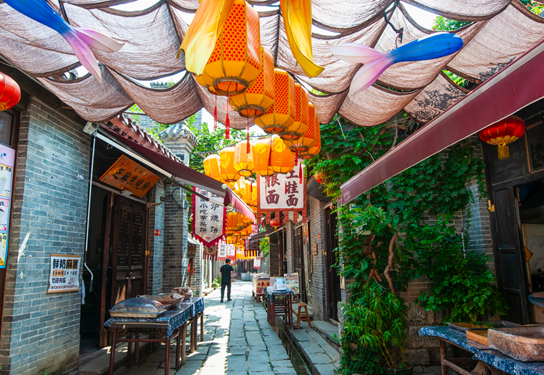
Travel consumption has shifted decisively from superficial snapshot sightseeing to experience-focused journeys that deliver richer emotional reward. Fenghui Ancient Town in Shaoxing, Zhejiang, blends preserved historic architecture with youthful vitality. After comprehensive restoration work, the town has invited veteran craftspeople back to operate workshops, delivering authentic traditional craft experiences for visitors. A septuagenarian representative inheritor of barrel-making techniques has resumed his craft, with queues forming outside his wooden workshop each day. Tourists can learn to carve wood shavings, assemble miniature barrels and take finished handicrafts home as souvenirs. Travellers arriving from Hunan have spoken of the town’s multi-layered appeal, which combines classical opera, hands-on craft sessions and seasonal local delicacies that encourage full audience engagement. The town welcomed nearly 870,000 visitors last year.
Cultural and tourism development stands as a core channel for satisfying residents’ demands for higher quality lives. Demand for ancient towns, intangible cultural heritage displays and village galas continues climbing, with integrated cultural-tourism frameworks reshaping travel patterns into slow-paced, experience-led consumption that carries substantial untapped market potential.
Cross-industry linkage creates fresh avenues for industrial upgrading beyond cultural sector boundaries. Short drama Invitation to Taiyuan premiered recently, weaving the city’s landmarks, local cuisine and natural scenery into its plotlines. Travellers from Heilongjiang have used the series as a bespoke travel guide, touring ancient buildings and sampling street food alongside on-screen characters. Elsewhere in Guangdong, the hit feature film Letter to Grandma prompted Shantou authorities to launch themed travel routes themed around the motion picture.
Building cultural appeal through travel and showcasing cultural heritage via tourism has become a mainstream innovative path for cultural industry reform. Regional authorities now back the production of short dramas and feature films that embed local cultural characteristics, lifting regional visibility and drawing visitors to follow on-screen storylines across landscapes and cultural sites. Officials from the Ministry of Culture and Tourism note that cross-sector integration represents an irreversible trend, with no single industry able to thrive in isolation. Policy support will centre on nurturing travel brands themed around stage performances, film and television productions, sports tournaments and intangible heritage to match evolving public demand.
Tourism footfall translates directly into tangible consumption growth that lifts national economic performance. Domestic visitors repeatedly travel to Rongjiang County in Guizhou to attend grassroots village football matches, combining match viewing with visits to Dong villages, boutique homestays and local markets. The county, once designated an impoverished area, recorded a regional GDP of 10.914 billion yuan in 2025, with the grassroots football league delivering significant spillover economic benefits. Catering sector revenue alone exceeded 1.4 billion yuan within the county last year, demonstrating how a single mass sporting event can revitalise an entire county’s commercial ecosystem.
Grassroots sporting competitions including village football leagues, village basketball leagues and regional amateur football tournaments operate as powerful catalysts for tourism, consumption and regional economic vitality. The Suqian Amateur Football League in Jiangsu remains in full swing, with outdoor viewing zones laid out across Sihong County for locals and tourists to enjoy fixtures alongside urban cultural sightseeing. Multiple scenic spots in Lianyungang have rolled out match-linked promotional offers, converting match audiences into steady visitor streams.
References to building a culturally strong nation and a tourism powerhouse are embedded within the 15th Five-Year Plan Outline. Officials with the Ministry of Culture and Tourism confirm that cultural and tourism development will be aligned with broader national strategic priorities across the planning cycle, unlocking the sector’s capacity to cultivate public temperament and fuel widespread economic and social advancement.