Guizhou Transforms Derelict Industrial Sites Into Immersive Factory Tourism Destinations Under National Policy Push
According to China Youth Daily and CRI Online reports, seven central government departments including the Ministry of Culture and Tourism and the Ministry of Industry and Information Technology jointly released policy guidance in late May this year, outlining comprehensive support for factory tourism expansion and full utilisation of nationwide industrial heritage resources, with dedicated backing for tourism built around disused industrial premises. Authorities in Guizhou Province have rolled out a string of pioneering regeneration schemes for abandoned industrial sites, crafting fresh, engaging visitor experiences within former factory premises.
1964 Cultural and Creative Park in Zunyi stands as a flagship benchmark of this provincial regeneration work, built on the original site of Changzheng Electrical No.12 Factory, a major industrial facility constructed during the 1970s Third Front construction campaign. The Third Front Museum and art galleries housed within the restored factory buildings remain the core cultural draw, drawing steady streams of visitors each day. Descendants of workers from the Third Front era regularly revisit the complex with family members; many return multiple times, finding vivid preserved machinery and production components that rekindle personal memories of the region’s industrial past.
The museum within the park welcomes roughly 100,000 guests every twelve months. Upcoming plans include regular themed salon events paired with AI-derived cultural merchandise to deepen and diversify on-site exhibition offerings. Recognised as China’s first cultural park centred on Third Front industrial legacy, the site has secured designation on the fourth national register of industrial heritage, having operated continuously for a full decade. Curated mixes of onsite activities and multi-layered commercial offerings form the core strategy to sustain consistent visitor footfall. Over the previous calendar year, the venue hosted 144 distinct events spanning art exhibitions, live music competitions, specialty coffee pop-ups and original cultural merchandise fairs, evolving into a vibrant urban cultural hub where historic industrial fabric blends seamlessly with contemporary creative activity.
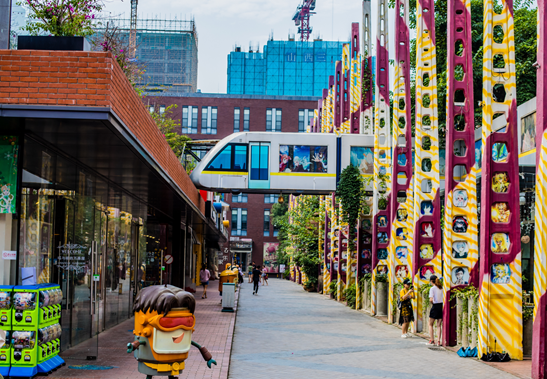
Visitor volumes doubled last year to hit approximately 500,000 arrivals. Regeneration works adhere strictly to conservation principles that retain original external architectural features without structural alteration, leveraging cultural assets to attract commercial tenants and maintain an occupancy rate of around 90 per cent. Ongoing operational adjustments aim to strike balanced proportions between cultural programming and leisure tourism amenities across the park’s footprint.
Wanshan Cinnabar Ancient Town in Tongren delivers an alternative blueprint for revitalising dormant industrial heritage, built on the former Guizhou Mercury Mine site. All underground mining tunnels, original residential streets and factory premises retain unaltered authentic fabric, letting guests observe and engage with tangible records of heavy industrial development spanning generations. International travellers visiting the site highlight the immersive, unmodified historic landscapes as a standout attraction that sets the destination apart from conventional sightseeing locations.
Moving beyond passive exhibition formats, the scenic area has reconstructed full mid-to-late twentieth century mining community living scenes, rolling out a broad portfolio of interactive experiences including underground mine exploration and period street immersive activities. Staff cast as non-player characters wander the restored thoroughfares to interact organically with visitors across the compound. Operators have consolidated ninety-one separate heritage structures including abandoned workshops and subterranean mining tunnels into one cohesive visitor zone.
The site’s core operational framework hinges on integrated film production and cultural tourism, supplemented by bespoke immersive features including roving period NPC performances and full-length period drama location shoots. Nine distinct narrative scripts and matching set environments have been custom-built to place visitors at the centre of historical storylines, converting static preserved relics into fully interactive open-air performance spaces. The broader Wanshan mercury mine heritage complex features on China’s Tentative List for World Cultural Heritage. Teams will scale up film location services and educational study tour provisions, while establishing cross-border premium industrial tourism itineraries linking the site with Fanjing Mountain and Fenghuang Ancient Town across the Guizhou-Hunan provincial boundary. Coordinated management mechanisms will align heritage conservation, World Heritage nomination work and cultural tourism sector growth moving forward.
Across Guizhou, forty-eight sites hold provincial industrial heritage accreditation, with eleven of these entries also classified as national-level industrial heritage assets. The province holds rich, diversified industrial heritage archives, with standout examples originating from Third Front construction, wartime industrial relocation, mineral extraction and traditional fermentation production sectors. Cross-department coordination mechanisms will be strengthened in the period ahead, supporting deeper academic research into the cultural and historical value embedded within each heritage site. Targeted programmes will advance systematic protection and integrated multi-purpose utilisation, aligning the intrinsic historical significance of industrial relics with functional contemporary cultural and tourism applications.
Provincial industrial authorities will roll out unified standards for heritage site renovation and visitor service infrastructure, extending technical guidance to municipal and county operators managing factory tourism projects. Additional investment channels will be opened to fund immersive experience upgrades, digital exhibition technology and cross-regional tourism route connectivity across Guizhou’s network of preserved industrial premises.