Agricultural Technological Innovation Unlocks "Code" for Grain Yield and Efficiency
The 2026 Government Work Report proposes to "solidly promote all-round rural revitalization", "intensify the implementation of the new round of the 100-billion-jin grain production capacity improvement campaign" and "break through the 'last mile' of agricultural technology promotion". Against the backdrop of technology reshaping the future of agriculture, how to further tap the potential for yield increase and achieve efficiency and quality improvement has become a key focus.
During the Two Sessions, discussions were held to explore how to unlock the "technological code" for grain yield and efficiency through the whole-chain agricultural technological innovation, with insights from professionals engaged in agricultural research and industrial practice.
The transformation of farmland irrigation methods has brought remarkable benefits, shifting from "irrigating the land" to "irrigating the seedlings" with drip irrigation technology. Compared with traditional flood irrigation, drip irrigation has obvious advantages in water conservation, yield increase, efficiency improvement and ecological protection — four key benefits summarized by relevant experts.
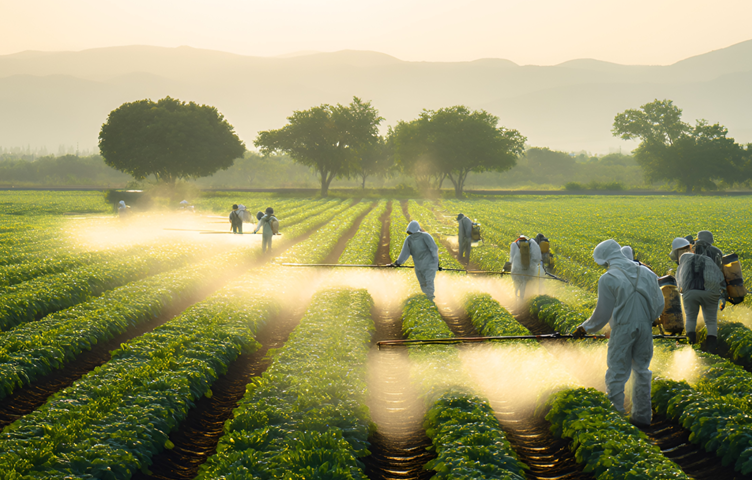
Drip irrigation can reduce water consumption per mu to about 260 cubic meters, saving more than 25% of water. By delivering water and fertilizer directly to the root zone of crops for precise supply, it enables corn yield per mu to exceed 1,000 kilograms in arid and semi-arid areas in central and western China. In terms of efficiency, one person can manage about 1,000 mu of land with drip irrigation, compared with only 10 mu per day with traditional methods, freeing farmers from heavy physical labor. Additionally, precise application of water and fertilizer reduces negative impacts on soil and ecology.
Despite these significant benefits, the promotion of drip irrigation still faces challenges. It is suggested that the state introduce incentive policies to help the technology cross the "last mile" and truly benefit ordinary farmers and small plots.
Precise and intelligent nutrient management is another key to improving grain production efficiency. In 2025, the utilization rate of chemical fertilizers for China’s three major grain crops reached 43.3%, 3.1 percentage points higher than that in 2020, with room for further improvement. To address the problem of advanced technologies failing to take root in fields, a mobile-based "fertilization consultant" — the "NE Nutrient Expert System" — has been developed.
Farmers can obtain customized fertilization plans by simply inputting the crop type and target yield on their mobile phones. This technology has been promoted in 31 provinces, municipalities and autonomous regions, covering 28 crops including rice, corn and wheat. In a large-scale rice farm in Jiansanjiang, Heilongjiang, the application of this method reduced fertilizer usage by 18% and increased per mu yield by 6% to 10% for two consecutive years, reaching the local maximum yield level. Efforts are also underway to develop an "AI intelligent fertilization model" that dynamically adjusts topdressing plans based on weather changes and real-time sensor data.
Enterprise practice has also played an important role in advancing agricultural technology. A leading agricultural enterprise has made new breakthroughs in fertilizer efficiency technology, participating in the formulation of industry, national and international standards for controlled-release fertilizers. Its bio-based coated slow-release fertilizer technology has won a national technological invention award, realizing precise nutrient release and efficient utilization. By integrating imported German technology with independent R&D, the enterprise has formed three core technologies covering key links of fertilizer upgrading, and its soil-water-fertilizer coupling technology for drip irrigation scenarios has been promoted nationwide, saving water resources and improving fertilizer utilization rate.
The "introduction" and "going global" of agricultural technology not only accelerate domestic agricultural modernization but also contribute Chinese wisdom and solutions to global food security and sustainable agricultural development. While China leads in many fields, international cooperation is still needed in cutting-edge areas. On the one hand, key technologies and components are being introduced; on the other hand, China’s advantages in nutrient management for small-scale farmers and complex land conditions are being shared globally, with controlled-release fertilizer technology having achieved leapfrog development from following to leading the world.
From drip irrigation’s four key benefits to precise fertilization technologies and enterprise innovations, a clear picture of agricultural technological innovation is taking shape, driving grain production towards higher yield, efficiency and quality.