China Advances Green Transition of Small Hydropower for Rural Prosperity and Clean Energy
Seven government departments, including the Ministry of Water Resources and the National Development and Reform Commission, have recently jointly issued a guideline on accelerating the green transition and high-quality development of small hydropower.
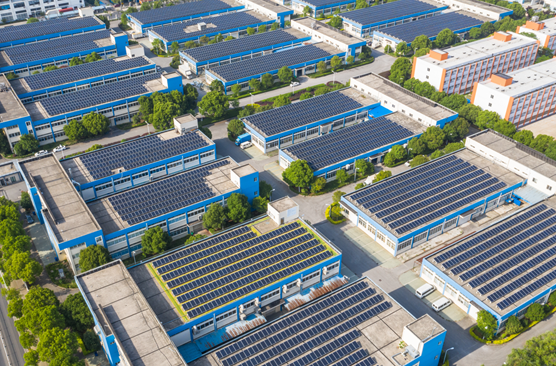
The guideline clearly outlines three key objectives: integrating the green renovation of small hydropower with the construction of a new rural energy system, the building of happy rivers and lakes, and the development of ecological and cultural tourism to promote common prosperity in rural areas; advancing the construction of multi-energy complementarity, implementing integrated development of water, wind, solar and energy storage, and building system-friendly clean energy complexes; and giving play to the advantages of small hydropower as distributed power sources to improve the reliability of rural power supply.
Small hydropower, as a clean energy widely distributed in rural areas, holds irreplaceable multiple values in rural development. It serves as a stabilizer for rural energy supply, effectively supporting power supply at the end of power grids and improving the reliability and quality of power supply in rural areas, mountainous regions and islands. It also reduces rural residents’ electricity costs and can act as an emergency power source with black-start capability in extreme disasters, ensuring basic production and living electricity needs in rural areas and safeguarding the bottom line of rural energy security.
The green renovation of small hydropower plays a vital role in driving rural common prosperity. It acts as a new engine for rural collective economy, with some regions supporting rural collectives to invest in small hydropower projects in the form of resources and funds, linking with rural revitalization funds. This transforms local water energy advantages into economic advantages, steadily increasing rural collective income, boosting farmers’ employment and income growth, and providing industrial support for county-level common prosperity.
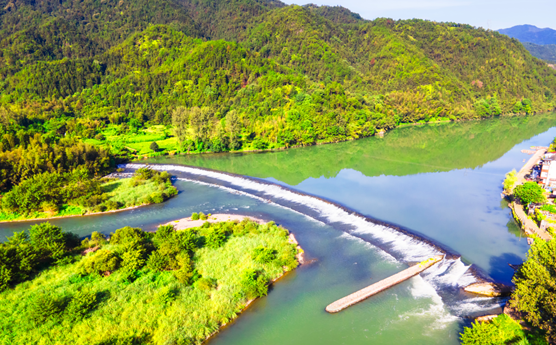
In addition, the green renovation of small hydropower integrates closely with the construction of happy rivers and lakes, beautiful villages, and ecological and cultural tourism. Through the discharge of ecological flow and the restoration of dewatered river sections, it not only improves the rural water ecological environment but also drives the development of rural tourism, ecological breeding and other industries relying on river and lake ecological landscapes, promoting economic growth.
As a catalyst for rural energy transition, small hydropower has the characteristic of rapid regulation. Relying on this feature, the integrated development of water, wind, solar and energy storage can be promoted in rural areas, with supporting new power facilities such as charging piles built to support the consumption of rural distributed new energy and help build a new rural energy system.