New Tea Drinks Boost Rural Industries with Local Produce
As spring brings fresh local produce, the innovative development of new-style tea drinks is bringing characteristic agricultural products and high-quality tea bases into households across China, injecting new vitality into rural characteristic planting, agricultural product processing and the high-quality development of the tea industry, reported Xinhua News Agency on April 3.
A number of regional specialty agricultural products, such as southern Fujian loquats, western Yunnan sour papayas and Jinyun Oolong tea, have expanded their sales channels and increased their value through the innovation of tea drinks, forging a new path for rural revitalization featuring “characteristic planting + intensive processing + brand-driven development”.
Yunxiao County in Fujian Province, known as the “Hometown of Loquats in China”, produces tender and sweet loquats. The local area has built a diversified product system including fresh fruits, flower tea, fruit paste and fruit wine, which has become an important pillar industry for local farmers to increase their income and get rich, said Zhang Hui, an agricultural technician from Yunxiao County Agriculture Bureau.
In Dali, Yunnan, sour papayas have become a characteristic cash crop thanks to their unique sour flavor. In Cibi Lake Town, Eryuan County, the planting area of sour papayas exceeds 7,000 mu with an annual output of nearly 20,000 tons, Yin Jintao, publicity committee member of Cibi Lake Town, introduced. Through the “Party organization + cooperative + farmer” model, the small papayas have become “get-rich fruits” for local people, with both fresh fruits and processed products entering a broader market.
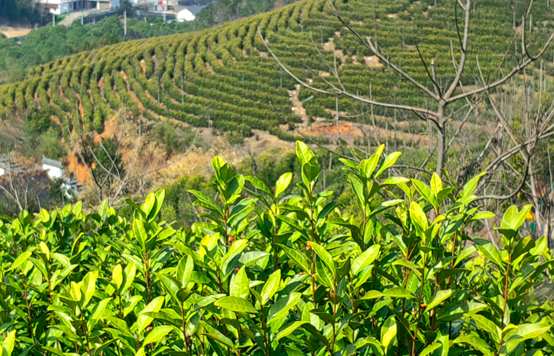
The tea industry is a pillar industry for rural revitalization, and high-quality tea bases empower the value increment of agricultural products. Jinyun Oolong grows in weathered rock soil and forms a unique quality of long-lasting fragrance and mellow aftertaste through multiple rounds of shaking and airing processes, which is a vivid embodiment of the quality improvement and upgrading of the oolong tea industry. At present, China’s oolong tea has formed core producing areas such as Fujian and Yunnan, driving hundreds of thousands of tea farmers to increase their income through ecological planting, standardized processing and brand operation.
In recent years, China’s new-style tea drink brands have continuously increased investment in the health track, promoting raw material traceability and quality upgrading. On March 26, Heytea launched a new product “Jinyun Sour Papaya Loquat” nationwide, introducing low-GI “L-arabinose” for the first time in its series products, which not only provides consumers with a lighter and healthier drinking experience but also drives the standardized and green development of upstream raw material planting reversely, according to a report from Xinhua News.
Smooth production and marketing connection has made it easier for local produce to be converted into income. New-style tea drink enterprises have driven the large-scale and standardized planting of characteristic agricultural products such as Fujian loquats and Dali sour papayas through stable orders and customized demands, solving the pain point that farmers “can grow but cannot sell” their products. Meanwhile, order agriculture has promoted the upgrading of processing links, with supporting production lines for cleaning, sorting, drying and intensive processing built to increase the added value of agricultural products and extend the industrial chain.
With new tea drink innovation as a bridge, more and more regional characteristic agricultural products have walked out of remote mountainous areas and entered the market, and the traditional tea industry has been revitalized in the process of youth-oriented and healthy transformation. The integrated development of agriculture and tea has not only enriched people’s consumption choices but also effectively promoted rural revitalization, allowing local farmers to share the benefits of industrial value increment.