Hefei’s Rapeseed Fields: From Crops to Scenic Gems, Boosting Rural Revitalization
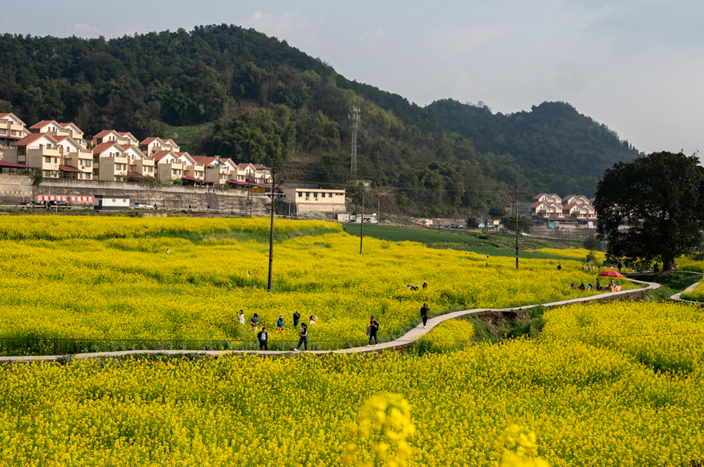
Shortly after the Spring Equinox, Hefei, known as Luzhou in ancient times, is bathed in the golden glow of rapeseed flowers. Across the city, from the banks of the Jianghuai Canal in the High-tech Zone to Tangchi Town in Lujiang County and Huailin Town in Chaohu City, vast stretches of rapeseed fields have turned into a picturesque landscape, attracting tourists and breathing new life into the countryside.
Once a common cash crop valued only for its seeds used in oil pressing—bringing merely a few hundred yuan per mu annually—rapeseed has been redefined in Hefei. Today, it first “sells” its scenery during flowering, then its seeds after blooming, bringing double income to local farmers. Beyond the economic gains, rapeseed has transformed from a “food crop” to a “scenic crop,” expanding agriculture’s primary function to include aesthetics, leisure and social interaction, thus becoming both the “face” and “core” of rural areas.
While traditional leisure agriculture usually follows a linear model of “planting, processing and tourism,” Hefei is exploring an advanced path of integrated primary, secondary and tertiary industries. As tourists wander through the flower seas, the land beneath their feet is quietly undergoing a profound transformation from a “flower landscape” to a “value chain.”
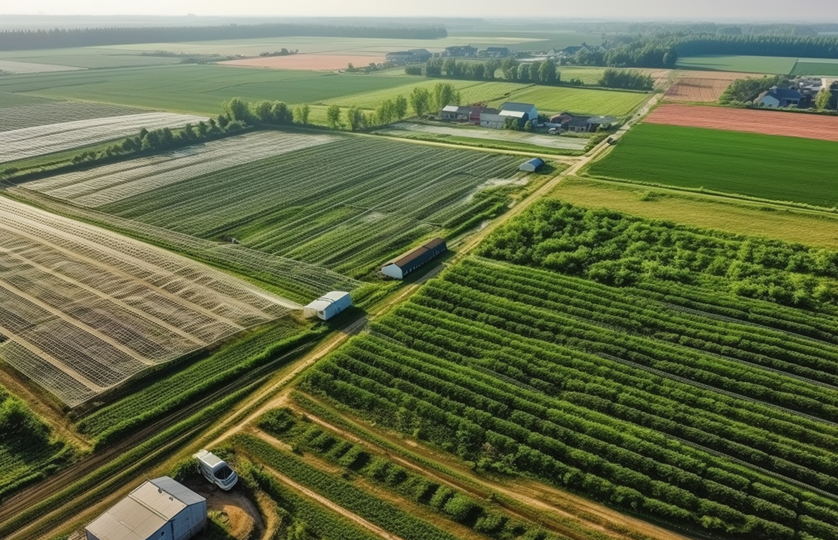
In the High-tech Zone, a once abandoned wasteland piled with dregs and overgrown with weeds has been turned into an “urban pastoral reception hall” integrating ecological conservation and leisure tourism. Led by the Urban Management Brigade, implemented by Gaoxin Urban Development Group and supported technically by local seed giant Quanyin Hi-Tech, the project adopts an “ecological capitalization” approach. With technologies such as drone sowing, green pest control and intelligent fertilization, it has become a replicable model for activating idle urban land.
A similar transformation is taking place in Hairu Village, Huailin Town. A joint project by Huaixiang and Shanghai Bright Agriculture Development, the 1,200-mu rapeseed base has revived the land through soil improvement, nutrient enhancement and ecological restoration. “By focusing on soil improvement and ecological restoration, we have brought vitality back to the land. The rapeseed花海 not only restores the ecology but also attracts tourists, combining reservoir scenery with flowers to generate benefits,” said Yu Zhiqiang, person in charge of Huaixiang Base.
Huang Wei, director of the Rural Industry Development Department of Hefei Agriculture and Rural Bureau, noted the shift: “In the past, activating resources mostly meant land transfer; now we focus on resource vitalization—making every inch of land generate economic, ecological, aesthetic and social value.”
In Datang Village, Tangchi Town, the rapeseed花海 has spurred a cluster of businesses. Beside the fields, Xipo Coffee has become a popular check-in spot, while nearby children’s playgrounds, rural cinemas and boutique homestays like Xipo Courtyard are thriving. “The flower sea brings tourists, who drive demand and promote supply. Cafes, homestays, restaurants and research bases have gathered spontaneously to form a vibrant industrial ecosystem,” explained Gao Junchao, member of the Party Committee and director of the Propaganda Department of Tangchi Town.
The benefits are most tangible for local farmers. Tang Weidong, owner of Dongsheng Restaurant in Datang Village, smiled as he busied himself: “Business has quadrupled these days. Our local dishes like native chicken soup and tea-scented mandarin fish are popular, and many tourists buy local eggs and dried bamboo shoots to take home.”
In Huailin Town, the “leading enterprise + base + farmer” model has enabled farmers to earn stable incomes from land transfer, planting work and order-based profit sharing. Thanks to cooperation with Bright Agriculture Development, rapeseed yield has increased by over 20%, with high-quality rapeseed oil in short supply in the Yangtze River Delta market. The project has benefited more than 50 local households, increasing their annual income by over 6,000 yuan on average. “This land used to be barren, but now it’s alive, and we can earn money at our doorstep,” said Wei Anchi, a villager from Hairu Village.
As spring breeze sweeps across Hefei, the golden rapeseed waves ripple gently. What was once a simple crop has evolved into a driver of rural revitalization, weaving a beautiful picture of ecological prosperity, consumption vitality and farmers’ prosperity in this innovative city that nurtures its people.