Xiong'an New Area: Tech-Powered Agriculture Paints New Picture of Rural Development
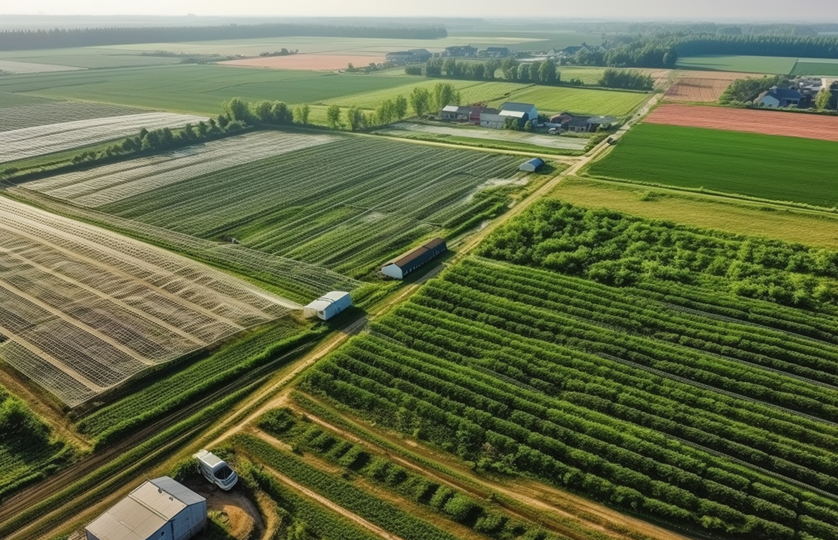
As spring breathes life into the earth and all creatures stir, the fields of Xiong'an New Area in Hebei Province are bustling with activity. Anchored in its development orientation, Xiong'an has extensively gathered global agricultural innovation resources, taking technology as the engine to integrate cutting-edge technologies such as big data and artificial intelligence into the entire agricultural production chain, thus depicting a new blueprint for agricultural development.
In Beiqudi Village, Tongkou Town of Xiong'an, plant protection drones glide steadily over wheat fields along preset routes under the operation of pilots; nearby, an unmanned tractor equipped with the Beidou Navigation System shuttles back and forth for high-precision tillage. Advanced intelligent agricultural machinery has gradually become popular across Xiong'an's fertile land.
More promisingly, the Fuxi Farm Headquarters Base Project in Xiong'an, laid out and constructed by the Chinese Academy of Sciences (CAS), will serve as a scenario carrier for three key core technologies: rapid soil testing, intelligent breeding and intelligent agricultural machinery, fully demonstrating the effectiveness of smart agriculture. Currently, construction of the 2,600-mu core area of the project is in full swing. On-site, workers are digging field ditches and renovating farmland, while the headquarters for command and research is being upgraded, with rice planting expected to be completed in mid-to-late May.
A relevant person in charge of the CAS Xiong'an Innovation Research Institute noted that Fuxi Farm has been put into operation in several places. Relying on advanced rapid soil testing technology, the farm can conduct a detailed "X-ray examination" of the land to accurately grasp various soil data. Through data empowerment, researchers realize customized fertilization and precision irrigation, "supplementing what is lacking and where it is lacking". After years of operation in some areas, the farm has significantly improved water and fertilizer conservation and enhanced soil fertility, and its headquarters will introduce more latest agricultural achievements to boost Xiong'an's development.
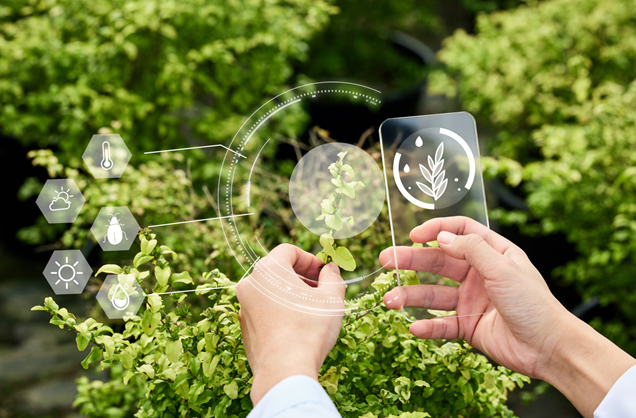
Meanwhile, projects including the CAS Agricultural Scientific Research Data Center — which provides base support for more than 40 released agricultural vertical models nationwide — and the CAS Third-Generation Intelligent Agricultural Machinery R&D Base are accelerating construction, with new agricultural productive forces gathering rapidly in Xiong'an.
In Phase I of the Xiong'an Smart Agriculture Science and Technology Park, covering about 550 mu, modern plant factories are outlining a smart picture of protected agriculture with digital technologies. Intelligent inspection robots move slowly along tracks, capturing the growth status of each tomato through AI vision systems; automatic water and fertilizer integrated equipment delivers nutrient solution to plant roots based on real-time data collected by sensors.
"The park has introduced a number of advanced agricultural technologies," said Wang Lei, a technician at the park. The special glass on the greenhouse roof can evenly disperse direct light to every corner, effectively avoiding uneven plant growth. "Compared with traditional solar greenhouses, water consumption here is reduced by more than 60%, fertilizer by more than 50%, and per unit area yield increased by about 400%."
The precise coordination of hardware equipment is supported by a cloud-based "super brain". In February 2025, "Xiong Xiaonong", an industrial AI large model that has absorbed tens of millions of pieces of agricultural data, was officially launched and has performed well in scenarios such as protected agriculture.
At the Yangquehu Xili Modern Agricultural Industrial Park, Qin Tongbao, the production manager, shuttles through greenhouses and takes photos of yellowing pepper leaves with his mobile phone. "Besides relying on years of planting experience, I now send photos to 'Xiong Xiaonong'," he said. With the assistance of the agricultural large model, the accuracy of pepper pest and disease diagnosis has risen sharply, and various prevention and control work has been carried out more timely and effectively.
The emergence of cutting-edge agricultural technologies in Xiong'an is inseparable from the successful holding of the "Xiong'an Future City Scene Expo". In the past two sessions, hundreds of cutting-edge agricultural technologies have been displayed, ranging from 10-ton-plus unmanned tractors to smart agricultural chips as small as a fingernail, as well as smart farm management and control systems and full-industry-chain digital applications.
Many agricultural scientific and technological achievements have been transformed into productive forces in the fields. At the Xiong County High-Standard Vegetable Breeding and Promotion Demonstration Base, the fruit and vegetable post-harvest intelligent sorting system, a cutting-edge technology from the expo, has been put into use. A relevant person in charge of the base said the intelligent sorting equipment, relying on spectral analysis technology, can not only identify appearance defects but also measure sugar content, realizing efficient and accurate sorting of agricultural products.
A relevant person in charge of the Xiong'an New Area Agriculture and Rural Bureau stated that with relatively limited basic farmland, Xiong'an's agricultural development focuses not on the planting area of specific varieties, but on gathering, integrating and transforming various advanced agricultural scientific and technological achievements to play a leading and exemplary role. Across Xiong'an, technology is breathing new vitality into the land, weaving a vivid picture of smart agriculture.