Beijing CPPCC Launches Research to Boost Suburban Rural Industry and Rural Revitalization
The Beijing Committee of the Chinese People’s Political Consultative Conference (CPPCC) will hold a special deliberative standing committee meeting this year focusing on "developing modern suburban rural industries and solidly advancing comprehensive rural revitalization". On April 16, the Beijing CPPCC kicked off its research and consultation work. At the meeting, the Agriculture and Rural Committee of the Beijing CPPCC introduced the research and consultation work plan, while the Beijing Municipal Bureau of Agriculture and Rural Affairs, the Municipal Development and Reform Commission, and the Municipal Bureau of Culture and Tourism reported on relevant progress, according to Beijing Daily.
The meeting emphasized the need to accurately grasp the characteristics and laws of developing modern suburban rural industries under the new situation, and make suggestions for promoting comprehensive rural revitalization. It focused on key areas including strengthening planning guidance, giving play to the integrated effect of policies, promoting the integrated development of the primary, secondary and tertiary industries in rural areas, and empowering rural industries through culture and art.
A person in charge of the Agriculture and Rural Committee of the Beijing CPPCC introduced that the committee will organize members and experts to carry out in-depth deliberative discussions on accelerating agricultural and rural modernization, developing modern suburban rural industries, and formulating countermeasures for comprehensive rural revitalization, contributing CPPCC wisdom and strength to a good start for the capital’s agricultural and rural modernization during the 15th Five-Year Plan period. The key consultation areas include optimizing the structure and layout of modern suburban rural industries and expanding new development tracks.
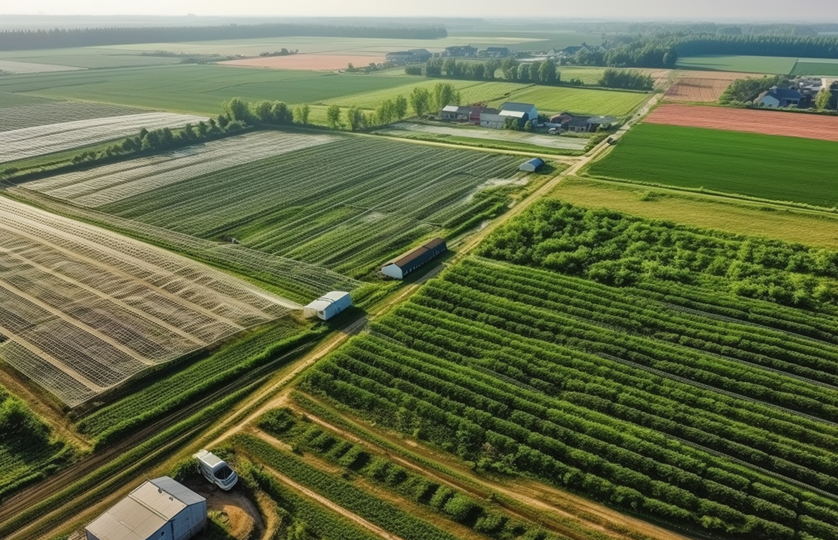
The Beijing Municipal Bureau of Agriculture and Rural Affairs reported that the development of modern suburban rural industries is showing a sound momentum. The city’s cultivated land area has recovered from 96,000 hectares in 2021 to 131,333 hectares in 2025, with a total of 59,333 hectares of high-standard farmland built. The vegetable self-sufficiency rate has increased to 30.3%, according to Beijing News. The agricultural science and technology progress contribution rate has reached 77%, with 29 seed enterprises selected into the national formation, ranking first in the country.
The Municipal Development and Reform Commission introduced supportive measures from three aspects: policy supply, factor guarantee and facility supporting. It has issued a series of documents to promote green development in ecological conservation areas and establish a compensation mechanism for ecological product value realization. It also supports the construction of the Agricultural Zhongguancun and the "Seed Industry Capital", and plans major projects such as the Badaling World-Class Great Wall Scenic Area to upgrade rural tourism.
The Municipal Planning and Natural Resources Commission provides spatial resource guarantee through planning guidance, policy supply and platform building. All 120 township territorial spatial plans in the city have been completed, and rural industrial land indicators are listed separately in the annual construction land supply plan. It has also launched the "Jingyun Rural Co-creation Plan" to link various resources to empower rural areas.
The Municipal Bureau of Culture and Tourism is promoting the transformation of rural tourism from scale expansion to quality improvement. There are 17 municipal-level key rural tourism towns and 195 key villages in Beijing. It has built a "1+10+N" brand matrix led by the "Roaming Suburban Beijing" municipal brand, and will further strengthen rural homestays and greenway IP to attract more tourists, reported China Culture Daily.