Tea Revitalizes Taoyuan Village in Anhui: Huang Zhengquan Leads Villagers to Prosperity with Tea Industry
Recent reports have highlighted the remarkable achievements in the tea industry of Taoyuan Village, Huayuan Township, Dongzhi County, Chizhou City, Anhui Province. Huang Zhengquan, a deputy to the Dongzhi County People’s Congress, Secretary of the General Party Branch of Taoyuan Village, and General Manager of Chabaoling Tea Industry Co., Ltd., has dedicated more than 20 years to the tea industry. He has led villagers to break through industrial difficulties, build high-quality brands and expand income channels, lighting up the path of rural revitalization with a single leaf of tea and setting a vivid example of rural revitalization in the region.
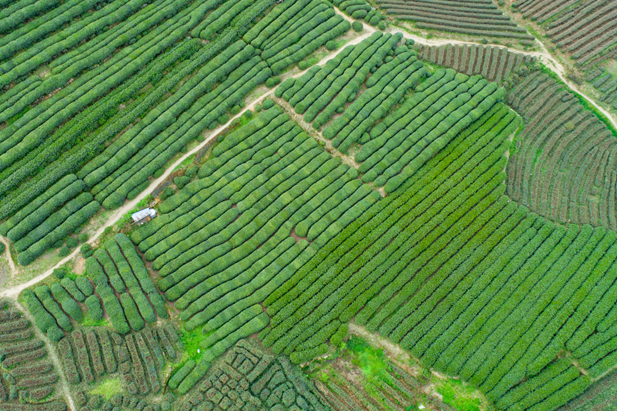
The tea history of Taoyuan Village dates back to the Tang Dynasty, and the production technique of steamed green cake tea had spread widely in the surrounding areas by the Song and Yuan Dynasties. According to "Wenxian Tongkao" (Comprehensive Examination of Literature) and "Zhide County Chronicles", the historical famous teas "Xianzhi" and "Nenrui" were produced on this land. As the core producing area, Chabaoling boasts a moderate altitude and an average annual temperature of 16.3℃. Its unique geographical and climatic conditions not only nurture high-quality fresh tea leaves but also shelter numerous rare and precious ancient tea trees (wild tea). Farmers’ Daily reported that despite such abundant resources, Taoyuan Village once struggled with a dilemma of "holding a golden bowl but begging for food" in its tea industry for a long time.
"In the past, tea farmers in the village planted and sold tea scattered, with no stable purchasing channels. After picking, they either waited for buyers to come and press down prices or carried tea leaves over mountains to sell at markets, which was time-consuming and laborious yet barely profitable," recalled Xu Xiuzhen, a villager, voicing the common frustration of Taoyuan’s tea farmers back then. Due to the lack of large-scale planting, standardized processing and market-oriented operation, tea sales were sluggish and prices remained low. Many villagers, seeing no hope, chose to work in cities, leaving large areas of tea gardens unattended and abandoned.
A native of Taoyuan Village, Huang Zhengquan grew up surrounded by the fragrance of tea and cherished a deep affection for the tea mountains. Watching the tea gardens inherited from his ancestors fall into desolation and his fellow villagers struggle to increase their income despite the high-quality resources, Huang, then a village cadre, felt anxious. "We must not let good tea rot in the mountains, nor let our villagers suffer poverty while sitting on a gold mine," this simple belief became his original intention to devote himself to the tea industry.
In 2016, Huang founded Dongzhi Chabaoling Tea Industry Co., Ltd. and implemented an "order-based purchasing" model. He signed long-term agreements with tea farmers to purchase all qualified fresh leaves at a guaranteed price, completely solving the problem of tea sales for farmers and reviving over 1,000 mu of idle tea gardens. People’s Network noted that such a model has effectively stabilized the income expectations of tea farmers and laid a solid foundation for the sustainable development of the local tea industry.
In industrial development, Huang adheres to quality standards, insists on green and ecological planting, and strictly controls the entire tea-making process. The "Chabaoling Qimen Black Tea" developed under his leadership has won numerous awards, including the Gold Award of Chizhou Tea Competition, the First Prize of Chizhou Tea Processing Competition, the Special Prize of National Selenium Water Tea Tasting Competition, the Gold Award of Asia-Pacific Tea Award for Black Tea, and the Gold Award of China Tea Olympics. China News Network reported that Qimen Black Tea has been listed among the Top 10 of 2024 China Tea Regional Public Brand Cultural Power, and its high quality has enabled Chabaoling’s products to be sold in first-tier cities such as Beijing, Shanghai and Guangzhou, as well as in international markets.
Currently, Chabaoling Tea Industry has built a 1,000-mu tea base and a 700-square-meter standardized workshop. It invests over 700,000 yuan annually in purchasing fresh leaves and achieves an annual sales volume of more than 2 million yuan, directly driving over 200 households of tea farmers to increase their income. The company provides jobs near their homes for villagers, attracting those working outside to return and effectively alleviating the problems of left-behind children and empty-nest elderly. Meanwhile, it carries out technical training, assists needy tea farmers, promotes industry-university-research cooperation, and develops tea-tourism integration projects to extend the industrial chain, helping Taoyuan Village transform from a "deserted village with idle gardens" into a "prosperous tea village".
As Party Secretary of the village and a people’s congress deputy, Huang has always led industrial development with Party building, integrating enterprise development closely with rural revitalization and people’s well-being. Yang Yan, Secretary of Huayuan Township Party Committee, stated that Taoyuan Village’s practice has provided replicable and promotable experience for the development of characteristic rural industries, vividly interpreting the responsibility of grass-roots leaders with practical actions.