Baicheng County in Xinjiang Blazes a Rural Revitalization Path with Characteristic Agriculture
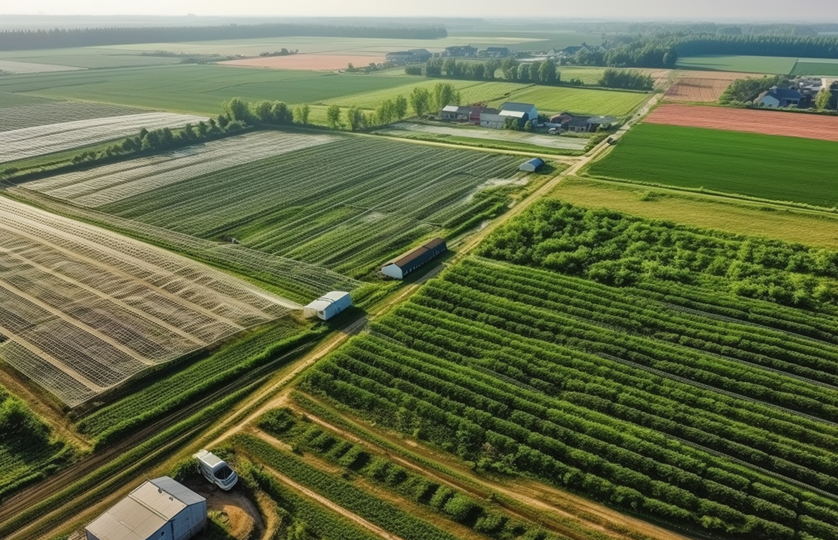
Located at the southern foot of the Tianshan Mountains and the northern edge of the Tarim Basin, Baicheng County in Xinjiang takes land as its foundation and industry as its vein, forging a vibrant rural revitalization path with regional characteristics. Through moderate-scale land management and industrial chain extension, the county has continuously expanded farmers’ income channels, tasting the "sourness" of exploration, "bitterness" of overcoming difficulties, "sweetness" of growth and "spiciness" of development.
Xinjiang Daily reports that Baicheng County adheres to stabilizing scale, optimizing structure and improving efficiency, promoting the contiguous layout, mechanical operation and scientific management of its "sour, sweet, bitter and spicy" characteristic industries through land transfer, cooperative leadership and leading enterprise drive.
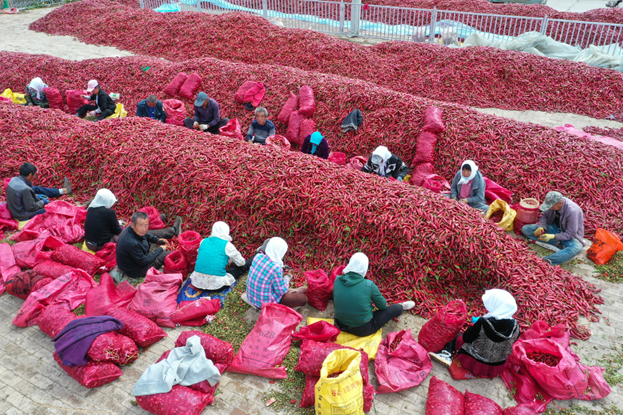
The pepper industry has achieved remarkable large-scale effects. Xinjiang Qianjiao Agricultural Development Co., Ltd. has built 40 seedling greenhouses since its launch in 2023, serving farmers to plant over 10,000 mu of peppers of various varieties. Fan Haichuan, the company’s person in charge, said the enterprise plans to carry out deep processing of chili products and build a pigment factory in the second half of 2026 to extend the industrial chain.
Dried apricots, a high-quality characteristic fruit in Baicheng, have a planting area of about 50,000 mu. Baicheng Sihong Agricultural Products Farmers’ Professional Cooperative plants over 3,000 mu of dried apricots, with an annual output value of 5 million yuan. Equipped with more than 40 tractors and 30 spraying machines, the cooperative ensures large-scale and standardized planting.
Mechanization has boosted efficiency, with a mechanization rate of over 90% in links such as sugar beet and pepper seedling raising. The county’s sugar beet planting area is stably maintained at 150,500 mu, relying on Aksu Aodu Sugar Industry to form a "enterprise + base + farmer" model.
China News Service points out that Baicheng County is an ideal planting area for high-quality astragalus due to its altitude of about 1,200 meters, temperate continental arid climate and deep sandy loam. Baicheng Qicao Tang Planting Farmers’ Professional Cooperative plans to plant 6,000 mu of astragalus in 2026, with its products directly supplied to Sinopharm Group.
Li Baohua, a large astragalus grower, said his 1,000 mu of astragalus is planted in accordance with GAP standards to ensure quality. Processing parks and workshops have solved the problems of difficult sales and storage, with dried apricots sold to more than 10 major cities and purchased at 8 to 15 yuan per kilogram in 2025.
Characteristic industries have brought diversified income to farmers. Tohuti Matniyaz, a villager, obtained stable income from transferring 17 mu of land for pepper planting. Shawana Kurban earns 90 yuan a day working in pepper fields, and up to 150-200 yuan during harvest. Wu Yajie, director of Baicheng County Agriculture and Rural Bureau, said the county has laid a solid foundation for rural revitalization through industrial development.