China’s New Energy Agricultural Machinery Gains Momentum Amid Green Agriculture Drive
Amid the dual waves of global energy transition and green agricultural revolution, new energy agricultural machinery is reshaping the traditional agricultural machinery industry at an unprecedented pace. Leveraging the world’s most complete new energy industrial chain and vast agricultural application scenarios, China’s new energy agricultural machinery has gradually formed a coordinated development pattern of multiple technological routes, including hybrid, pure electric and clean fuel power, China Agricultural News reported.
Experts note that with independent technological innovation, policy guidance and unblocked market promotion, China’s domestic new energy agricultural machinery is fully capable of transforming from a follower to a leader in the global new energy revolution, providing solid equipment support for ensuring national food security.
Hybrid technology is accelerating its industrialization. On April 9, the Changji National Agricultural High-tech Industrial Demonstration Zone in Xinjiang launched a maturation and finalization project for new energy hybrid tractors, with 10 hybrid tractors from 10 enterprises conducting pre-sowing soil preparation tests. This marks a new stage in China’s hybrid tractors, moving from technological research to large-scale maturation and finalization.
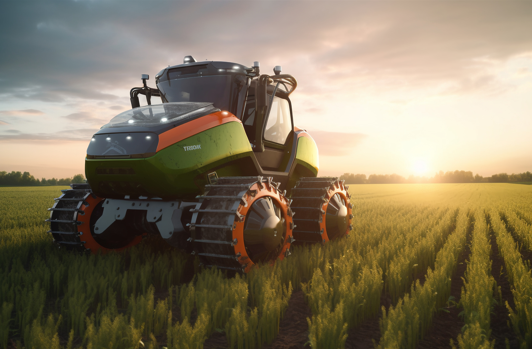
Ye Zongzhao, Director of the Power Machinery Department of the Agricultural Mechanization General Station of the Ministry of Agriculture and Rural Affairs, said Xinjiang, with its diverse soil types, crop varieties and operation scenarios, is an ideal area for field testing of large-scale high-end agricultural machinery and new energy tractors. "If new energy agricultural machinery can be verified successfully here, it can be applied basically across the country," he added.
Li Jinliang, General Manager of Shandong Lingong Agricultural Machinery, noted that new energy agricultural machinery can bypass traditional power transmission technologies, simplifying gearbox design and providing domestic enterprises with an opportunity to "overtake on a curve". "Hybrid technology circumvents the technical barriers of traditional fuel engines, putting domestic enterprises in an active position," he said.
Diversified technological routes are taking shape. Huang Youlin, Chief Chief Engineer of Tractor Supporting Technology at Guangxi Yuchai General Machinery Power Division, said his company is comprehensively deploying hybrid technology while simultaneously laying out pure electric and clean fuel power routes. Major agricultural machinery enterprises, cross-border new forces and emerging companies are all joining the new track, accelerating technological iteration.
Policy support plays a crucial role. The Ministry of Agriculture and Rural Affairs and the Ministry of Finance have issued guidelines to strengthen the identification and supervision of new energy agricultural machinery, and increase subsidies for their purchase and application. Yin Bifeng, Professor at Jiangsu University’s School of Automotive and Transportation Engineering, predicted that China’s new energy agricultural machinery will enter an explosive period of mature technology, large-scale products and full scene coverage in the next 5 to 10 years.
To break through development bottlenecks, efforts are being made to promote the integration of new energy with intelligence and networking, reduce costs, improve supporting services and establish a sound standard system. Zhang Wenbo, Deputy Secretary-General of the China Agricultural Machinery Circulation Association, called for joint efforts to formulate industry and national standards to promote the standardized development of the industry.