Century-Old Rice Town in Urumqi Revitalizes, Blending Technology, Industry and Tourism
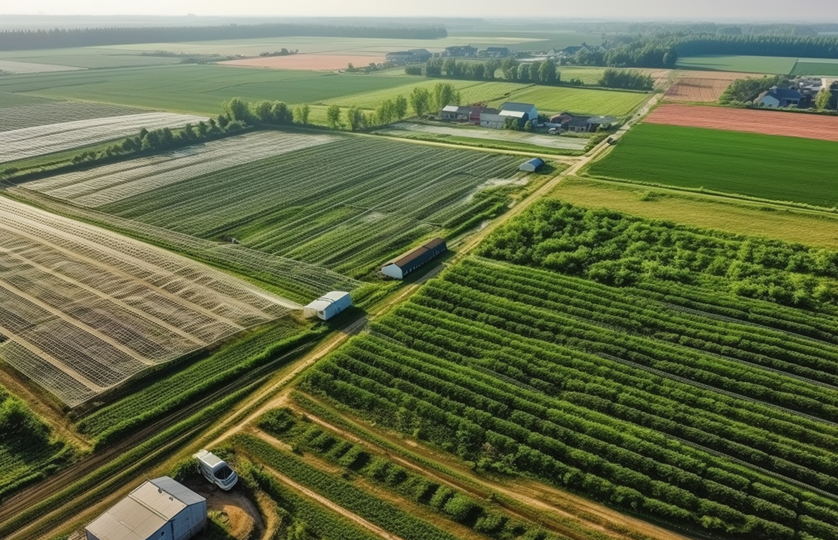
Large-scale rice cultivation in Midong District, Urumqi, Xinjiang, dates back to the Qianlong period of the Qing Dynasty. Over 200 years later, "Miquan Rice" has become a national geographical indication product. After a period of shrinkage in planting area in previous years, it has gradually recovered in recent two years. I
n 2025, the district’s rice planting area rebounded to 1033 hectares, with an output of 10,000 tons. By 2027, the local rice planting area is expected to stabilize above 2000 hectares, with an output of 19,000 tons.
This century-old rice town is now continuing its story of high-quality rice planting by relying on scientific and technological innovation and promoting the integration of the primary, secondary and tertiary industries.
Scientific and technological support has become the core driving force for the revival of the rice industry. On April 17, rice seedling raising was in full swing in Midong District. A 9,000-square-meter intelligent seedling raising factory in Xinjian Village, Yangmaogong Town, built and operated by Beijing Jinfuteng Technology Co., Ltd. with a total investment of about 17.8 million yuan, stands out as the first industrialized and intelligent seedling factory in Xinjiang. "The whole seedling raising process is visualized and managed with intelligent precision," said Xu Wenfeng, the factory director. The factory plans to produce 28,000 plates of rice seedlings this year, covering 80 hectares of paddy fields, and has become a "seedling aircraft carrier" for the surrounding agricultural industry.
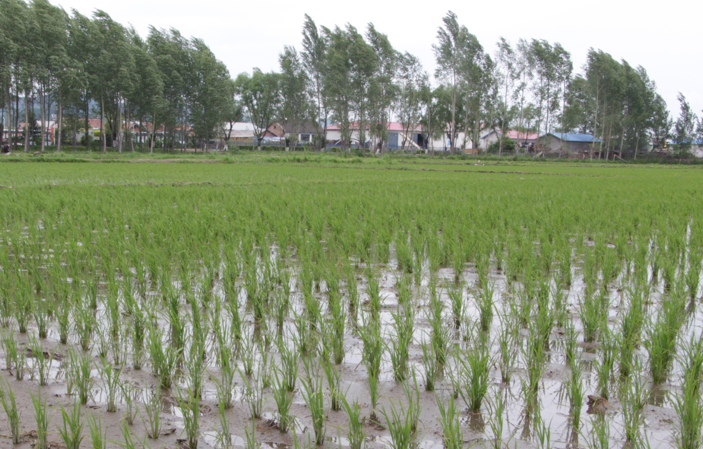
To ensure good seeds are matched with good methods, Midong District has built a technical service system of "district-level overall planning, town-level implementation and village-level coverage". Cao Chuanyou, a grassroots agricultural technician in Xinjian Village, has long been active in the fields. "I help farmers contact technicians and solve problems I can handle," he said, adding that he passes on new technologies and policies to villagers door to door every year.
The rice research team from the Xinjiang Academy of Agricultural Sciences has set up experimental fields in Hanjiazhuang Village, Sandao Dam Town, for decades. "Our main responsibility is to cultivate new varieties and provide new technologies to increase farmers’ production and income," said Li Dong, associate researcher of the academy. The team has developed a number of scientific research achievements, including the new variety "Xinjing 19", which was approved in 2025 and is expected to be promoted in Midong District over 66 hectares in 2026.
The rice industry in Midong District has formed a complete industrial chain. Xinjiang Dalingshan Agricultural Development Co., Ltd., a leading enterprise, built an intelligent refined rice processing workshop with an annual processing capacity of 35,000 tons. It adopts the "company + cooperative + farmer" model, driving 291 hectares of rice planting. Xinjiang Baisikang Agricultural Technology Co., Ltd. has 33 hectares of organically certified land, with its organic rice selling at over 12 yuan per kilogram.
Agriculture-tourism integration is also booming. Zhou Yuansheng, a returning college student, founded the "Xunjiang Four Seasons" farm stay, which receives about 100,000 tourists annually. Wang Zehua’s rice-crab co-cultivation base realizes "one water for two uses and one field for two harvests", attracting 5,000 research tourists last year. Huang Gong Village’s rice park, open to the public free of charge, attracted over 300,000 tourists in 2025.
Up to now, Midong District has built 2 rice parks and 1 rice history and culture museum, launching 6 high-quality tourism routes and receiving 6.0828 million tourists annually. Yu Xiaojian, Secretary of the Party Leadership Group of the Midong District Agriculture and Rural Bureau, said the district has explored a new model of rural revitalization through technology, industry and integration.