Spring Blooms Across China: Ecological Protection and Rural Development Flourish Hand in Hand
In spring, various regions across China have taken targeted measures based on local conditions, empowering both ecological protection and industrial development to paint a new picture of high-quality development for beautiful and harmonious villages. From desert afforestation to flower-based industries, from river restoration to tea culture inheritance, the countryside is brimming with vitality in the warm spring breeze.
Inside Babusha Forest Farm in Gulang County, Wuwei City, Gansu Province, on the southern edge of the Tengger Desert, fine water droplets seep into the sand accurately along the drip irrigation pipes, nourishing various sand-tolerant seedlings such as Haloxylon ammodendron, Hedysarum scoparium and Hippophae rhamnoides. Xinhua News Agency reports that relying on a 500,000-cubic-meter reservoir built by diverting the Yellow River water in April 2025, the forest farm began laying an efficient water-saving drip irrigation project this spring, striving to solve the desert irrigation problem and consolidate desertification control achievements.
To address bottlenecks such as water scarcity, low efficiency of traditional irrigation methods and difficult seedling management in desert areas, Gulang County has fully promoted the water-saving irrigation project in Babusha Forest Farm. A comprehensive efficient water-saving irrigation system integrating water storage, pipeline water conveyance and precise drip irrigation has been initially built, realizing the transformation from “flood irrigation” to “precision drip irrigation”.
Up to now, Babusha Forest Farm has accumulated 338,200 mu of desertification control and afforestation, and 464,000 mu of sand fixation and grass cultivation under management. Wind and sand hazards have been fundamentally curbed, and the regional ecological environment has continued to improve.
In Zheng Yang Village, Yongji City, Shanxi Province, more than 200 mu of peonies have entered their best viewing period recently, with various colors blooming in full, attracting numerous tourists for spring outings and photo-taking. Peonies not only serve as a scenic attraction but also drive rural industrial development.
Relying on the “enterprise + cooperative + farmer” model, the local area has fully explored the diverse values of peonies in ornamental, medicinal and garden uses. China Rural Development Report notes that the base currently has 430,000 peony plants, with an output value of over 30,000 yuan per mu. Peony seedlings and related products are sold to Heze, Kunming, Guangzhou and other places, effectively driving more than 200 surrounding villagers to employment.
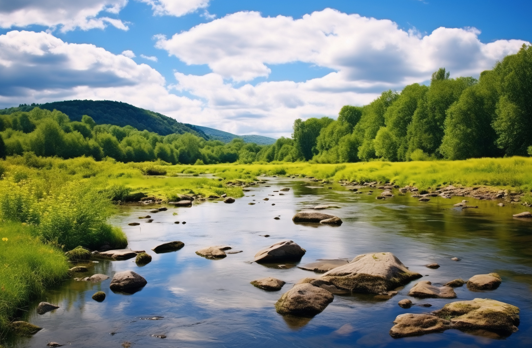
In Jiexiu City, Shanxi Province, the newly renovated Longfeng River, a first-level tributary of the Fenhe River and a second-level tributary of the Yellow River, has clear water and green banks, attracting many citizens to visit. The Longfeng River ecological restoration project started in May 2023, covering a governance length of 17.8 kilometers.
Over the past two years, measures such as river dredging have effectively improved water quality, allowing citizens to enjoy high-quality ecological space at their doorstep and share ecological benefits. Meanwhile, Wuyi Mountain City in Fujian Province has ushered in its annual tea-picking peak season, with the traditional “Shanshan Kaicha” (Calling the Mountain to Start Tea Picking) ceremony held to pray for good weather and a bumper tea harvest.
Held in the Yucha Garden of Wuyi Mountain, the ceremony allows tea lovers to taste tea on site and learn tea-making skills, experiencing the unique charm of Wuyi Mountain tea culture. As an important part of local spring tea activities, the ceremony not only carries folk cultural heritage but also has become a key carrier to promote the in-depth integration of tea culture, tourism and agriculture in recent years.