China’s Agricultural Law Revision Draft Debated to Boost Agricultural Modernization
Agriculture is the foundation of a nation, and building a strong agricultural country is the cornerstone of building a great modern socialist country. As China enters a new era and embarks on a new journey, the development of agricultural and rural economy is facing new situations and tasks, making it necessary to revise the Agricultural Law. On April 27, the draft revision of the Agricultural Law was submitted to the 22nd meeting of the Standing Committee of the 14th National People’s Congress for its first deliberation.
The draft revision focuses on four key areas, aiming to consolidate the foundation of agricultural development, promote high-quality agricultural development and advance rural revitalization, according to experts interviewed by Xinhua Viewpoint.
First, it clarifies the national food security strategy and builds a diversified food supply system. Given that more than 1.4 billion people need to be fed, ensuring the capacity to supply grain and important agricultural products is the top priority of a strong agricultural country. The draft explicitly adopts a national food security strategy featuring self-reliance, domestic focus, guaranteed production capacity, appropriate imports and technological support, adhering to the principle of storing grain in land and technology to ensure basic self-sufficiency in grains and absolute security in staple foods.
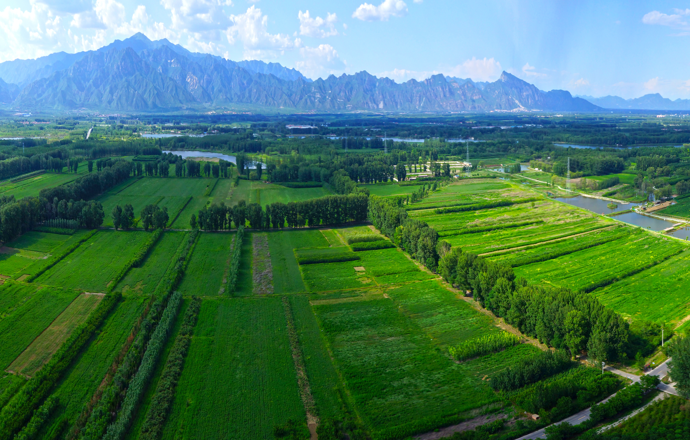
“An important change in the draft regarding food security is that it elevates the policy measures behind China’s consecutive years of grain harvests into legal norms, establishing a institutional system covering strategic positioning, production capacity protection, income guarantee and risk prevention and control,” said Cheng Guoqiang, Dean of the National Institute of Food Security Strategy at Renmin University of China. The draft also emphasizes the strictest farmland protection system, strengthens the special protection of permanent basic farmland, and expands the resource base for food security to forests and grasslands by developing diversified food production.
Second, it promotes the development of new agricultural productive forces and deepens the integration of scientific and technological innovation with industrial innovation. The draft proposes developing new agricultural productive forces in light of local conditions and advancing the in-depth integration of scientific and technological innovation and industrial innovation. “Developing new agricultural productive forces and strengthening agricultural scientific and technological innovation are key breakthroughs and important driving forces for building a strong agricultural country,” noted Ren Dapeng, Professor at the College of Humanities and Development Studies, China Agricultural University.
The draft includes specific measures such as encouraging the application of new technologies in agriculture, strengthening the R&D and promotion of new crop varieties, technologies, equipment and products, and supporting the development of smart agriculture. It also highlights the importance of talent support by revising the chapter name to “Agricultural Science and Technology, Education and Talents” and specifying measures to cultivate agricultural professionals and local rural talents.
Third, it promotes green agricultural development and the green transformation of production methods. A notable structural change in the revision is the addition of a special chapter on “green agricultural development”. Cheng Guoqiang stated that this adjustment reflects that green development has become an inherent requirement of agricultural and rural modernization. The draft encourages economical and intensive planting and breeding technologies, biological pest control and ecological circular agriculture, and clarifies the implementation of agricultural ecological protection compensation and the improvement of the value realization mechanism of agricultural ecological products.
Fourth, it promotes rural economic development and balanced allocation of public resources. The draft emphasizes integrated urban-rural development, promoting the equal exchange and two-way flow of urban and rural factors, and the balanced allocation of public resources. Ren Dapeng said that relevant provisions in the draft help integrate rural development into the overall layout of urban-rural integration. In addition, the draft stipulates measures to support underdeveloped areas and improve the long-term mechanism for preventing return to poverty, providing legal guarantees for consolidating the achievements of poverty alleviation.
People’s Daily reported that the draft revision, consisting of 14 chapters and 110 articles, closely focuses on the goal of building a strong agricultural country, adapting to the new characteristics and requirements of agricultural and rural modernization. Its deliberation marks an important step in advancing the rule of law in agriculture and rural areas in China.