Luquan Tobacco in Kunming Builds New Tobacco Production Pattern with Standardization and Digital Empowerment
Since the start of spring 2026, Luquan County Tobacco in Kunming, Yunnan Province, has focused on the goal of “outstanding quality and characteristics, strong industrial demand, increased farmers’ income, and efficient and standardized operation”. Taking “line marking, ridge forming and hole digging” as the breakthrough point, it has built a new tobacco leaf production pattern featuring “standardization as the foundation, refined management and control, and digital empowerment”, laying a solid foundation for improving the quality and efficiency of precise tobacco leaf production throughout the year.
At the beginning of the year, at the Luquan Tobacco Leaf Production Work Conference, Shi Dingguo, Deputy Manager of Luquan County Tobacco Monopoly Bureau in charge of tobacco leaf production, clearly put forward requirements for improving the quality and efficiency of tobacco leaf production. “All tobacco stations should strengthen the awareness of standardized production, establish the concept of ‘precision production’, and fully tap the potential of tobacco leaf production,” he said, setting the tone for the subsequent work of “line marking, ridge forming and hole digging” to promote the transformation from extensive to refined tobacco leaf production.
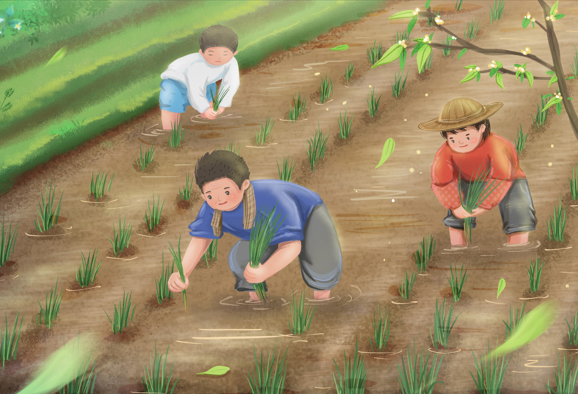
Luquan Tobacco regards “line marking, ridge forming and hole digging” as a systematic project requiring the participation of all staff, elements and the whole process. Guided by the concept of “precision production”, it takes the 2026 tobacco leaf production assessment indicators as the general guide, transforms the shortcomings in previous production into specific key tasks, and accurately decomposes them to all towns, villages and grids. “At the beginning of 2026, these tasks were identified as key annual work through on-site training meetings to ensure that the goals reach the fields directly,” said Kong Dexun, Director of Sayingpan Tobacco Station.
Standard construction is the first pass of this transformation. Luquan Tobacco strictly implements the requirement of “pursuing quality and efficiency through standards”, and in accordance with the Technical Specifications for Mechanized Cultivation and Preparatory Ridge Formation of Tobacco-planting Soil, it has transformed the technical parameters of “line marking, ridge forming and hole digging” from “empirical values” into quantifiable and implementable “standard rulers”: row spacing of 120 cm, plant spacing of 60 cm, ridge height of 30 cm, and hole depth of 15 to 20 cm. Through strengthening the rigid constraints and dynamic monitoring of technical standards, it ensures that each process is accurately targeted at the key links of quality improvement, tightening the “quality valve” from the source.
To break down barriers between different positions and form a joint force, Luquan Tobacco has established a multi-level collaborative promotion mechanism of “county bureau overall planning, tobacco station leadership, technicians’ implementation, and farmers as the main body”. Sayingpan Tobacco Station has transformed this mechanism into a three-line collaborative model of “tobacco station overall planning, tobacco station staff leadership, and farmers as the main body”, with all parties working in the same direction to form an interwoven collaborative network. It also promotes a centralized training model of “theoretical explanation + on-site demonstration + practical operation”, ensuring that technical essentials are deeply rooted in the hearts of farmers.
In terms of refined management, Sayingpan Tobacco Station has introduced the whole-life cycle management concept. It formulates classified ridge formation plans according to different land conditions, promotes large-scale and intensive operations, and establishes a “tobacco production mutual assistance group” to form a good atmosphere of learning from each other and catching up with each other. A set of “four-inspection mechanism” and “double-person operation and cross-verification” system ensures the quality of each link and the accuracy of planting data.
Digitalization has become an indispensable support for intensive cultivation. Through the “Xiangye Zhinong” mini-program, farmers can obtain policy announcements in real time, submit service applications online, and rent agricultural machinery on demand, greatly improving production efficiency.