Qinzhou, Guangxi Blazes a Path of Rural Revitalization with Characteristic Industries and Digital Empowerment
In recent years, Qinzhou City in Guangxi Zhuang Autonomous Region has relied on its resource endowments, taken characteristic planting and breeding as the foundation, empowered by digital technology, and promoted efficiency through the integration of the primary, secondary and tertiary industries. It has blazed a development path featuring strong industries, wealthy farmers and beautiful countryside, injecting vigorous vitality into rural revitalization.
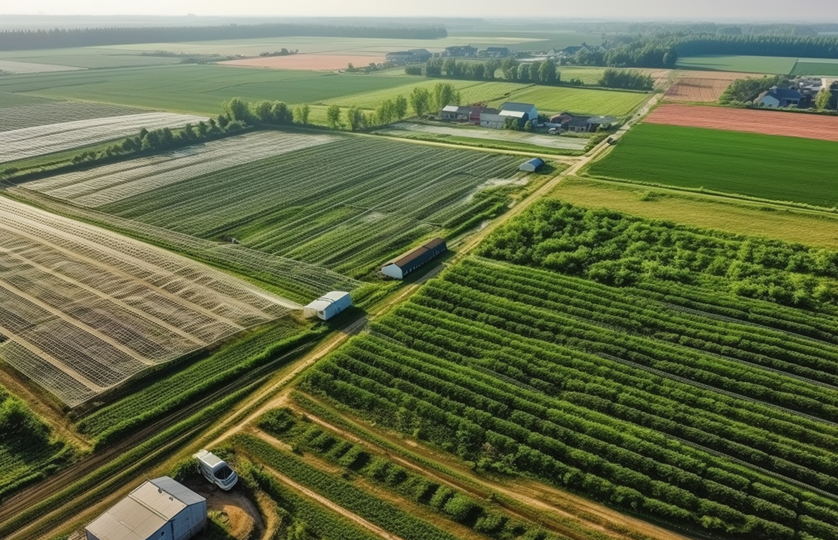
Qinzhou has focused on characteristic industries such as blueberries, tea, cucumbers and grain, developing modern agriculture on a large scale and in a standardized way, and transforming small specialty products into large industries. At the 1,000-mu blueberry base in Jiubaidong, Qinbei District, Li Shang, the person in charge, introduced that the project adopts imported substrates, automatic water and fertilizer control systems and skylight management systems, giving priority to employing local villagers. The daily income of pickers can reach up to 500 to 600 yuan, enabling people to increase their income stably at their doorsteps.

Lingshan Minggui Tea has adhered to organic planting for 8 years, implementing zero pesticides and zero chemical fertilizers, and driving women around to increase their income by picking tea. The cucumber planting base of Lingshan Jinsheng Agricultural Products adopts green and standardized planting, with a per-mu yield of over 10,000 jin per season and a per-mu output value of about 20,000 yuan, and its products are sold to the Guangdong-Hong Kong-Macao Greater Bay Area. Li Yanping, one of China’s Top 10 Farmers in Pubei County, has rooted in the front line of grain production, built a modern drying production line and seedling raising center, and driven the planting of more than 20,000 mu of rice, making grain planting more promising.
To solve the problems of agricultural production in hilly and mountainous areas, Qinzhou has actively embraced artificial intelligence and low-altitude economy. Lingshan Guibird Digital Technology has built the "Guibird Takes Off · Didi Spraying" shared plant protection platform, integrating more than 130 local pilots to achieve rapid order dispatching within 3 kilometers. Since its launch, the platform has served more than 600,000 mu of farmland, effectively reducing pesticide usage, improving the rate of high-quality fruits, and helping farmers increase their income by more than 3,000 yuan per mu.
Qinzhou adheres to the primary industry as the foundation, the secondary industry as the driving force, and the tertiary industry as the expansion, building a close mechanism linking and benefiting farmers. The intelligent litchi sorting line in Lingshan has a daily processing capacity of 125,000 kilograms, significantly reducing costs and increasing efficiency. It has strengthened regional public brands such as "Qinzhou Oyster" and "Lingshan Litchi", developed new formats of rural e-commerce and integration of agriculture, culture and tourism, and expanded sales channels through live streaming, offline exhibitions and rural tourism.
Xinhua News Agency reported that the per capita disposable income of rural residents in Qinzhou reached 21,800 yuan in 2025, a year-on-year increase of 5.8%, which was higher than the average growth rate of rural residents in Guangxi Zhuang Autonomous Region. With characteristic industries taking root and digital technology empowering development, Qinzhou has continuously narrowed the urban-rural gap, making the road of rural revitalization broader and more solid.