Tianjin Launches Rice Seedling Cultivation Campaign to Boost Grain Yield
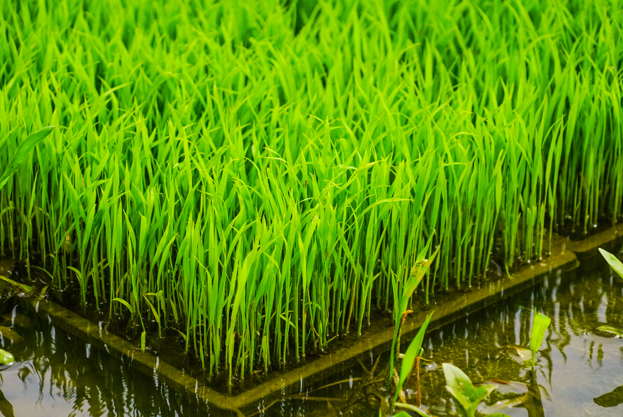
Shortly after Guyu, one of China’s 24 solar terms, neat trays of lush green rice seedlings spread out like green carpets at the Xiaozhan Rice Seedling Cultivation Base in Jinnan District, Tianjin. With the launch of the 2026 Tianjin Agricultural Technician Rural Outreach Program and the Rice Concentrated Seedling Cultivation Technology Observation Meeting in Jinnan District, a "Four-Season Action" focusing on increasing the per unit yield of grain and oil crops has officially kicked off.
China News Service reports that the Ministry of Agriculture and Rural Affairs has emphasized that concentrated seedling cultivation is a key core technology to increase rice per unit yield and stabilize grain production capacity. For Tianjin, which faces tight cultivated land resources and a small per capita area of cultivated land, this technology is even a powerful tool to "achieve great results with limited resources".
By centralizing and industrializing the scattered seedling cultivation links of farmers, it not only solves the bottleneck of "difficult and high-cost seedling cultivation" for each household, but also clears obstacles for the comprehensive standardized promotion of Tianjin’s "Xiaozhan Rice", a famous agricultural brand. On the land-scarce Bohai Bay, concentrated seedling cultivation has become a core measure for Tianjin to fulfill its political responsibility for food security and implement the strategy of "storing grain in land and technology".
2026 is the first year of the 15th Five-Year Plan, and the political responsibility for food security has been placed at the top of the agenda. The "Agricultural Technician Rural Outreach Program" aims to focus on the "last mile" of technology implementation. "We will continue to promote the integrated efficiency of high-quality farmland, improved varieties, good methods and advanced agricultural machinery through full-process production consultation, full-factor technology integration, full-link agricultural technical training and full-cycle service guidance," emphasized Guo Yunfeng, deputy director of Tianjin Agricultural Development Service Center, when deploying the implementation plan.
This year, Tianjin will focus on four major crops — corn, rice, wheat and soybeans — and carry out "Four-Season Guidance" through five actions, including variety selection based on seedling condition, strong seedling cultivation, precise fertilizer and water management, pest control and disaster prevention and loss reduction. Xiaozhan Rice, a signature agricultural product of Tianjin, has seen its planting area in Jinnan District grow from 36,490 mu in 2020 to 63,280 mu in 2025, supported by the promotion of improved varieties and improved planting quality.
Li Li, person in charge of Tianjin Ruijing Tianyuan Family Farm, who has successfully cultivated seedlings for seven consecutive years despite extreme weather, has cultivated 180,000 trays of seedlings this year, covering 6,000 mu of planting area. Jia Xudong, administrator of Tianjin Jingu Group Seedling Cultivation Base, showed the thriving "Xiaozhan Rice No. 1" seedlings, an independently developed new variety in Jinnan District. "It will be approved and put on the market for promotion next year," he said.
Zheng Aijun, senior agronomist of Tianjin Agricultural Development Service Center and rice expert, introduced that the shed-based substrate seedling cultivation adopts full-nutrition substrate made from agricultural wastes such as crop straw through more than 20 processes, replacing traditional soil. This technology solves the pain points of difficult soil collection, cumbersome operation, serious diseases and weak seedlings, increasing the seedling survival rate by 5% to 10% and featuring advantages of saving seeds, fertilizers, pesticides and labor.
Liu Wenwen, person in charge of Tianjin Mengxing Agricultural Planting Professional Cooperative, said the cooperative uses slightly acidic electrolytic water for seed soaking instead of pesticides this year, which is cost-effective and safe. With scientific prevention and control measures, the cooperative’s rice products have obtained organic certification. Supported by science and technology, Tianjin is firmly holding the "Chinese rice bowl" through high-quality seeds and new agricultural technologies.