Desert Ginseng Harvest Booms in Dengkou County, Inner Mongolia, Boosting Ecological and Economic Development
As the warm breeze of May sweeps across the Ulan Buh Desert, cistanche, known as "desert ginseng", has successively emerged from the ground in the desert ecological management area of Dengkou County, Bayannur City, Inner Mongolia, ushering in the peak harvest season. This precious desert medicinal herb is not only breathing vitality into the desert but also building a path of coordinated development for ecological improvement, industrial prosperity and people’s income increase.
Advanced technologies have laid a solid foundation for the bumper harvest of cistanche this year. Wastewater resource utilization technology is adopted locally, where sewage from cattle farms is treated into nutrient fertilizer through complex enzyme technology and delivered to cistanche-inoculated areas via underground pipelines. This technology has significantly improved the yield and inoculation rate of cistanche, leading to an output far exceeding expectations.
At present, the cistanche inoculation area in Dengkou County is nearly 140,000 mu, with 30,000 mu entering the harvest period. The annual output of fresh cistanche reaches 670 tons, with an annual output value of 16 million yuan. Relying on local enterprises such as Wangyedi and Nomadic Tribe Ecological Technology Co., Ltd., the deep processing industrial chain of cistanche has been continuously improved, and the brand effect of its series of products has become increasingly prominent.
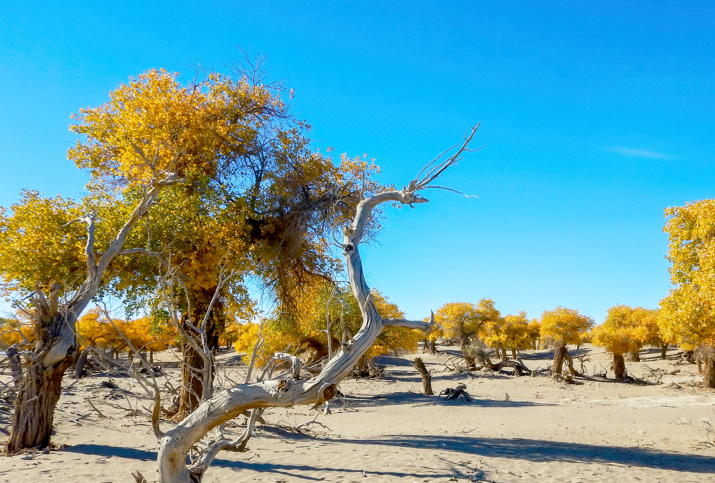
Dengkou County is located on the eastern edge of the Ulan Buh Desert. In recent years, the county has made full use of the resource advantages of the Ulan Buh Desert area, adhering to the guidance of "more light collection, less water use, new technologies and high efficiency". Following the idea of integrating ecological management with industrialization and industrial development with ecologicalization, it has actively encouraged and introduced various enterprises and social capital to carry out industrial desert control.
The county has vigorously promoted technologies for inoculating cistanche on haloxylon ammodendron and atriplex canescens, developed sand industries such as desert Chinese medicinal materials, organic forage planting and new energy photovoltaic desert control, and has successively introduced more than 90 various enterprises. These efforts have effectively promoted the comprehensive management of the Ulan Buh Desert, with a total of 800,000 mu of ecological management completed through industrial desert control.
Xinhua News Agency reports that Inner Mongolia has promulgated the Inner Mongolia Autonomous Region Sand Control Regulations, which clearly stipulate that areas with desertified land should moderately and orderly develop characteristic sand industries and combine sand control with rural revitalization to drive farmers and herdsmen to increase employment and income. Dengkou County’s practice of developing cistanche industry is a vivid practice of this regulation.
Meanwhile, local authorities have connected the 10,000-mu cistanche base with desert scenery to create characteristic cultural and tourism routes, promoting the transformation of ecological achievements into cultural and tourism value and realizing the integrated development of multiple industries. This model not only improves the ecological environment but also enriches the industrial format and expands channels for people’s income increase.
Looking ahead, Dengkou County will continue to deepen the development of the cistanche industry, further optimize planting technologies, expand the deep processing industrial chain, and enhance the brand influence of cistanche products. It will also continue to promote industrial desert control, expand the scale of ecological management, and integrate sand industry with cultural and tourism, photovoltaic and other industries. This will further revitalize the desert resources, help rural revitalization in an all-round way, and contribute to the construction of the northern ecological security barrier in China.