Smart Mechanisation and Agronomic Integration Revitalise Mountain Orchards in Sichuan
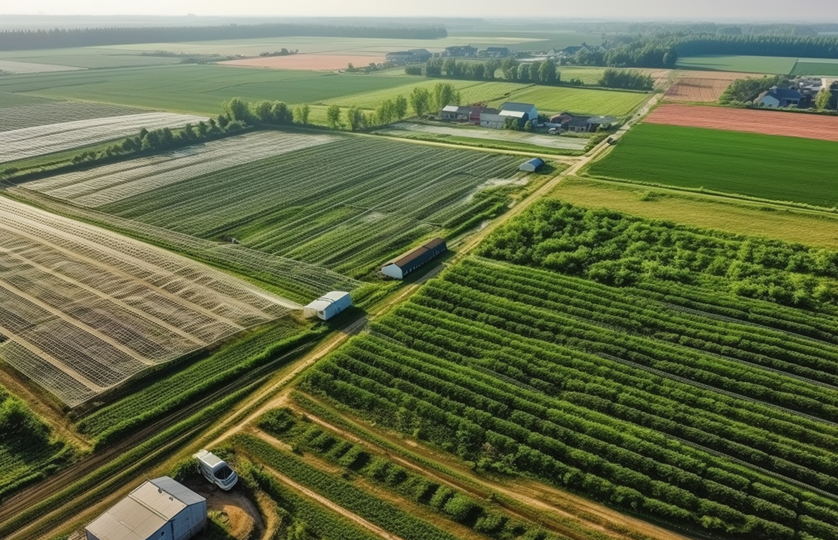
Modern intelligent agricultural machinery is reshaping traditional fruit planting in mountainous areas of Sichuan. In Yuexi County, Liangshan Prefecture, small-scale family orchards have adopted driverless plant protection equipment, intelligent trenching machines and automated maintenance devices, achieving efficient and refined orchard management. The local apple industry is stepping into a new phase of coordinated development featuring advanced machinery and standardised planting techniques.
For a long time, mountain orchards in Liangshan have faced prominent operational bottlenecks. Fragmented terrain, irregular tree shapes and backward drainage systems have hindered mechanical operations, keeping the local orchard mechanisation rate below 30%. Blindly introducing agricultural equipment without matching agronomic optimisation fails to unleash technological advantages, resulting in low operational efficiency and wasted production resources.
A national key research and development project has targeted these pain points by promoting integrated mechanisation and agronomic upgrading. Standardised transformation has been carried out in local demonstration orchards, adopting wide-row and narrow-plant spacing to reserve mechanical passageways. Optimised drainage systems and streamlined tree structures eliminate operational dead angles for intelligent devices, enabling agricultural machinery to travel and work efficiently in mountain plots.
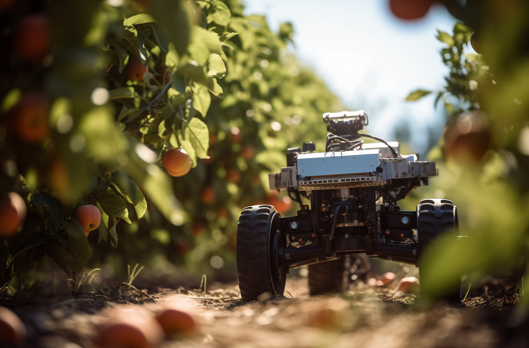
The integration of advanced technology and scientific planting delivers substantial efficiency improvements. Manual weeding struggles to cover 20 mu within a full working day for four workers, while intelligent mowers can complete over 100 mu of operations in the same period. Unmanned plant protection devices finish pesticide spraying across 40 mu in just 10 minutes, far exceeding traditional manual efficiency. Updated intelligent bagging equipment also multiplies operating efficiency and cuts labour costs effectively.
Demonstration effects from small-scale family orchards drive upgrading of large industrial parks. Standardised and refined management in small orchards sets replicable benchmarks, prompting large-scale modern orchards to optimise tree shapes, improve drainage facilities and unify planting standards. This progressive optimisation model accelerates the overall modernisation of the regional fruit industry.
Scientific and systematic industrial planning underpins steady growth of local agriculture. Local agricultural research teams have formulated targeted development strategies tailored to Yuexi’s high-altitude ecological advantages. Optimised fruit varieties, standardised planting modes and multi-source resource integration have reversed the long-term stagnation of the local apple industry. The county’s apple planting area has expanded to 100,000 mu, with a total industrial output value exceeding 350 million yuan, benefiting more than 30,000 farming households and raising average household annual income by over 20,000 yuan.
The technological promotion model has expanded across multiple southwestern provinces. Covering 24 demonstration counties in Sichuan, Yunnan, Guangxi and Guizhou, the project promotes high-quality crop varieties and intelligent agricultural equipment for six characteristic fruits. It has realised a total promotion area of 474,000 mu, bringing an economic increase of 502 million yuan and driving income growth for 24,000 rural households.
Local agricultural departments continue to advance the integration of improved seeds, advanced planting methods, standardised management, intelligent machinery and high-quality products. Mature technical experience from Liangshan’s mountain orchards will be widely replicated in southwestern hilly regions, steadily empowering the high-quality development of the characteristic fruit industry and sustainable rural income growth.