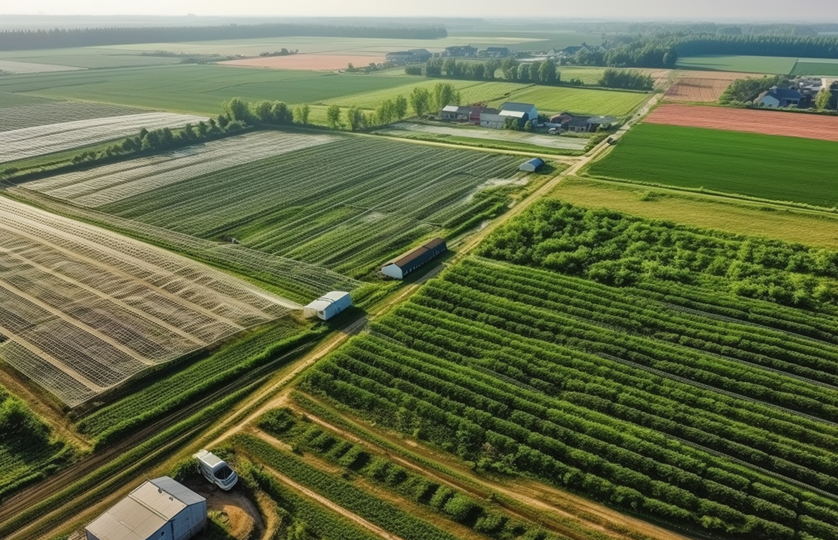
Qianshan Boosts Sericulture Industry Upgrading to Drive Rural Revitalisation and Farmers’ Income Growth
Qianshan City in Anhui Province is leveraging its local resource endowments and technological innovation to upgrade the sericulture sector, advancing integrated rural revitalisation and steady income growth for collective villages and local residents. The city has built a sustainable development model featured with technology-driven sericulture and industry-based rural prosperity, delivering tangible economic benefits for rural households.
At present, Qianshan boasts 32,900 mu of practical mulberry fields, covering 6,610 sericulture households including 508 households lifted out of poverty and monitoring households. The annual total output value of the local sericulture industry reaches 366 million yuan, with each participating household gaining an average annual income increase of 4,000 yuan.
The city has optimised industrial layout through systematic planning and differentiated development. It has formulated a specialised development plan for the sericulture industry, aligning industrial construction with territorial spatial planning and rural development schemes. Centring on key villages, the city has built contiguous standardised sericulture bases and arranged downstream deep-processing industries in surrounding areas, forming a coordinated development pattern covering production, processing and rural employment. Over 2,000 mu of new sericulture bases were developed in 2025.
Targeted functional zoning divides the industry into ecological planting and breeding zones, factory-based silkworm rearing zones and processing and transformation zones, avoiding homogeneous competition and achieving clustered industrial development. Six national, provincial and municipal-level demonstration villages and towns specialising in sericulture have been cultivated. Meanwhile, Qianshan promotes intensive management by encouraging orderly land transfer via shareholding and trusteeship models, solving the problems of fragmented land resources. Nearly 30 large-scale sericulture family farms covering over 50 mu each have been established.
Technological empowerment serves as the core driver of industrial upgrading. The city has built in-depth cooperation with the Sericulture Research Institute of Anhui Academy of Agricultural Sciences and set up expert workstations to tackle key technical problems in silkworm breeding and artificial feed cultivation. It has launched Anhui’s first full-age factory-based silkworm rearing plant, adopting advanced artificial feed breeding technology to transform traditional sericulture.
The new technology shortens the whole breeding cycle to 28 days, enables year-round multi-batch standardised production and raises per mu economic benefits by more than three times, eliminating the constraints of high labour intensity, long production cycles and seasonal climate restrictions in traditional breeding. The innovative “age-based sericulture transfer” model connects factories and farmers closely. Factories raise young silkworms to the third instar with professional feed before distributing them to households, cutting manual labour input by 75 percent and building a mutually beneficial industrial linkage system.
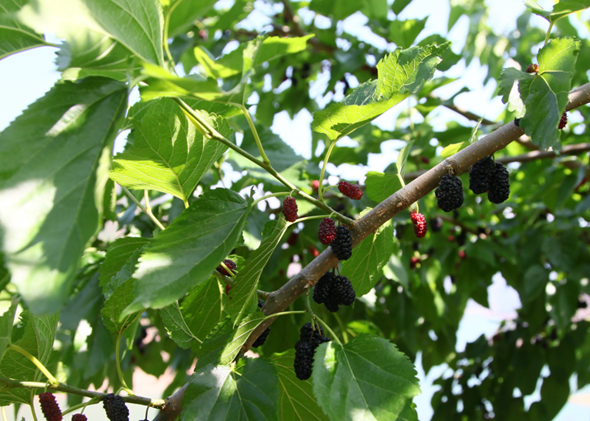
Qianshan also extends the industrial chain to boost integrated development of primary, secondary and tertiary industries. It makes full use of idle silkworm breeding greenhouses to realise circular planting of mulberry and fungi, forming a diversified product matrix including mulberry sprouts, mulberry fruits, mulberry leaf tea, mulberry branch fungi and mulberry yellow fungi. The local characteristic brand “Silkworm Township Gifts” has been built, and the integration of sericulture industry and cultural tourism continues to deepen to raise product and industrial added value.
Sound institutional guarantees underpin long-term industrial development. The city integrates various rural funds and arranges 30 million yuan of annual fiscal support for characteristic industries, prioritising investment in sericulture construction projects and driving nearly 10,000 households to participate in industrial operations. A targeted pairing assistance mechanism has been implemented, with more than 150 large-scale breeders learning advanced technologies from domestic advanced regions and becoming local technical talents.
Targeted training and on-site guidance are provided to improve farmers’ breeding capabilities. A stable benefit linkage mechanism ensures multi-channel income growth for rural residents. The “young silkworm distribution plus guaranteed purchase” model brings an average annual income increase of 5,200 yuan for 660 sericulture households. An 800-square-metre mulberry leaf processing factory enables local on-site transformation, adding an extra 500 yuan of income per mu for farmers. Surplus rural labourers can also gain an average annual income increase of 15,000 yuan through factory employment.