Low-cost Cup Transplant Technology Boosts Flue-cured Tobacco Yields in Yunnan Rural Areas
A low-cost and efficient agricultural technology is gaining rapid popularity among local farmers in Gongshan Town, Xundian County, Kunming, Yunnan Province, revolutionising traditional flue-cured tobacco planting patterns. The lightweight transparent protective cups, known as tobacco seedling protection cups, have expanded from an initial trial area of 4.5 mu to 312 mu in just one year, with 32 local tobacco farmers actively adopting the innovative planting method for the current planting season.
The simple reusable plastic cups serve as miniature greenhouses for newly transplanted tobacco seedlings. They address long-standing pain points in traditional tobacco cultivation, including seedling burning, wind-damaged plastic mulch, insufficient water retention and cumbersome field management. Each cup costs merely 0.257 yuan and can be reused for three to four years, delivering remarkable economic benefits with minimal input.
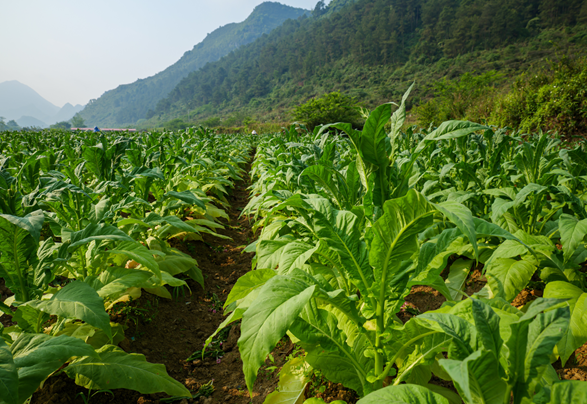
The technology was first trialled on a small scale by local agricultural technicians last year. After witnessing stable seedling growth and significant improvements in planting efficiency, local farmers have voluntarily promoted the technique across wider farmland. The transparent cups maintain stable temperature and humidity around seedlings, completely eliminating seedling burning risks caused by untimely film removal in traditional mulch planting.
Suited to the windy climatic conditions of local mountainous areas, the cups firmly press down ground mulch to prevent wind damage, removing the need for repeated film repairing and seedling replacement. The cup structure also collects rainwater effectively, improving soil water retention and enhancing drought resistance for tobacco roots. Their transparent design allows farmers to observe seedling growth status directly, simplifying daily field management and cutting redundant working procedures.
The optimized transplanting process removes deep digging and secondary film piercing steps, greatly reducing labour intensity and working hours. According to field survey data, the one-time investment per mu stands at around 240 yuan, and the average annual amortised cost drops below 80 yuan due to long-term reuse. The technology achieves a nearly 100 percent seedling survival rate and accelerates the growth cycle by three to five days, enabling earlier harvesting and sales.
Research published by the Chinese Agricultural Science Bulletin verifies that cup transplant technology increases tobacco yield by approximately 5 kilograms per mu and raises per mu output value by nearly 185 yuan. The substantial cost-saving and yield-increasing effects have driven a dramatic expansion in application scale, with participating farmer households surging 31 times and planting area growing 68 times year on year.
The practical micro-innovation has brought tangible income growth opportunities for local farmers. It also provides a replicable technical model for refined, efficient and labour-saving tobacco planting in mountainous regions, injecting steady impetus into the high-quality development of the local characteristic tobacco industry and rural vitalisation.