Yuxi Boosts Crop Straw Valorisation to Drive Sustainable Rural and Agricultural Development
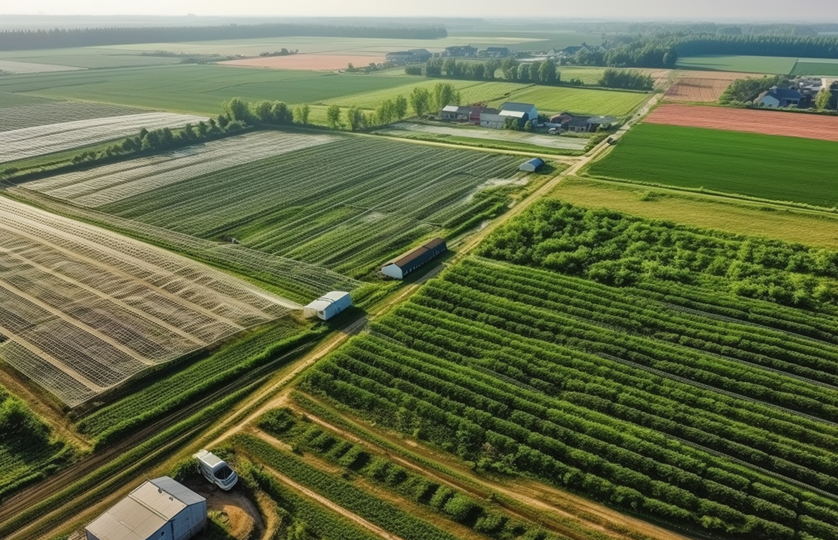
Jiangchuan District in Yuxi city boasts mild climatic conditions and fertile farmland, hosting around 223,000 mu of cultivated land primarily used for rice, corn and vegetable planting. The region generates approximately 187,000 tonnes of crop straw annually. For a long time, high collection and transportation costs paired with immature processing technologies have constrained local straw comprehensive utilisation efficiency, affecting rural living environments and sustainable agricultural development.
To unlock the dual value of straw resources and market potential, Jiangchuan District has adopted a resource-upcycling development strategy centred on five major utilisation models, namely fertilisation, feeding, fuel conversion, substrate application and industrial raw material processing. The local authority has incorporated straw comprehensive utilisation into its overall agricultural development blueprint, building a diversified investment framework supported by governmental funds, social capital and operational entity self-financing to encourage coordinated participation from projects, market players and rural households.
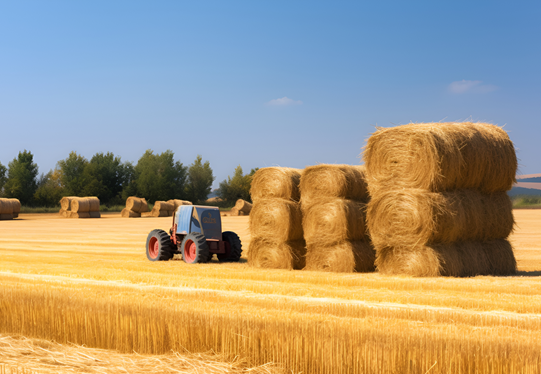
Since 2024, Jiangchuan District has allocated 9.5 million yuan in special subsidies for straw utilisation. Multiple incentive mechanisms including direct subsidies, post-construction allowances and performance-based rewards have been rolled out to support households, cooperatives and enterprises in purchasing specialised agricultural equipment such as straw crushers, balers and kneading machines, and constructing silage cellars and straw storage facilities. The targeted policy support has substantially upgraded regional straw collection, storage and processing capacity.
The district also leverages research achievements from universities and research institutes in straw decomposition agents, water retention agents and organic fertiliser optimisation to conduct field monitoring and effect evaluation for straw returning technologies. Field trials verify that scientific application of decomposition agents effectively improves soil organic matter content and soil structure, with soil quality indicators reaching 1.6 times higher than control groups, providing reliable technical support for efficient straw returning and farmland fertility improvement.
Innovative straw-based material technology has achieved notable breakthroughs at experimental bases in Yangjiazui Village, Qianwei Town. Processed straw has been developed into high-performance hydrogel materials with superior water and fertiliser retention capabilities. Applied to spinach, onion, water spinach and pakchoi cultivation, the new materials reduce chemical fertiliser usage by 25 per cent. The straw-derived water retention agent also delivers 25 per cent better performance than mainstream commercial alternatives on the market.
Jiangchuan District has established targeted demonstration zones to scale up mature straw utilisation models. A 240-mu full straw returning demonstration plot in Yangjiazui Village has driven expanded application across 1,800 mu of farmland, processing 1,100 tonnes of straw every year. A specialised straw feed processing site in Liushimu Village, Jiuxi Town, produces 3,200 tonnes of silage and yellow storage feed annually, meeting the breeding demands of 42 local livestock farms.
Driven by systematic policy support and technological innovation, the district’s comprehensive straw utilisation rate has surpassed 92 per cent in 2025, maintaining steady year-on-year growth. The industrial upgrade has delivered tangible ecological and socioeconomic benefits. Local straw utilisation projects have created 280 rural jobs and lifted annual household income by an average of 3,500 yuan for participating farmers.
Straw fertilisation application has cut chemical fertiliser consumption by 210 tonnes per year, reducing crop planting costs by 850,000 yuan. Meanwhile, straw-based feed production replaces traditional forage resources, lowering livestock breeding costs by 1.2 million yuan for local farmers. Crop straw in Jiangchuan has successfully transformed from rural ecological burden into valuable green agricultural resources, laying a solid foundation for the long-term sustainable development of modern ecological agriculture.