Changyi’s Regional Cluster Drive Powers Rural Revitalization in East China
Changyi, a city nestled along the lower reaches of the Weihe River and the Bohai Sea in Shandong Province, has been leveraging the experience of the "Ten-Thousand-Village Improvement Program" to advance rural revitalization through regional cluster development, in line with the 15th Five-Year Plan’s guideline of promoting rural revitalization in an orderly and regionalized manner.
The city has built a hierarchical development framework featuring 10 model clusters driving progress, 32 emerging clusters taking shape and 629 villages advancing toward all-round revitalization. Confidence abounds that full-scale rural revitalization led by these clusters will be achieved in around five years through strengthened livelihood industries, improved rural construction, enhanced factor aggregation, more effective governance and stronger Party building guidance.
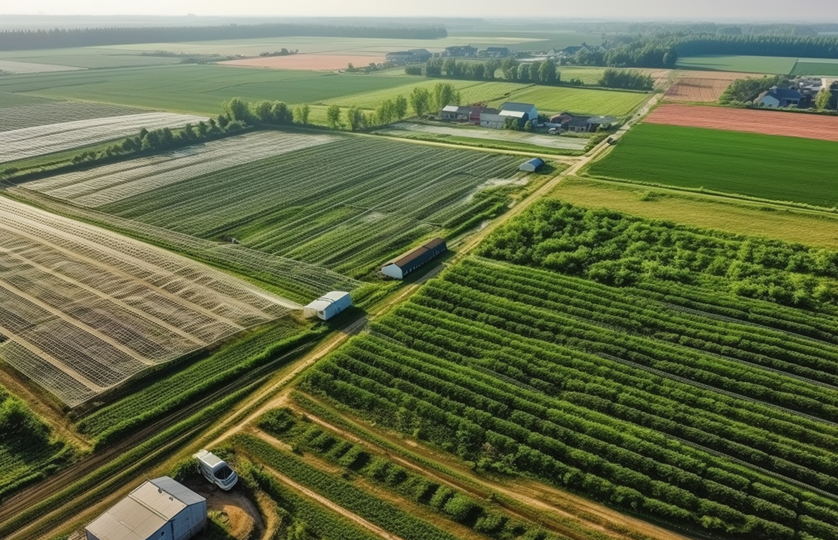
In the "Saline-Field Granary" cluster, sprinklers spray water and fertilizers over vast wheat fields, creating rainbows in the mist. This vibrant scene stems from regional integration that addressed the long-standing problem of low grain yields caused by scattered saline-alkali land. Since 2023, the city has planned 10 high-quality clusters by integrating 20 core villages with surrounding potential villages, famous industrial villages and model civilized villages. Over 200 million yuan has been invested to lay 55 kilometers of water diversion pipelines, forming a comprehensive water storage system that has increased grain yield per mu from less than 350 kilograms to over 1,350 kilograms in three years. The cluster has also launched large-scale land management services covering 102,000 mu, benefiting farmers across 11 villages.
Rather than simple geographical combination, the cluster development realizes the chemical reaction of factor restructuring. Guided by systematic planning, each cluster focuses on one or two core industries based on local conditions. The "Ten-Thousand-Mu Jujube Garden" cluster has developed a cooperative mechanism involving communities, enterprises and farmers. It has collaborated with Shandong Academy of Agricultural Sciences to breed new jujube varieties and develop processed products like jujube bud tea. With annual sales exceeding 30 million yuan, it has become the nation’s largest pear-jujube production base and trading center, boosting the per capita income of local farmers to 50,000 yuan. The "Red Memory" cluster integrates local cultural and historical resources to create a tourism network, converting cultural appeal into economic benefits.
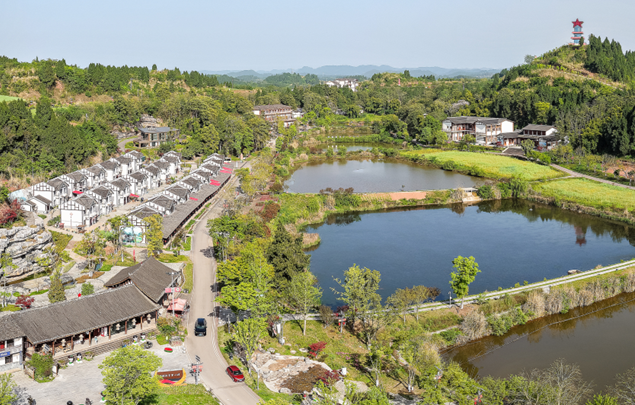
The "Pear Blossom Water Town" cluster, established in 2024, attracts 100,000 visitors during the Qingming holiday alone with its pear gardens and rural delicacies. Smooth village roads, neatly arranged farmhouses and hidden overhead wires have turned the area into an idyllic residence. Such transformation is supported by the city’s five-in-one cooperation initiative, which promotes cross-village cooperation, enterprise-village alliance, talent exchange, industrial collaboration and community integration. Fifteen shared-prosperity companies and 36 partners have been introduced under this model.
By 2025, the income ratio between urban and rural residents in Changyi has narrowed to 1.65:1, with 43 villages achieving collective income exceeding one million yuan each. The city has built 203 model villages recognized at or above the prefecture level, with beautiful courtyards accounting for 49.49% of the total. Two more villages were named national civilized villages in 2025, bringing the total to six, as local customs are polished through regular cultural activities.
China Youth Net reports that Changyi’s institutional achievements and practical paths in rural cluster development are replicable and promotable, offering a valuable reference for advancing rural revitalization with local characteristics across the country.