Changyi Transforms Saline Land with Integrated Farming Innovation to Secure Bumper Wheat Harvests
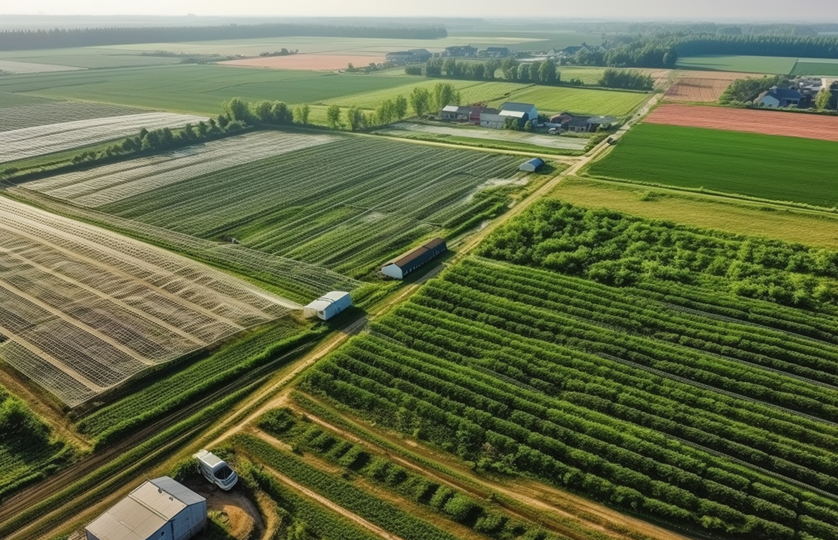
Vast golden wheat fields stretch far and wide across Changyi, as soft June breezes sweep across ripening ears of grain, signalling an abundant summer harvest on the horizon.
Within Qingfu Agricultural Complex’s tracts of high-standard farmland, wheat stalks stand sturdy with plump, well-filled grains. Operators of local agricultural enterprises project a 10 per cent year-on-year yield rise for wheat this season, marking another strong harvest cycle.
Stable supply of grain and key agricultural produce stands central to building a robust agricultural sector. Changyi has consistently prioritised cultivated land protection and food security, rolling out systematic solutions to overcome constraints imposed by coastal saline soil. The city maintains grain sown areas above 80,000 hectares, with annual total output exceeding 500 million kilogrammes. Summer grain output has recorded sustained growth in planting area, per-unit yield and overall production for successive years. The region holds official accolades including National Advanced Unit for Grain Production, National Pilot County for High-efficiency Water-saving Irrigation, National Major Grain-producing County, National Demonstration County for Full Mechanisation of Major Crops, and Shandong Provincial Demonstration County for High-standard and High-efficiency Agricultural Mechanisation. It has also been listed in Shandong’s county-level digital agriculture development rollout scheme.
Sustained expansion in wheat acreage and grain industrial output stems from Changyi’s integrated development framework, spanning saline land remediation, premium seed breeding, digital agricultural management and full industrial chain value upgrading.
Water Infrastructure and Soil Improvement Lay Solid Production Foundations
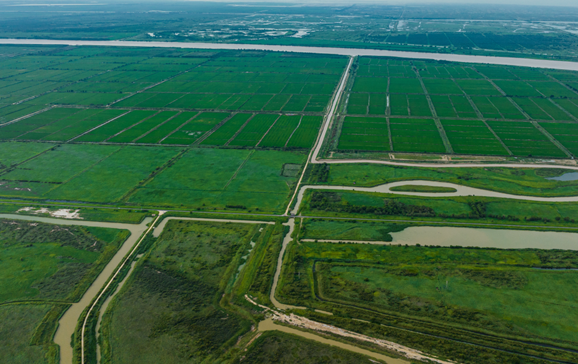
Water conservancy underpins grain output, while fertile land forms its core base. To address extensive saline tracts along northern coastlines, Changyi has built a modern regional water network and rolled out systematic soil rehabilitation schemes.
Consistent long-term planning has guided river regulation works, establishing a core water grid framework defined by three main axes, three water supply networks, nine vertical channels, seven horizontal conduits and hundreds of storage ponds. Projects including the Weixi water diversion scheme connect irrigation zones to field-side channels, resolving final-mile barriers to saline land restoration. Within Qingfu Agricultural Complex, salt concentrations in severely saline plots have fallen from above 10‰ to under 3‰, while combined biannual grain yields have surged from less than 250 kilogrammes per mu to over 1,200 kilogrammes per mu.
Four rubber dams and the Xin’anzhuang tide-control storage sluice on the Wei River form riverine plain reservoirs with a combined storage capacity of 68 million cubic metres, securing irrigation water supplies across northern coastal zones. In Liutuan Town, dredging along the Xiaolong River’s main and branch watercourses links 53 natural ponds in a chain-style storage layout, delivering a comprehensive water retention capacity of 8 million cubic metres.
Parallel to saline land remediation covering 102,000 mu within Qingfu Agricultural Complex, Changyi continues upgrading high-standard farmland construction. New paved farm access roads and underground irrigation pipe networks complete integrated field, water, road, forest and channel infrastructure to stabilise grain yields. Cumulatively, 666,500 mu of high-standard farmland has been completed citywide.
Premium Seed Varieties Matched with Optimised Cultivation Techniques
Seeds represent the core technological asset of farming. Changyi collaborates with provincial and national research institutes and higher education bodies to build a complete industrial chain covering seed breeding, field demonstration and large-scale promotion, matching tailored varieties to local soil conditions.
Three newly-bred wheat lines jointly developed with research institutions, namely Jitai 46, Weimai 2411 and Weimai 2461, have entered national and provincial variety certification trials, with Weimai 2411 undergoing national-level assessment.
Shannong 48, a widely promoted resistant wheat strain in Changyi, carries the major resistance gene Fhb7 against Fusarium head blight and delivers moderate powdery mildew resistance alongside robust winter hardiness. The variety covered 100,000 mu of local farmland in 2025. Its grains contain 12.8ug/g lutein, 3.59 times the concentration found in Jimai 22, offering nutritional benefits for eye health. Strong saline tolerance enables large-scale planting across nearly 10,000 mu at Qingfu Agricultural Complex from autumn 2022. Milled flour from this crop supplies school canteens throughout Changyi, earning steady market demand for its pale golden texture.
On 8 June, over 60 distinct wheat varieties were displayed in trial demonstration fields managed by local agricultural technology firms in Yinma Town. Clear signage outlines each strain’s specifications and seed suppliers, while specialists from Weifang Academy of Agricultural Sciences conduct real-time yield measurement on maturing crops. Five large-scale variety demonstration events and agricultural training sessions have been co-hosted with local agricultural authorities post-wheat grain filling, allowing growers to compare performance on-site and select varieties aligned with their field conditions, paired with scientific cultivation guidance to maximise seed potential.
Comprehensive agricultural technical support underpins consistent grain output. Following delayed wheat sowing triggered by autumn flooding in 2025, Changyi rolled out targeted technical support, policy backing and on-farm outreach under a dedicated seedling strengthening initiative. A team of 157 agricultural technicians maintains continuous field presence throughout the full crop cycle, covering autumn sowing, winter and spring crop management, pest control and summer harvest preparations. Customised intervention measures support underdeveloped seedlings to achieve uniform robust growth across all farmland.
Synergy between premium seeds and refined agronomy lifts overall grain productivity. Changyi has hosted annual high-yield grain competitions for three consecutive years. Contest plots recorded a maximum wheat yield of 847.1 kilogrammes per mu and a record maize yield of 905.78 kilogrammes per mu in 2025, breaking regional maize yield benchmarks for Weifang City and lifting average municipal grain yields across all varieties. Further soil conditioning using cattle manure and biogas residue is projected to push two-crop yields on Qingfu’s saline farmland to 1,600 kilogrammes per mu in future cycles.
Digital and Smart Technology Boost Precision Farming Output
Scientific innovation delivers lasting solutions for yield stability and growth. Changyi prioritises digitalised and unmanned agricultural technology to upgrade wheat production systems.
A digital twin irrigation framework, structured around one big data intelligent control centre, one digital management platform for Xiashan Reservoir’s Changyi irrigation zone and two automatic monitoring stations, enables remote precision agricultural management across northern saline regions. Real-time data on channel water levels, flow rates, field temperature, soil moisture and meteorological conditions feeds back to the central control hub, supporting remote decisions on irrigation and fertilisation scheduling. Adoption of water-saving irrigation and integrated water-fertiliser systems cuts water consumption by over 50 per cent and raises fertiliser utilisation efficiency by more than 30 per cent.
Large-capacity agricultural drones now carry out all crop spraying operations within Qingfu Agricultural Complex, delivering even coverage at 100 times the speed of manual spraying while slashing operational costs to roughly one-twentieth of traditional labour expenses. High-precision digital farm management has supported strong wheat yields despite delayed sowing in the previous cycle, with timely irrigation, fertilisation and pesticide application enabled by technological infrastructure.
Designated a National Demonstration County for Full Mechanisation of Major Crops, Changyi holds total agricultural machinery power of 1.164 million kilowatts, with an overall agricultural mechanisation rate reaching 96.97 per cent. Ahead of the 2026 summer harvest, 1,350 wheat combine harvesters and 736 agricultural social service organisations stand fully prepared for field operations. Eleven emergency machinery task forces have been assembled, with tracked harvesters and mobile grain dryers stockpiled to streamline summer harvest workflows.
Integrated Storage and Processing Industries Expand Grain Value Chains
Changyi develops a complete industrial system linking grain production, secure storage and value-added processing to lift profitability across the whole grain sector.
A three-tier grain drying network, combining large central facilities, medium and small auxiliary equipment and mobile emergency dryers, mitigates losses caused by rainy weather during harvest seasons. The city operates 67 sets of grain drying equipment with a combined daily processing capacity exceeding 10,000 tonnes, delivering reliable drying services for individual grain growers and large-scale farming operators.
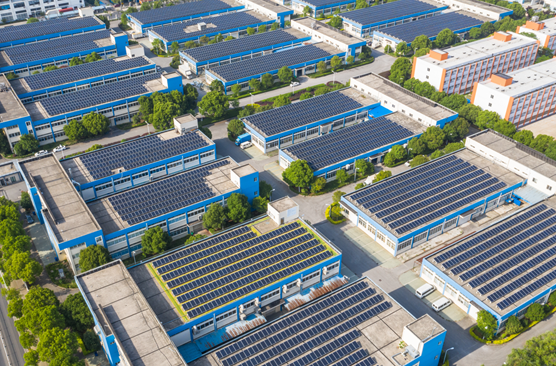
Changyi Grain Storage and Logistics Park in Weizi Sub-district operates as the region’s largest and most comprehensively equipped grain storage hub, with a total storage capacity of 55,000 tonnes. Integrated conveying, cleaning, drying and warehousing production lines run alongside intelligent grain monitoring systems that track temperature, humidity and pest activity 24 hours a day, triggering automatic ventilation and cooling adjustments to minimise grain deterioration and storage losses. The facility maintains round-the-clock staffing during wheat harvest periods and provides mobile on-site purchasing and drying services on demand.
Deep processing drives higher returns for local wheat supplies. Leveraging national agricultural industry town designation in Yinma Town, local flour manufacturers operate advanced production lines with a daily processing capacity of 1,000 tonnes. Beyond specialised flour variants, facilities develop high-value derivatives including wheat germ oil, vital wheat gluten and dietary fibre. The firm’s flour product range holds Shandong Provincial Famous Trademark accreditation, alongside titles of Shandong Provincial Key Agricultural Industrialisation Leading Enterprise, Shandong Provincial Agricultural Product Processing Demonstration Enterprise, National High-quality Grain and Oil Demonstration Enterprise and Shandong Provincial Emergency Supply Enterprise, with goods distributed nationwide.
Building on its national major grain-producing county status, Changyi fosters leading agricultural processing enterprises alongside family farms and other new agricultural business entities, forming a closed-loop industrial chain covering seed breeding, cultivation, warehousing and deep processing. Full industrial chain output value for grain sectors reached 10.549 billion yuan in 2025, with secondary processing industries contributing 8.232 billion yuan of this total, marking robust expansion across the local grain economy.
Continuous innovation across soil remediation, seed development, digital precision farming and full industrial chain upgrading creates sustained upward momentum for grain yields in Changyi. Ongoing optimisation of agricultural infrastructure and technological application will unlock further production potential on saline land and drive consistent high-output harvests in subsequent growing cycles.