Ramie’s Three-millennia Heritage Revives as Full Industrial Chain Takes Root in Dazhu, Sichuan
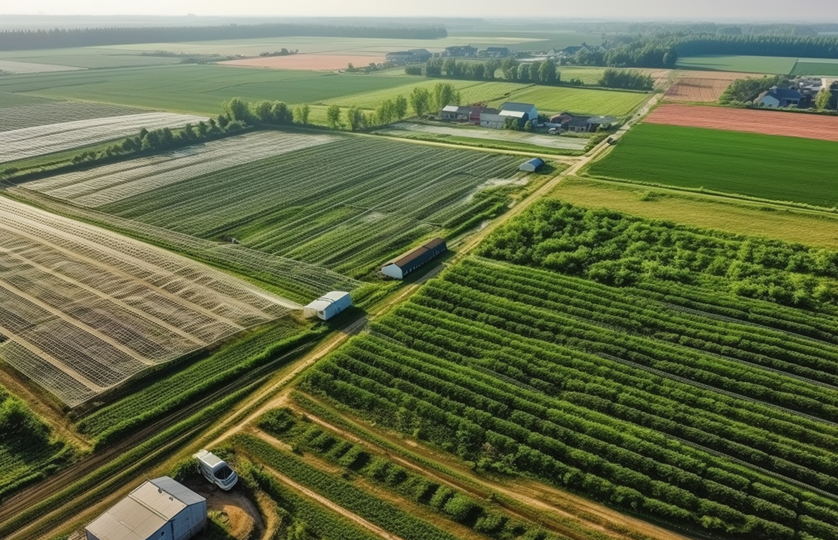
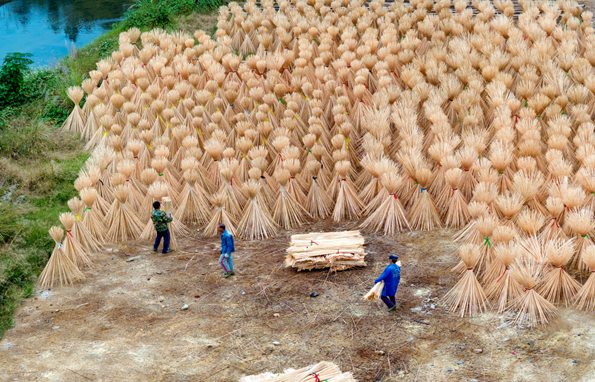
As Grain in Ear arrives across eastern Sichuan, mechanical decortication machines hum non-stop through core ramie farmlands in Chuanzhu Township, Dazhu County. Local farmers race to cut, strip and transport fresh ramie fibres under dry sunny weather, stacking wet raw fibre neatly ahead of delivery to drying yards and industrial processing facilities.
Ramie, often dubbed “China Grass” by overseas markets, has been cultivated across Dazhu for more than 3,000 years. Its development trajectory weaves through ancient agricultural routines recorded from the Shang and Zhou dynasties, prosperous inter-regional trade networks of the Tang and Han eras, a golden industrial phase in the 1980s, market headwinds in the 1990s, and comprehensive industrial revitalisation in the modern period. The crop stands embedded within local cultural identity and regional heritage.
Local authorities guide a three-tier upgrade strategy for ramie production, shifting operations from conventional manual farming to tech-enabled cultivation, shifting basic raw fibre processing to high-value deep manufacturing, and expanding standalone agricultural output into integrated primary, secondary and tertiary sectors. A complete industrial network covering seedling breeding, field planting, textile processing, spinning and cultural tourism has taken shape, lifting household incomes for nearly 50,000 ramie growers and forming a solid pillar for high-quality county-level economic growth.
Primary Industry Lays Solid Foundation via Agricultural Technology
Traditional ramie cultivation long faced three persistent operational hurdles: lengthy seedling cycles, labour-intensive manual stripping and limited field output efficiency. Elderly residents retain hand stripping craft, a labour-heavy practice that required two labourers twenty working days to tend one mu of land with modest annual returns.
Intelligent greenhouses operated by Jin Yue Agricultural Technology deliver precise automated irrigation and ventilated temperature control, nurturing uniform tender ramie seedlings. Advanced systems cut traditional three-month seedling cycles to just 32 days, eliminating manual weeding requirements and pushing seedling survival rates above 96 per cent. The enterprise manages a 2,000-mu standardised planting base, adopting flexible rotational schedules for harvesting and seedling transplantation. Over 70 local villagers secure steady daily employment, with labour numbers rising above 100 during peak farming windows. Free premium seed distribution, on-site technical guidance and guaranteed purchasing prices extend production support to more than 500 surrounding farming households.
Selective breeding delivers core competitive advantages for regional crop development. Collaborative research between Dazhu County and Dazhou Academy of Agricultural Sciences generated Chuan Ramie No.16, a high-yield strain with a 12 per cent fibre extraction ratio. Mature plantations deliver average yields of 170 kilograms per mu, with mechanical stripping pushing maximum output to 210 kilograms per mu, nearly 50 per cent higher than conventional varieties. Finer, tougher fibre textures further elevate raw material quality. A dedicated 120-mu breeding base supplies over 1,200 kilograms of certified seeds during spring 2026, supporting concentrated seedling cultivation across 3,200 mu and achieving 100 per cent coverage of premium ramie strains countywide. Average single fibre count stabilises above 2,000, peaking at 2,800, outperforming the national average benchmark of 1,500 and securing top-tier domestic fibre quality rankings.
Mechanised equipment resolves labour shortages and rising staffing expenses. Compact mountain ramie stripping machinery now operates as standard farm infrastructure, processing 800 kilograms of wet fibre daily with efficiency 12 times higher than fully manual work, trimming stripping costs by more than 1,000 yuan per mu. Three county-wide dedicated ramie processing service hubs house 12 sets of automated U-shaped stripping production lines, offering on-demand field processing and mobile service packages. Fresh ramie completes stripping operations within 24 hours, forming a streamlined closed workflow covering field harvesting, on-site fibre separation, bulk logistics and factory refinement.
Local authorities issued Eight Support Measures for Breakthrough Ramie Industrial Development in 2024, allocating 6.7 million yuan in annual subsidies for planting expansion and mechanical decortication equipment purchases. Official agricultural statistics record upgraded and newly established ramie fields covering 34,000 mu by the close of 2025, lifting total county cultivation area to 135,000 mu. The region accounts for roughly 40 per cent of national ramie planting acreage and 60 per cent of Sichuan provincial output, yielding 20,000 tonnes of premium raw ramie each year with a 100 per cent high-grade fibre ratio. Annual industrial output reaches 400 million yuan, delivering average annual income growth of over 2,200 yuan for each of the 47,600 registered ramie farming households.
Secondary Industry Strengthens Supply Chains Through Leading Manufacturers
Agricultural cultivation forms the industrial base, while downstream textile manufacturing underpins sector-wide expansion. Production workshops run by Sichuan Yati Textile Technology operate over 500 full digital production units carrying out degumming, carding, spinning and weaving procedures to produce fine-textured ramie fabrics. During the first quarter of 2026, the facility manufactured 2.1 million metres of textile cloth and 1,050 tonnes of ramie yarn, generating industrial output worth 186 million yuan with zero finished product inventory backlogs; customer order schedules extend as far as September.
The deep-processing flagship facility represents a total investment of 350 million yuan, housing 63,000 long-spinning spindles and 25,000 short-spinning spindles, ranking among China’s largest ramie textile production capacities. An in-house research and development team of over 20 technical staff resolved long-standing industry limitations including fabric prickle, creasing and weak colour fastness, developing more than ten blended textile materials combining ramie with lyocell and tencel fibres. Product value added rises by more than 30 per cent, establishing stable supply partnerships with multiple domestic premium clothing brands. The factory employs 820 staff members, 90 per cent drawn from local communities, with frontline skilled operators earning average monthly salaries above 6,000 yuan and peak monthly wages reaching 12,000 yuan. The enterprise plans an additional 200 million yuan factory expansion in 2026; full post-completion operations will lift annual output value past 1 billion yuan and create 400 extra permanent employment positions.
Four designated ramie processing manufacturers operate within Dazhu Economic Development Zone, including Yati Textile, Rongyuanyuan Textile, Jingyu Textile and Jinfeng Ramie Industry, forming an integrated production network covering degumming, spinning and weaving. Total annual degumming capacity stands at 18,000 tonnes with spinning scale exceeding 100,000 spindles, quadrupling 2020 processing capacity and multiplying processing output value fourfold. Rongyuanyuan Textile deployed internationally advanced intelligent manufacturing equipment to deliver 180 million yuan in annual output during 2025, distributing finished goods to more than ten markets spanning Europe, the Americas, Japan and South Korea.
The county’s ramie sector previously sustained 24 textile mills with 20,000 industrial workers in the 1980s, covering 220,000 mu of ramie fields. The industry contributed 25 per cent of county industrial output value, 40 per cent of local tax revenue and over 80 per cent of cross-border export earnings. Unstable international market cycles and narrow single-product portfolios triggered widespread factory closures through the 1990s, reducing local operations to raw fibre supply only.
Regional development frameworks now centre on flagship enterprise cultivation and full-chain industrial expansion, combining targeted policy upgrades for local manufacturers with precision investment attraction for external high-value processing firms. Sichuan Ramie Engineering Technology Research Institute operates within the county, drawing on specialist research stations to advance biological degumming technology and premium textile material development, guiding the sector’s transition toward high-end, intelligent and environmentally sustainable manufacturing. Local ramie product ranges have expanded beyond semi-processed fibre and slivers to high-count yarn, luxury fabrics and specialised military-grade composite materials. Ultra-fine ramie composite materials engineered by high-tech enterprise Yuzhu Ramie Industry serve aerospace and national defence applications.
Major industrial construction projects progress to extend downstream value chains. A new biological degumming base will adopt pollution-mitigating biochemical processing techniques; a dedicated pure ramie yarn facility targets annual output above 80,000 tonnes upon completion; a complete ramie garment manufacturing park will evolve Dazhu into a national hub for finished ramie apparel. Combined infrastructure investment will facilitate the county’s shift from a major raw ramie supplier to a leading textile manufacturing centre.
Tertiary Industry Drives Integrated Cultural Tourism
Ramie functions not merely as a cash crop but as a three-millennia living cultural relic. Dazhu’s hand-woven ramie textile craft traces back a thousand years, with locally produced imperial tribute cloth gaining nationwide renown across the Tang and Han dynasties. Cross-industry integration between ramie cultivation, regional culture and tourism unlocks renewed visibility for traditional local heritage.
Jin Yue Agricultural Technology pioneered ramie cultural tourism development with a 5 million yuan investment in a dedicated ramie heritage exhibition hall and summer cloth experience centre. Exhibition spaces document the crop’s complete historical timeline and industrial evolution, while hands-on zones host guided fibre twisting, spinning and weaving sessions for visiting travellers. Cultural and creative product development aligns ramie heritage with contemporary national trend aesthetics, generating over 100 merchandise lines including summer cloth artwork, ramie apparel and home textiles. The venue welcomes more than 100,000 annual visitors, with cultural tourism and creative goods revenue contributing roughly 20 per cent of total enterprise turnover.
Industrial sightseeing emerges as a fresh revenue stream. Yati Textile constructs transparent open production corridors to showcase full ramie processing workflows to tourists, lifting brand recognition while supporting direct retail sales of finished textiles. County-level development blueprints outline a national ramie trading complex, complete with attached research laboratories, quality inspection centres, cultural experience venues and cotton-ramie themed commercial streets, forming a world-class integrated ramie cultural tourism compound. Local authorities progress toward national intangible cultural heritage designation for Dazhu’s hand ramie weaving craft, collating regional folk tales and traditional customs to sustain living cultural transmission.
Regional branding forms a core pillar of cross-sector integration. Dazhu Ramie holds national geographical indication certification and ecological origin protection accreditation, ranking within the top 100 most influential domestic agricultural regional public brands. Local manufacturers participate in international trade expos and annual national ramie industrial innovation conferences to expand global brand recognition. The assessed brand value of Dazhu Ramie surpassed 2.3 billion yuan in 2025, with finished goods distributed to more than 20 countries and territories worldwide.
Integrated tourism operations create a mutually reinforcing industrial cycle, where tertiary visitor exposure drives secondary textile sales, and rising product brand value lifts raw ramie purchasing prices to benefit primary farming households. Over 12,000 local villagers secured supplementary income streams tied to ramie cultural tourism services throughout 2025.
County development targets outline expansion to 200,000 mu of ramie cultivation by 2030, with full industrial chain annual output exceeding 10 billion yuan. Dazhu will operate as China’s largest premium ramie raw material base, a leading national ramie textile processing hub and a benchmark integrated ramie cultural tourism demonstration zone.
National agricultural and textile authorities continue rolling out supportive frameworks to advance characteristic crop industrial integration across rural regions. Standardised intelligent farming machinery, biological fibre refinement technology and cultural tourism commercialisation models gain wider nationwide uptake. Ongoing technical research optimises ramie breeding, low-carbon textile manufacturing and cultural creative product development, supporting sustained expansion of full-chain characteristic agricultural sectors across inland rural areas.