Qiandongnan Sees Historic Rural Transformation Over 70 Years with Robust Agricultural Upgrading
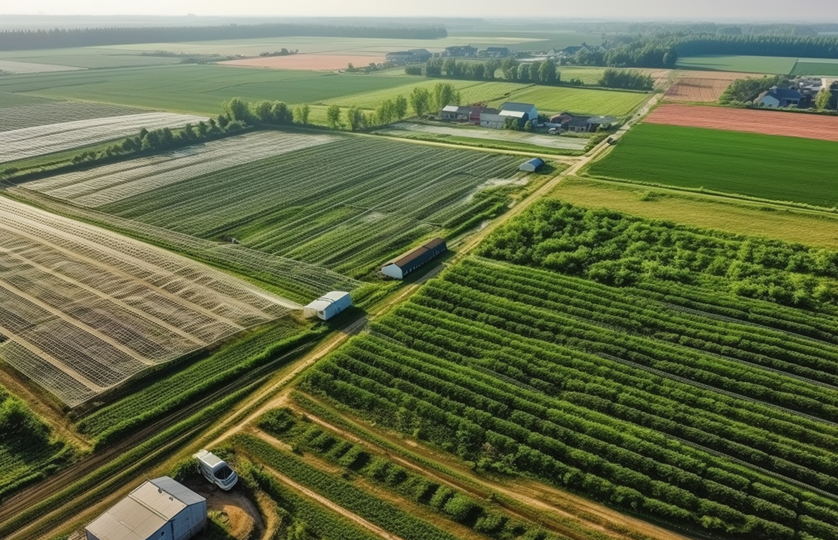
A press conference marking the 70th anniversary of the founding of Qiandongnan Miao and Dong Autonomous Prefecture was held on 23 June, unveiling sweeping historic advances in the prefecture’s agriculture and rural development. The prefecture has delivered comprehensive structural upgrades across rural industries and livelihoods, achieving transformative shifts from traditional farming to modern intensive cultivation, from basic subsistence living to well-off rural life, and from scattered individual operations to integrated whole-industry-chain development.
Key economic indicators have maintained steady high growth throughout the 14th Five-Year Plan period. In 2025, the total output value of Qiandongnan’s farming, forestry, animal husbandry and fishery industries reached 50.877 billion yuan, while the per capita disposable income of permanent rural residents hit 16,213 yuan. The growth rates of both indicators have consistently outpaced national average levels, reflecting solid momentum in rural economic advancement.
Local grain and non-staple food supply systems have maintained stable and sufficient operation. Qiandongnan has fully advanced grain capacity enhancement initiatives targeting stable staple food security. Its total grain output stood at 1.41 million tonnes in 2025, exceeding the official development targets set for the 14th Five-Year Plan period. Sufficient supplies of vegetables, ecological livestock, poultry and aquatic products have been secured across rural areas, with the pass rate of random quality safety inspections for local agricultural products reaching 99.3 per cent, establishing a stable supply system featuring sufficient volume, reliable quality and diversified varieties.

Solid progress has been made in consolidating poverty alleviation outcomes and reinforcing rural development safeguards. As 2025 marks the final year of the rural revitalisation transition period, Qiandongnan has strictly prevented large-scale return to poverty. The number of employed residents lifted out of poverty reached 625,800, fulfilling 112.82 per cent of the annual target. A total of 663 million yuan in industrial development subsidies has been distributed across the prefecture, with targeted assistance measures fully implemented for monitoring households and a risk elimination rate of 78.16 per cent recorded for vulnerable rural groups. Long-term paired assistance mechanisms have also delivered tangible results, with east-west collaborative support funds totalling 2.626 billion yuan invested in 621 rural development projects.
Characteristic rural industries have expanded in scale and achieved in-depth whole-chain integration. In 2025, the output of tea, Chinese medicinal herbs and fruits in Qiandongnan hit 25,000 tonnes, 300,000 tonnes and 1.37 million tonnes respectively. The prefecture ranks first across Guizhou Province in the planting scale and output of camellia oleifera, medicinal herbs, blueberries and under-forest economic crops, as well as in the slaughter volume of ducks and geese.
Over the past 70 years, the local agricultural sector has completed a comprehensive upgrade from extensive traditional planting and breeding to large-scale, branded characteristic industrial operations. A total of 71 local agricultural products have obtained green food certification, while three regional brands have been included in national high-quality agricultural brand cultivation programmes. The processing conversion rate of local agricultural products has risen to 70.9 per cent, an increase of 26 percentage points compared with the end of the 13th Five-Year Plan period. Integrated industrial chain development has accelerated steadily, with featured agriculture emerging as a core driving force for rural prosperity and grassroots economic growth.
Rural living environments have undergone remarkable improvements driven by refined environmental governance. Drawing on mature rural development experience, Qiandongnan has further promoted comprehensive rural living environment upgrading programmes, achieving notable progress in rural domestic sewage treatment, sanitary toilet renovation and domestic waste disposal system construction. By the end of 2025, the rural domestic sewage treatment rate reached 61 per cent, with more than 820,000 rural sanitary toilets renovated across the prefecture. Over 98 per cent of rural villages with more than 30 households have been equipped with complete domestic waste collection and transportation facilities.
Rural infrastructure systems continue to improve comprehensively. The rural tap water penetration rate has reached 93.23 per cent, while 5G network coverage has been gradually extended to administrative villages. Mass cultural and sports events including village-level football, basketball and table tennis tournaments have gained widespread popularity nationwide, upgrading both the physical appearance and cultural connotation of rural settlements across the prefecture.
Rural institutional reforms and agricultural technological upgrading have continuously empowered high-quality rural development. Qiandongnan has further consolidated the achievements of rural property right system reforms, approving 8,779 rural homestead applications and completing the filing and handover of 1.0699 million contracted land right confirmation archives. The prefecture’s agricultural mechanisation rate has climbed to 57 per cent, with the cumulative construction area of high-standard farmland exceeding 2.3 million mu.
Digital agriculture development has gathered steady pace, with six county-level administrative regions including Danzhai and Majiang listed as provincial digital agriculture pilot zones. Two local agricultural enterprises have been recognised as national agricultural and rural informatisation demonstration bases. The prefecture’s rural development has achieved a fundamental shift from labour-reliant traditional farming to technology-driven modern agriculture, and from scattered individual operation modes to standardised and systematic rural governance.