Beijing Rolls Out Full-spectrum Digital Rural Framework to Accelerate Comprehensive Rural Revitalisation
According to China Daily and Xinhua News Agency reports, digital villages form a core strategic pillar of nationwide rural revitalisation and an indispensable component of Digital China development. Digital technologies are spreading rapidly across farming zones within Beijing, delivering tangible momentum for agricultural and rural modernisation while narrowing developmental divides between urban and rural zones.
A seminar themed on advancing digital village construction was held on 18 June at Shengshuiyu Village, Hancunhe Town, Fangshan District. Hosted by the Rural Governance Committee Studio under the Beijing Municipal Committee of the Chinese People’s Political Consultative Conference, the event brought together representatives from municipal government bodies including the Beijing Municipal Bureau of Agriculture and Rural Affairs, industry associations, academic specialists and local stakeholders from Fangshan District. Attendees exchanged practical experience, debated development pathways and mapped collaborative measures to advance digital infrastructure and inclusive rural growth.
Comprehensive progress metrics unveiled at the seminar illustrate a multi-stage transformation in Beijing’s rural digital ecosystem. As China’s national hub for technological innovation, the capital leverages its standing as a benchmark digital economy city, shifting digital rural development focus from foundational network rollout to deep operational application and quality optimisation.
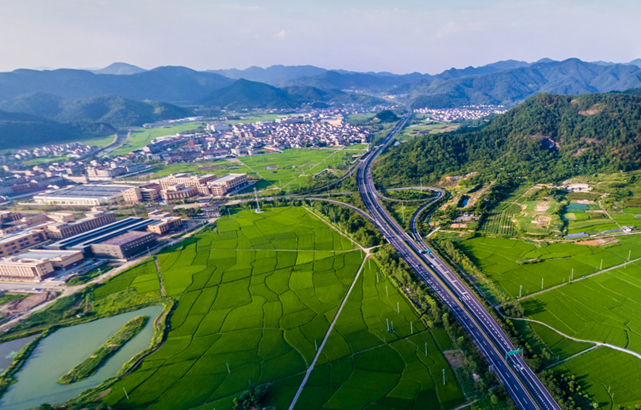
Full digital connectivity underpins all subsequent rural innovation. Fixed broadband services reach every rural household across Beijing, all administrative villages are equipped with gigabit broadband access, and 5G signal coverage extends to every township, laying robust digital infrastructure for rural digital transformation.
Municipal-level digital management platforms support cross-tier data coordination. The Beijing Rural Revitalisation Big Data Platform reached full operational capacity in 2025, delivering integrated data coverage for all agricultural and rural sectors. The Digital Jingcun intelligent village management hub, launched in 2024, now operates across more than sixty villages citywide, with complete town-level deployment covering thirty-seven villages in Yukou Town, Pinggu District and Miaofengshan Town, Mentougou District. Deployment schedules target full rollout in over ten townships by 2028, expanding to more than twenty townships by 2030.
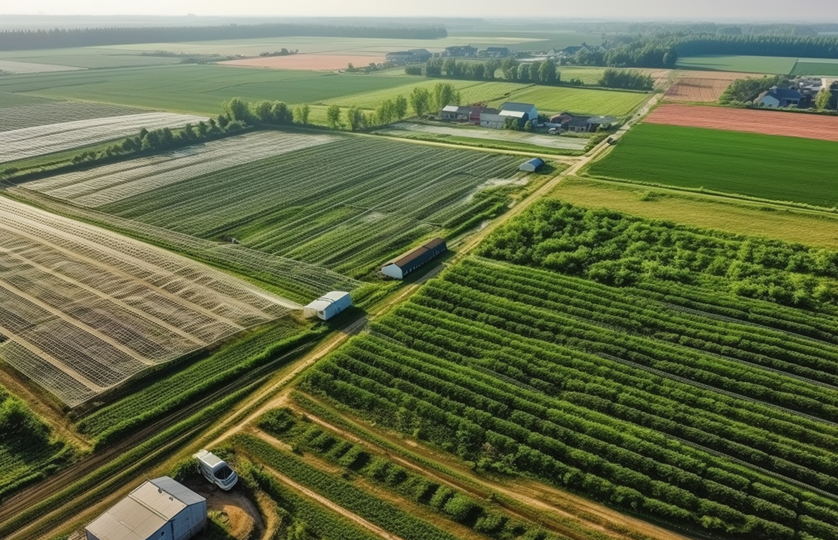
Digitalisation has reshaped agricultural production workflows across suburban farming belts. Information-enabled management covers more than thirty per cent of farmland in all agriculture-focused districts of Beijing, while the contribution rate of agricultural science and technology stands at seventy-five per cent. Centimetre-level precision farming powered by Beidou satellite navigation unmanned machinery operates across thousand-mu wheat fields in Zhangziying Town, Daxing District. AI pest monitoring systems deployed in Yukou Town, Pinggu District cut pesticide application volumes by forty per cent. Digitally controlled greenhouses in Xihuai Village, Tongzhou District allow growers to monitor full crop growth cycles via real-time data screens.
Digital tools streamline grassroots administration and public services, shifting village governance from offline manual inspections to real-time online data operation. The reward point scheme embedded within the Digital Jingcun platform boosts resident participation in community management. Huangshandian Village in Fangshan District has run seventy-two themed reward activities, accumulating over 4.1 million points with 772 local residents taking part. Residents access transparent disclosure of village finances, land and administrative affairs, employment postings, one-click maintenance reporting and direct message channels to village cadres through widely used social media applications, enabling proactive resolution of public demands before formal complaints arise. Ninety-six point two per cent of villages across Beijing host integrated community service hubs.
Structured talent recruitment and training mechanisms draw skilled innovators back to rural areas, bringing fresh creative input to digital village projects and reinforcing human capital for capital rural revitalisation.
Shengshuiyu Village hosts a prominent example of homegrown rural entrepreneurship. A post-1980s rural entrepreneur launched homestay operations after returning to the village in 2017, establishing a cooperative centred on Chinese toon cultivation to raise collective household incomes. The cooperative develops value-added processed goods including toon-infused lipstick, tea and coffee, establishing integrated supply chains combining e-commerce and cultural tourism. Produce once sold cheaply in bulk now commands premium market prices, with Shangfang Mountain Chinese toon certified as a national geographical indication agricultural product. The cooperative incorporates 321 local households and manages more than 3,000 mu of toon plantations, recording an annual turnover exceeding 4.8 million yuan in 2023 with participating farmers earning an average of over 20,000 yuan each per annum.
Parallel rural innovation schemes operate across all suburban districts. Xinzhuang Village, Xingshou Town in Changping District attracts urban innovators to launch timber craft and specialty coffee homestay businesses, with seasonal market events revitalising local community life. Jinpoluo Village, Xiwengzhuang Town in Miyun District unites young creative practitioners to integrate ecological farming, boutique accommodation and outdoor environmental education. Dajixiang Village, Sihai Town in Yanqing District pioneers an inclusive shared community model that accommodates returning entrepreneurs, long-term local residents and external innovators, supplemented by sustained technical input from university research teams. The Kuaishou Technology Happy Village Pioneer Programme identifies and nurtures more than one hundred rural entrepreneurs nationwide, delivering offline training, platform traffic and brand support to grow rural industrial output.
Beijing’s Hundred-Thousand Village Development Programme continues to expand digital application scenarios, driving steady rises in collective village revenue and consistent inflows of skilled rural innovators.
Committee members and industry specialists outlined actionable development priorities for the next phase of digital rural advancement during panel discussions.
The director of the Agriculture and Rural Committee under the Beijing Municipal Committee of the Chinese People’s Political Consultative Conference highlighted the inclusive social value of digital village development. Site-specific construction priorities and digital applications should align with local industrial layouts, population profiles and governance requirements, with staggered differentiated rollout improving practical relevance. All digital design frameworks integrate grassroots resident demands alongside technical expert assessment to resolve tangible daily challenges for farming households.
A municipal committee member and senior official from the Beijing Rural Development Centre advised accelerated citywide rollout of the Digital Jingcun system, scaling emerging digital service scenarios to lift agricultural production efficiency and streamline grassroots administrative workflows.
A senior administrator from the China Rural Cadre Training Institute flagged cross-departmental data sharing as a core developmental priority. Formalised inter-agency coordination frameworks will clarify rights and obligations governing government data provision, access and oversight. Unified technical standards, consistent data supply pipelines and targeted industry applications will enable seamless cross-tier and cross-departmental data collaboration, cutting unnecessary administrative travel for local residents.
A senior officer from the Standards and Planning Division of the Big Data Development Centre under the Ministry of Agriculture and Rural Affairs proposed refined standardisation for agricultural and rural datasets. A municipal trusted rural data space will facilitate orderly circulation of data production factors, while advanced big data analytics tools will build market matching and industrial trend forecasting models to unlock further value from rural digital economies.
Beijing’s digital rural agenda advances steadily through two parallel transitions: from standalone digital infrastructure installation to comprehensive functional deployment, and from single-agency government oversight to multi-stakeholder collaborative participation, delivering sustained digital-driven growth for all rural communities within the capital region. Supplementary municipal digital policy frameworks will roll out in successive phases to standardise data governance, expand intelligent farming pilots and extend integrated online public services to every village across Beijing’s suburban and mountainous zones.