Jiangxi Rolls Out Full Supervision & Rectification Framework for High-Standard Farmland Projects
Provincial authorities in Jiangxi place high priority on high-standard farmland development, framing targeted rectification of existing project defects as core work that delivers tangible benefits to rural residents. Senior provincial officials have conducted extensive field inspections across farming zones in the past year, issuing clear instructions for thorough, plot-by-plot risk screening. All remedial work must address root causes rather than superficial repairs, to prevent public farmland initiatives from failing to meet local residents’ expectations.
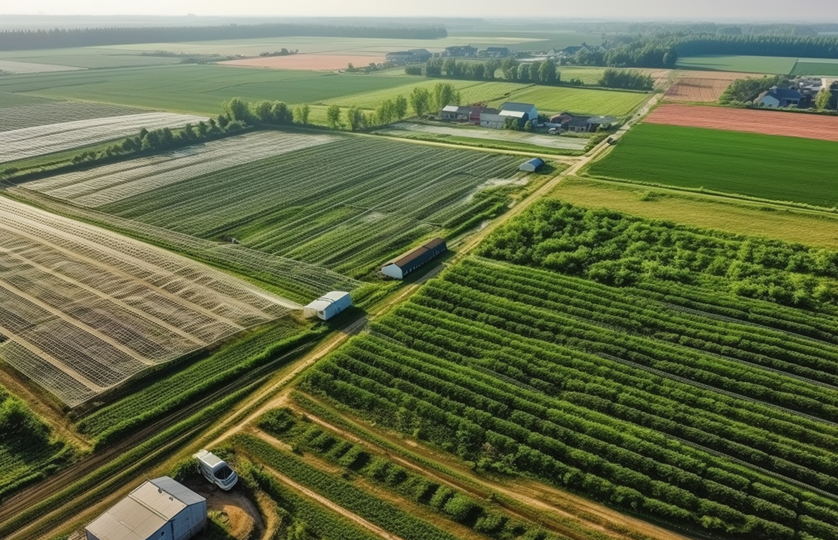
Jiangxi has pioneered province-level integrated funding arrangements nationwide since 2017, allocating an average investment of 3,000 yuan per mu for six core upgrading categories: field consolidation, irrigation and drainage networks, rural farm access roads, farmland protection and ecological conservation, farm power distribution, and soil fertility enhancement. Cumulative construction output stands at 31.41 million mu of high-standard farmland, accounting for 76.9 per cent of the province’s total cultivated area and sitting roughly 20 percentage points above the national average benchmark.
All identified flaws within farmland infrastructure are addressed openly and comprehensively. Top provincial leaders lead cross-departmental oversight mechanisms, establishing a governance model with clear Party and government accountability and coordinated inter-departmental operations to deliver end-to-end penetrating supervision.
A rigorous inspection and accountability system underpins on-site oversight. Eleven counties with weak management frameworks and prominent hidden risks have been designated priority supervision zones under differentiated monitoring rules. The Jiangxi Provincial Department of Agriculture and Rural Affairs has partnered with relevant provincial bureaus to assemble seven regional guidance teams, tasked with enforcing detailed defect screening and rectification obligations across local jurisdictions. Dedicated working groups have carried out unannounced inspections in 21 counties, with formal accountability reminders issued to four county-level authorities.
Media-reported infrastructure faults in Poyang and surrounding regions have been escalated to higher-level intervention. On-site supervision teams with professional agricultural technicians have been stationed full-time in Poyang, Yugan, Wannian and Shangrao, adopting a centralised task allocation model where provincial technical experts formulate remedial solutions for complex engineering issues and local authorities carry out physical renovations. All completed upgrades undergo multi-layered review following a standardised protocol of four mandatory inspections, random spot checks and final validation, ensuring every recorded defect receives genuine, thorough remediation. Separate follow-up assessments target pumping irrigation facilities to resolve operational faults in batches and secure consistent agricultural production support.
Sustained long-term regulatory frameworks run parallel to short-term corrective actions. Provincial regulators have released two sets of official operational guidelines and two unified assessment standards, alongside the launch of a cloud-based digital farmland management platform named Cloud Gan Agriculture Digital Farmland System. The complete regulatory toolkit is designed to resolve practical difficulties raised by rural residents. Over 130 resident complaints, petition submissions and public feedback cases have been fully resolved at provincial level so far this year.
Ongoing upgrading campaigns have delivered measurable progress. A province-wide concentrated repair drive for damaged farmland infrastructure is underway, with local authorities advancing site surveys and implementation blueprints to finish restoration work on over 100,000 mu of impaired facilities before the end of July this year. New build and renovation schemes progress in tandem; core field engineering works covering 432,000 mu of newly constructed high-standard farmland and 378,000 mu of upgraded plots designated for 2025 have been fully completed.
A three-year upgrading programme tackles irrigation’s last-mile gaps, with 452 irrigation installations across 106,800 mu of farmland already refurbished to resolve water supply bottlenecks. Routine post-completion maintenance aligns with seasonal farming cycles. Maintenance crews have cleared more than 18 million metres of irrigation ditches and repaired over 13,000 separate assets including farm access roads, field access slabs and water pumping stations in the current year. Further rounds of scheduled maintenance and targeted infrastructure upgrades will continue to sustain stable farm operation conditions across the province’s cultivated land areas.